Air India Express Debuts Boeing 737-8 MAX on Muscat Route
Air India Express begins international Boeing 737-8 MAX operations on the Delhi–Muscat route, offering enhanced comfort, efficiency and connectivity.
 Jishan Khan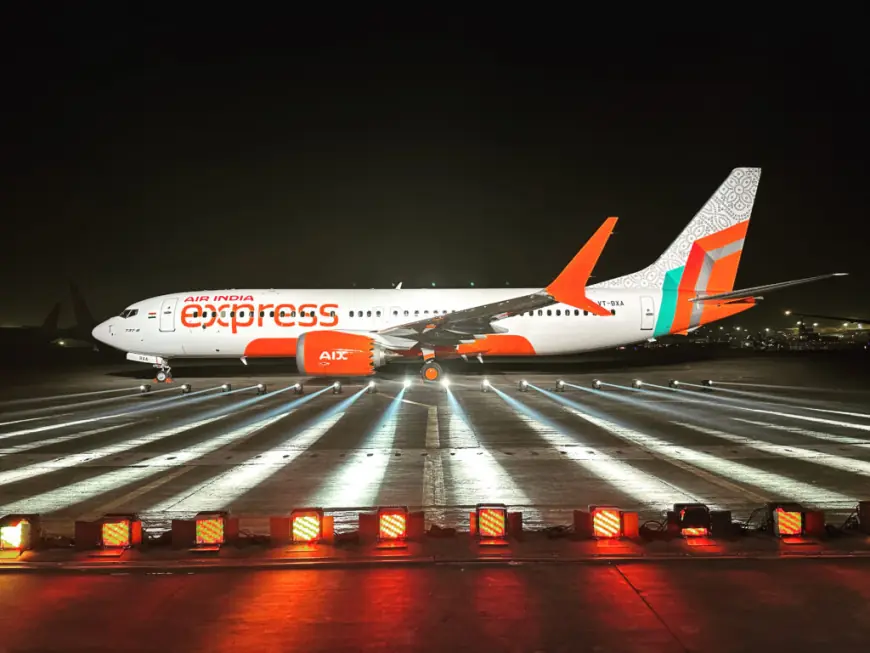

Air India Express has inaugurated Boeing 737-8 MAX operations on its New Delhi–Muscat international route, marking a notable step in the airline’s fleet modernisation and international service strategy as it responds to growing travel demand between India and the Gulf.:contentReference[oaicite:0]{index=0}
The induction of the new Boeing 737-8 MAX aircraft — registered VT-RNT — on regular international service comes with several operational and passenger-facing enhancements compared with older narrowbody equipment, signalling the carrier’s intention to elevate product quality across its expanding network.:contentReference[oaicite:1]{index=1}
From an aviation operations perspective, the 737-8 MAX’s fuel-efficient design supports lower trip costs and reduced carbon emissions on short- to medium-haul sectors such as New Delhi–Muscat, aiding the airline’s cost management and sustainability profile. The aircraft’s newer generation CFM LEAP engines also contribute to reduced noise and vibration levels, factors that benefit both passengers and airport communities.:contentReference[oaicite:2]{index=2}
Onboard, the 737-8 MAX brings tangible improvements for passengers. Cabin upgrades include larger overhead bins with increased carry-on capacity, addressing a frequent pain point on high-density international leisure flights. In-seat fast-charging power outlets at every seat respond to the rising expectation for device connectivity on short sectors where business travellers and holiday-makers alike rely on personal electronics. The aircraft’s quieter ride, enabled by advanced aerodynamics and noise-checked systems, also enhances overall passenger comfort relative to legacy aircraft types.:contentReference[oaicite:3]{index=3}
Muscat, Oman’s capital and a longstanding aviation hub between South Asia and the Middle East, has seen sustained demand from both business corridors and expatriate communities. Air India Express’ decision to place the 737-8 MAX into service on this sector provides capacity that aligns with these traffic patterns while also projecting the airline’s growing international footprint — a key plank in its post-privatisation network development.:contentReference[oaicite:4]{index=4}
Industry analysts note that renewing narrowbody international services with newer MAX jets supports airlines’ broader yield-management goals. With fuel efficiency improvements over earlier single-aisle models, the 737-8 MAX allows carriers like Air India Express to compete more effectively on Gulf routes where frequency, cost and cabin product expectations directly influence market share. Such fleet decisions also dovetail with regional connectivity trends as Indian carriers seek to leverage expatriate traffic flows and leisure demand in Gulf markets.:contentReference[oaicite:5]{index=5}
Operationally, integrating modern aircraft into regular rotations requires tight coordination across crew training, maintenance planning and dispatch systems. Air India Express has been expanding its pilot and technician qualification programmes to support 737-MAX operations, reflecting industry norms that prioritise crew type ratings and avionics familiarity ahead of service entry on international routes.:contentReference[oaicite:6]{index=6}
Looking ahead, the airline’s expanded use of 737-8 MAX aircraft points toward incremental enhancements across its wider Middle East network. Deploying fuel-efficient assets on high-frequency, short international routes can improve schedule reliability and allow strategic capacity-shaping as competitive pressures within South Asia–Gulf markets persist.:contentReference[oaicite:7]{index=7}
For frequent travellers between New Delhi and Muscat, the introduction of the 737-8 MAX translates to a more comfortable cabin experience, modern seat amenities and reassurance on sustainability metrics as airlines and regulators increasingly prioritise emissions-efficient operations in the short- to medium-haul arena.:contentReference[oaicite:8]{index=8}