Airbus Targets 2027 A220 Runway Overrun Alert System
Airbus plans to introduce a Runway Overrun Awareness and Alerting System for the A220 by 2027, enhancing safety and landing risk mitigation.
 Jishan Khan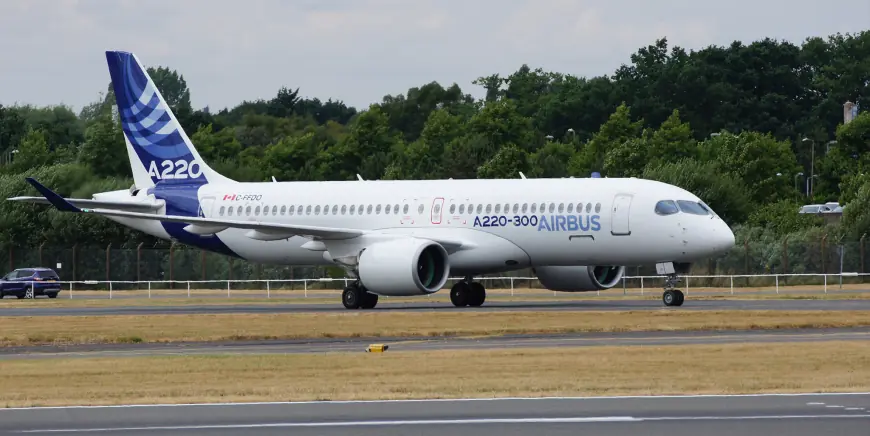

Airbus is developing a new runway overrun awareness and alerting system for its A220 family with a target introduction in 2027, marking a significant step in enhancing landing safety and overrun risk mitigation on one of its core narrowbody platforms.
The initiative follows broader industry attention to runway excursion hazards, which remain a leading factor in serious commercial jet incidents despite advances in aircraft systems and airport infrastructure. Airbus’ new system — often referred to in industry discussions as a “Runway Overrun Awareness and Alerting System” (ROAAS) — will build on existing technologies implemented across other Airbus families to provide crews with early, actionable alerts during the landing phase.
A runway overrun scenario occurs when an aircraft is unable to stop within the available runway length after touchdown. Overruns are typically associated with weather, runway contamination, misjudged approach speeds or late deceleration, underscoring the need for systems that continuously monitor landing parameters and provide timely alerts. Modern systems monitor factors such as speed, height, remaining runway distance and braking performance to evaluate whether a safe stop is achievable and advise crews on corrective actions.
Airbus has already installed similar systems — generally known as Runway Overrun Prevention Systems (ROPS) — on larger models such as the A320‑family, A330, A350 and A380, with certification and retrofit options aligning with evolving regulatory requirements. The extension of this capability to the A220 fleet reflects the company’s strategy of harmonising safety features across its commercial jet portfolio.
The A220 — a 110 to 130‑seat single‑aisle aircraft widely used in short‑ and medium‑haul markets — has gained traction with global operators due to its fuel efficiency and cabin comfort. However, as operators expand flights into diverse airport environments, including those with challenging weather or shorter runways, enhanced runway risk awareness tools become more relevant.
Industry regulators and avionics specialists see advanced runway overrun alerting systems as part of a multi‑layered safety framework that includes pilot training, performance calculation tools, airport surface condition reporting and precision landing guidance. Alerting systems that inform flight crews of potential overrun risk can prompt earlier go‑around decisions or encourage full deceleration, reducing the likelihood of an excursion.
Airlines operating A220 fleets will likely welcome the planned capability, which could align with broader fleet safety and operational integrity goals. While Airbus has not publicly finalised technical details or certification pathways, the 2027 target suggests a phased development and validation process that accounts for regulatory scrutiny, avionics integration and thorough flight testing.
The planned A220 alert system also complements global mandates for runway overrun protection on new deliveries of certain aircraft types, as regulators incorporate overrun safety measures into airworthiness standards. Ensuring interoperability with existing avionics suites and pilot interfaces will be central to the system’s practical adoption and effectiveness.
As aviation stakeholders emphasise continuous safety improvement, Airbus’ commitment to deliver enhanced runway overrun alerting on the A220 highlights the evolving intersection of flight deck technology, regulatory expectations and airline operational risk management. The initiative is poised to reinforce the A220’s safety credentials as operators deploy the aircraft across varied commercial networks worldwide.