Airline Introduces Lie-Flat Seats in Economy Without Business-Class Fare
economy lie-flat seats, premium economy innovation, airline product strategy, cabin configuration, passenger comfort
 Jishan Khan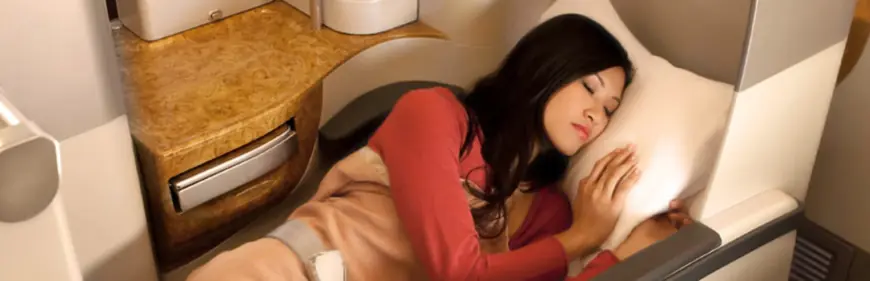

An international carrier has begun installing lie-flat seats in a dedicated economy seating zone on select long-haul aircraft, offering passengers premium rest without the need to purchase a traditional business-class ticket.
The move reflects a strategic response to evolving passenger expectations for comfort on long sectors and a commercial push to differentiate cabin products beyond the conventional economy and premium economy tiers.
Lie-flat seats have historically been reserved for higher-yield cabins where airlines can justify the space and pricing premium. By integrating these seats into an economy-class configuration, the airline is targeting leisure and budget-conscious travellers who value rest on overnight flights but are unwilling to pay full business-class fares.
Industry observers say the innovation illustrates a broader trend in product segmentation, where carriers seek additional revenue streams and competitive advantage through varied seating experiences. This development comes as airlines worldwide reassess cabin layouts to balance comfort, capacity, and operational efficiency amid fluctuating demand patterns.
The aircraft selected for the lie-flat economy retrofit are scheduled on transcontinental and intercontinental routes where demand for improved rest options is strongest. These sectors often have multiple competing airlines, and enhanced in-flight comfort can become a key factor in itinerary choice for passengers on flights exceeding eight hours.
From a network planning perspective, deploying lie-flat seats in the economy cabin requires careful evaluation of aircraft utilisation, seat density, and revenue management. Lie-flat seats take up more physical space than conventional economy seats, reducing total seat count. Airline analysts regard this as a calculated trade-off: higher yield per seat in a premium economy-style offering may offset the loss of seats overall.
For passengers, the introduction of fully horizontal seating without business-class pricing represents a notable lifestyle shift. Unlike standard premium economy products that increase pitch and recline, lie-flat seats allow travellers to rest fully, targeting the growing segment of long-haul flyers who emphasise comfort in the booking decision.
Aviation product strategists anticipate that if passenger uptake and yields meet expectations, similar cabin innovations could spread across other carriers seeking to capture latent demand for intermediate comfort classes. The initiative underscores how airlines are aligning cabin design with market segmentation, revenue optimisation, and competitive differentiation in an increasingly experience-driven industry.
For airline executives, the change highlights the interplay between aircraft configuration, customer value propositions, and broader competitive dynamics as carriers seek to innovate within legacy seating paradigms and attract new traveller segments.