American, United Battle for Supremacy at Chicago O’Hare
American and United expand competing networks at Chicago O’Hare, intensifying hub rivalry as both carriers adjust capacity and international links for 2026.
 Jishan Khan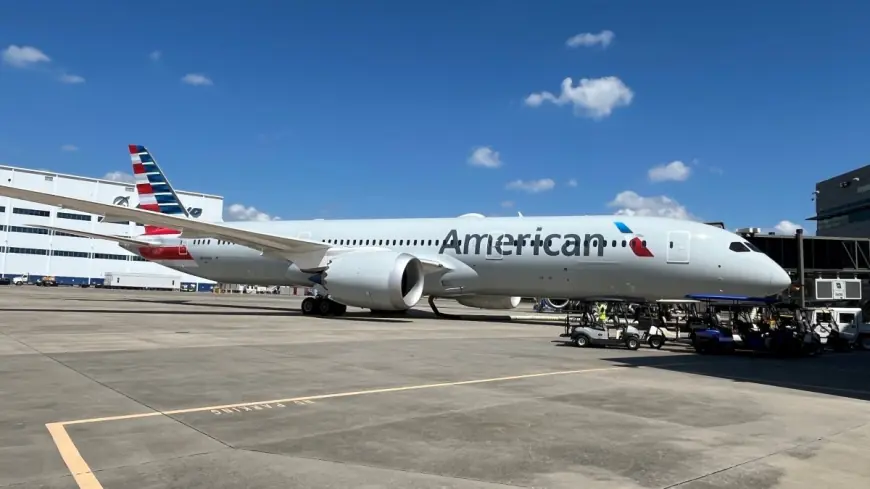

American Airlines and United Airlines are intensifying their competition at Chicago O’Hare International Airport, each deepening its network footprint as the two legacy carriers vie for hub supremacy in North America’s third busiest aviation market.
O’Hare has long been a strategic battlefield for U.S. carriers, given its central location, multiple runways and pivotal role in domestic and international connectivity. United, maintaining a historical stronghold at ORD, has developed an extensive hub that feeds long-haul international services and dense domestic flows. American, while traditionally more dominant at its Dallas-Fort Worth hub, has steadily increased capacity at Chicago, positioning the airport as a crucial node in its national network.
Recent schedule filings for 2026 indicate that American is adding frequencies and international sectors from Chicago, signalling a renewed focus on capturing premium traffic on transatlantic and transpacific markets. This expansion dovetails with American’s broader route strategy that seeks to balance domestic feed with lucrative long-haul services that enhance connectivity for both leisure and corporate segments.
United’s response has been to fortify key markets through its comprehensive global schedule, leveraging its deep alliance partnerships and Star Alliance connectivity. The carrier continues to operate a wide range of Asian, European and Latin American services from ORD, reinforcing its status as a global gateway and responding to American’s capacity build-out.
Hub competition at O’Hare has operational and commercial implications for both carriers. Airports with multiple significant airline bases benefit from competitive pricing, expanded slot utilisation and more diverse fare products for travellers. However, carriers must balance aggressive network deployment with unit cost considerations and demand elasticity across both premium and economy segments.
Network planners at American and United are aligning aircraft types to respective market demands out of Chicago. American has been deploying larger narrowbody and some widebody aircraft to support international expansion, while United continues to leverage its mixed fleet — including Boeing 777 and 787 Dreamliners — to maintain deep long-haul connectivity and high frequency service.
The competitive dynamics at O’Hare also influence alliance strategies. United’s entrenched Star Alliance connections allow seamless onward feed across partner networks, while American’s ties with oneworld partners and joint venture arrangements amplify transatlantic and transpacific options for passengers originating or connecting via Chicago.
For travellers, increased airline competition can yield more scheduling options and improved connectivity across global markets. However, hub rivalry also places pressure on operational resilience, given O’Hare’s complex traffic flows and sensitivity to weather, air traffic control constraints and peak-period congestion that can magnify delay propagation.
At the airport level, the expansion by both carriers requires tight coordination with the Chicago Department of Aviation and the Federal Aviation Administration to manage arrivals, departures, runway utilisation and ground handling resources. Peak-hour slot coordination becomes increasingly critical as both airlines pursue incremental growth without generating untenable congestion.
In terms of revenue performance, legacy carriers must ensure that capacity expansion aligns with yield management strategies, especially as international markets rebound and corporate travel patterns continue to evolve. Premium cabin sales on long-haul sectors — often anchored at hub gateways like Chicago — remain a focal point for revenue diversification beyond core domestic operations.
The competitive posture at O’Hare is part of a broader trend in the U.S. airline industry, where major carriers leverage hub strength to defend market share while also pursuing strategic growth outside their historical heartlands. For American and United, Chicago represents not only passenger volume but a launchpad for strategic network resilience as global demand patterns shift.
Looking ahead, the hub rivalry is likely to shape scheduling decisions, alliance negotiations and fleet deployment strategies for both carriers as 2026 unfolds, with implications for airport operations, passenger choice and North American-linked global connectivity.