Amtrak Surfliner Service Scheduled to Resume on June 7 After Critical Emergency Repairs Successfully Stabilize San Clemente Coastal Rail Line Threatened by Erosion and Landslides
 Munni Khatun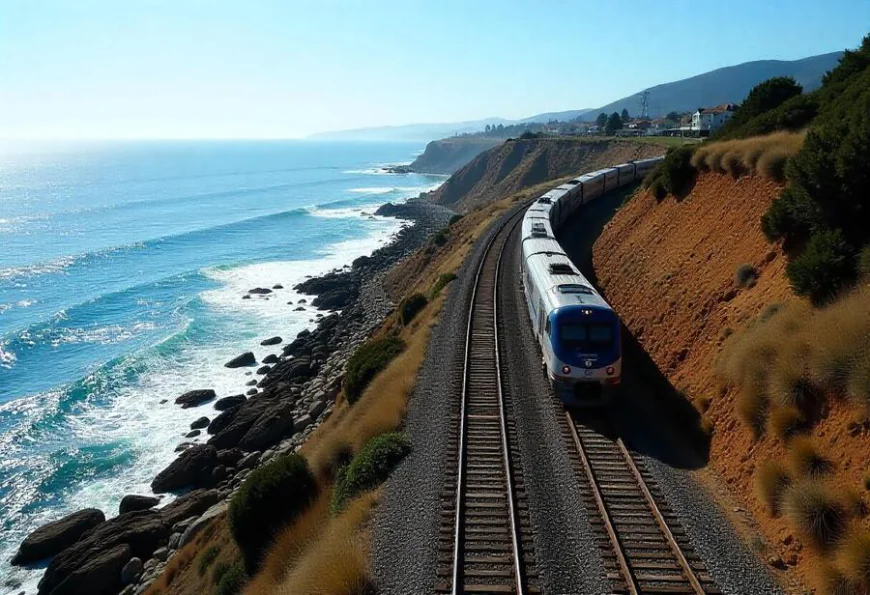

Amtrak Surfliner trains are scheduled to resume service on June 7 after urgent emergency work was carried out to stabilize the coastal rail line in San Clemente, California. This scenic route along Southern California’s coastline encountered serious risks due to erosion and landslides, which threatened both the safety and consistent operation of the rail service. Beginning in late April, crews launched focused efforts to reinforce at-risk areas and safeguard the track from additional deterioration.
The restoration project involved placing nearly 6,000 tons of riprap—large, durable rocks designed to absorb wave energy—along the affected stretches of track. Additionally, approximately 240,000 cubic yards of sand were strategically deposited between Mariposa Point and North Beach. This large-scale sand replenishment serves as a protective barrier against ongoing coastal erosion, helping to shield the rail infrastructure from the increasingly powerful forces of nature such as rising tides and storm surges.
As the project enters its concluding phase, construction teams are removing heavy equipment, conducting detailed inspections of the track and signaling systems, and clearing the work zones to guarantee safe conditions before train service resumes. These final checks are essential to ensure the corridor meets all safety standards and that passengers can travel with confidence.
This accelerated repair initiative was led by regional transportation agencies working collaboratively to fast-track the reopening of the corridor. Their efforts prevented an extended suspension that would have disrupted service during the peak summer travel season, a critical period for both commuters and tourists. By acting swiftly, they preserved an essential transportation link that connects numerous coastal communities and supports the regional economy.
To protect workers and infrastructure during upcoming construction, large concrete barriers have been installed along the inland bluff adjacent to the tracks. These barriers will shield crews as they prepare to build a 1,400-foot-long catchment wall, a long-term solution designed to further reinforce the hillside and reduce the risk of future erosion. While the exact schedule for this major construction phase is still being finalized, most work will take place behind these barriers to minimize impacts on train operations.
The Amtrak Surfliner service was suspended on April 28 after engineers detected unstable ground conditions that posed serious safety risks. The immediate response to these findings underscored the importance of ongoing monitoring and maintenance, especially for infrastructure exposed to dynamic coastal environments vulnerable to climate change effects.
With the stabilization work complete, Amtrak Surfliner trains are set to resume just in time to meet the seasonal surge in passenger demand throughout Southern California. The summer months typically bring an influx of travelers for business and leisure, making the restoration of this vital route crucial for efficient and reliable transportation.
Officials emphasize that although the immediate threats have been addressed, continuous efforts to mitigate long-term risks will persist. The upcoming construction of the catchment wall and additional protective measures will enhance the corridor’s resilience against future environmental challenges.
The reopening of the Surfliner route highlights the critical role of proactive infrastructure investment in safeguarding transportation networks exposed to natural hazards. Coastal rail corridors not only provide essential connectivity for communities but also support local economies, tourism, and environmental stewardship efforts.
In summary, the swift and decisive emergency measures to reinforce the San Clemente coastal rail line have allowed the Amtrak Surfliner to resume operations well before the peak summer travel period. This successful effort reflects a dedicated focus on providing safe, reliable, and resilient transportation solutions in Southern California despite increasing environmental challenges.
As service resumes, passengers can once again enjoy a safe and scenic journey along California’s coast, benefiting from a rail system reinforced to withstand future challenges. The successful reopening of this corridor marks an important milestone in protecting one of the region’s most treasured transportation routes.