Bomb Threat Forces IndiGo Flight From Delhi to Divert to Lucknow
A bomb threat on an IndiGo flight from Delhi prompted diversion to Lucknow; no explosives were found and passengers resumed travel after security checks.
 Jishan Khan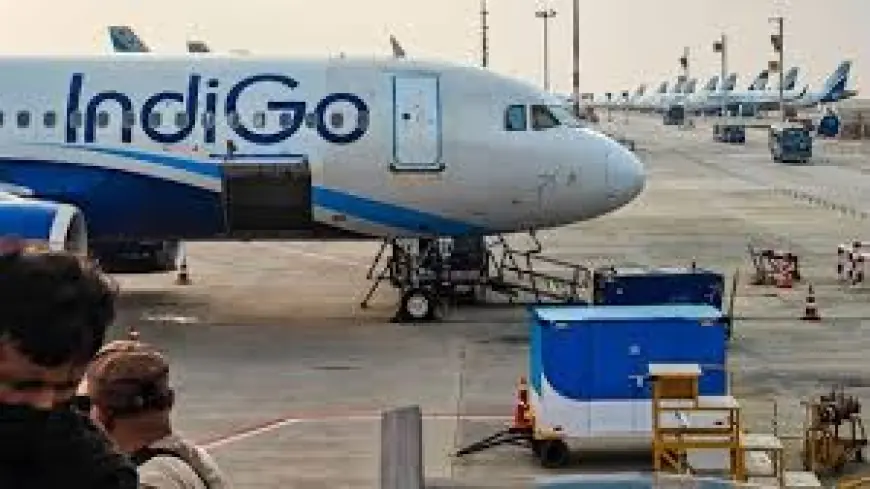

An IndiGo Airbus A320 flight originating from Indira Gandhi International Airport in Delhi was diverted to Lucknow on Sunday after a reported bomb threat prompted an immediate aviation security response and precautionary measures.
The flight, operating a scheduled service from Delhi to an undisclosed destination, was airborne when the alleged threat was received. Pilots coordinated with air traffic control and airline operations to divert the aircraft to Chaudhary Charan Singh International Airport in Lucknow, a designated alternate with adequate runway length, emergency handling capability and technical support.
Upon landing in Lucknow, passengers were kept onboard while airport security personnel and explosive detection units conducted a comprehensive sweep of the aircraft and terminal areas. The Aviation Security Group (ASG) and local law enforcement coordinated the search, using specialised equipment to inspect the cabin, cargo holds and surrounding airside zones.
After thorough checks, no explosive devices or hazardous materials were discovered, according to airport officials. Following clearance, passengers were disembarked and provided with assistance, including baggage retrieval and onward travel arrangements. The flight ultimately continued to its scheduled destination later in the day once security constraints were resolved and regulatory clearances obtained.
Bomb threats, though infrequent relative to the volume of daily commercial flights, trigger robust aviation protocols globally. Airlines and airports maintain established procedures to handle such incidents, including diversion to the nearest suitable airport, coordinated response with security agencies and systematic inspection of the aircraft. The goal of these protocols is to prioritise passenger and crew safety while minimising disruption.
IndiGo, India’s largest domestic carrier by fleet size and seat capacity, acknowledged the incident in a statement, saying safety is its foremost priority. The airline said its crew acted in accordance with standard operating procedures, swiftly diverting the aircraft and cooperating with security officials to mitigate potential risk.
Officials at Lucknow Airport highlighted the seamless coordination among airline operations, air traffic control, airport police and the ASG in managing the situation. The interception and inspection were completed without damage to the aircraft or injury to passengers and crew, reflecting the effectiveness of emergency response drills and security readiness.
For passengers, bomb threat diversions can be unsettling and disruptive. Airlines typically provide crisis support services, including rebooking, accommodation where necessary, and customer care support to address concerns arising from extended delays or schedule changes.
The Directorate General of Civil Aviation (DGCA) and local enforcement agencies will review the incident further to determine the origin of the threat and to strengthen procedures where necessary. Aviation stakeholders emphasise that vigilance and multi-agency coordination remain integral to maintaining secure air travel, even as threats evolve.
Operationally, the diversion affected slot sequencing at both Delhi and Lucknow airports, requiring air traffic control to adjust arrival and departure flows. Slot management during unscheduled diversions is a core capability of airport operations teams, ensuring that safety takes precedence without undue impact on wider network movements.