British Airways Maps 19 Airbus A350 Routes for 2026 Network
British Airways reveals 19 scheduled routes for its Airbus A350 fleet in 2026, spanning long-haul global network and cabin deployment strategies.
 Jishan Khan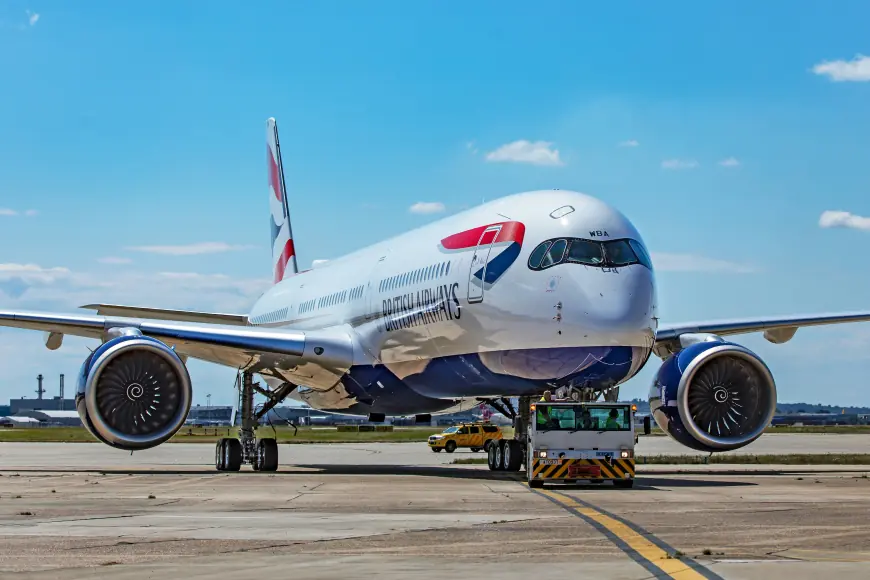

British Airways has disclosed the 19 scheduled routes that its Airbus A350 fleet will operate in 2026, detailing how the long-haul widebody aircraft will be deployed across its global network and reflecting strategic capacity planning for the year ahead.
The Airbus A350, a twin-engine, long-range widebody, has become central to British Airways’ fleet modernisation programme. The type offers improved fuel efficiency, extended range and enhanced passenger comfort relative to older generation aircraft, making it suitable for intercontinental sectors where airlines balance unit economics with competitive service offerings.
In 2026, the carrier plans to utilise its A350-900 and A350-1000 variants on an array of long-haul routes connecting its London hubs with destinations across North America, Asia, Africa and the Middle East. The 19 routes include key business and leisure city pairs such as London to New York, Los Angeles, Hong Kong, Johannesburg, Dubai and Tokyo, illustrating the wide geographical reach of the airline’s long-haul schedule.
Deploying A350 aircraft on such routes aligns with British Airways’ strategy to match aircraft capability with market demand. The A350’s range and payload capacity allow non-stop services on sectors that might otherwise require larger widebodies, while also delivering carbon emission benefits per seat. This fits within the airline’s broader sustainability agenda, which includes fleet renewal and operational efficiency initiatives aimed at reducing overall environmental impact.
Network planners at British Airways have sequenced A350 flights to optimise slot usage at congested airports, particularly during peak travel seasons. For example, the aircraft’s utilisation on transatlantic routes supports premium cabin demand, while its presence on Asia-Pacific services tackles competitive pressures and enhances schedule reliability. The airline has also positioned the A350 on services to destinations with runway or airport infrastructure constraints that favour the aircraft’s performance characteristics.
Passenger experience remains a focus in the deployment of A350 aircraft. The cabin configurations typically include a mix of first, business and economy seating, with modern inflight entertainment systems, mood lighting and improved pressurisation that can mitigate fatigue on longer sectors. For routes extending beyond 12 hours, comfort attributes such as lie-flat seats and advanced environmental controls contribute to the overall product proposition.
British Airways’ decision to map nearly two dozen A350 routes in 2026 follows broader industry trends where airlines leverage long-range narrowbodies and fuel-efficient widebodies to sustain profitable long-haul networks. With fluctuating demand patterns and evolving leisure and business travel behaviours, the A350 provides operational flexibility across varying market environments.
The launch of the 2026 schedule also reflects strategic responses to competitor capacity. On transatlantic and Asia-Europe corridors, British Airways competes with North American and Middle Eastern carriers that have similarly invested in next-generation aircraft. By deploying the A350 on routes with strong leisure and corporate travel demand, the airline aims to bolster yield performance and maintain network relevance.
For airline fleet planners and aviation analysts, the delineation of 19 A350 routes offers insight into how British Airways intends to navigate capacity growth, fuel economics and passenger expectations in a dynamic global market. As airlines worldwide update their long-haul schedules, data such as aircraft deployment patterns will continue to serve as a bellwether of competitive strategy in commercial aviation.