Dense Fog at Indian Airports Causes Flight Delays and Cancellations
Dense fog across northern India disrupts flights at major airports, leading to delays, cancellations and operational strain in winter weather conditions.
 Jishan Khan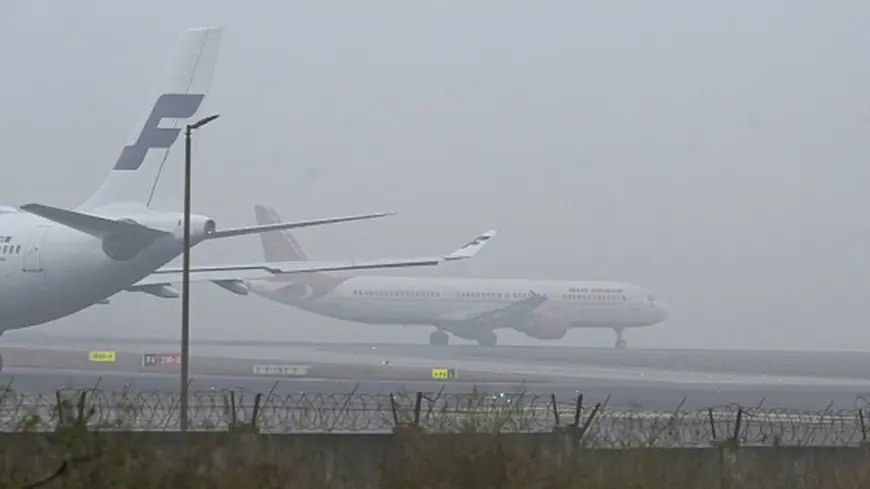

Severe fog across parts of northern India has disrupted flight operations at multiple airports, impacting thousands of passengers with delays and cancellations as winter weather systems linger over the region.
Dense early-morning fog reduced visibility below instrument landing minima at key airports, including Hyderabad, Vijayawada and other major hubs, leading air traffic control and airline operators to delay or cancel flights on heavily trafficked domestic sectors. Meteorological departments issued low-visibility advisories, noting that ground-level fog and associated weather conditions typically challenge runway operations during peak winter months.
Airport authorities implemented low-visibility procedures, which include stricter thresholds for aircraft approaches and departures and increased spacing between movements to maintain safety. These procedures, combined with the slow movement of fog banks across runways and taxiways, reduced arrival and departure rates, forcing schedule adjustments by airlines and airport operations teams.
Airlines responded by altering flight timetables, communicating delays to booked passengers and, in some cases, cancelling services when continuing deterioration in conditions made safe operations untenable. For travellers, information desks and airline customer service teams were tasked with rebooking options, meal vouchers for extended waits and coordination with ground handling agents to manage inbound and outbound disruptions.
Aviation planners highlight that fog-related disruptions are a recurring challenge for Indian airports during winter, often exacerbated by stagnant atmospheric conditions and cooling nights that foster dense ground fog. The phenomenon particularly affects early morning flight banks, as the window for acceptable visibility can be narrow without significant wind or solar heating to disperse the fog.
Controllers and airline operations centres have had to recalibrate schedules dynamically, balancing safety imperatives with capacity demands. Delays can cascade through an airline’s network, as aircraft and crew rotations are pushed out of alignment, increasing the likelihood of further knock-on disruptions later in the day.
Passengers affected by cancellations were advised to check mobile alerts, airline apps and airport announcement systems for updated status information. Some airlines proactively reached out to passengers with revised departure plans or alternatives via nearby airports once conditions improved. Hospitality support such as hotel accommodations and meal assistance were arranged in accordance with passenger rights norms in cases where delays extended beyond planned layovers.
Airport meteorological offices continue to track weather patterns and have indicated that fog intensity is expected to ease as daytime warming increases and wind conditions shift. In the short term, airports are coordinating with airlines to adjust schedules and manage backlog traffic once visibility thresholds return to normal.
Aviation industry observers note that heavy fog remains one of the most significant episodic operational constraints for airports without advanced ground-based augmentation systems. These systems — which can enable landings in lower visibility conditions — are installed at some major Indian airports but are not universally available across the network, leaving secondary airports more exposed to weather-related delays.
The winter fog episode underscores the interplay between climatic conditions and airline network performance. Airlines and airports will likely revisit mitigation strategies, including revised departure planning, strategic slot usage and enhanced passenger communication channels to reduce uncertainty and maintain service reliability amid recurrent weather disruptions.