EgyptAir’s First A350 Enters Flight Testing Phase
EgyptAir’s first Airbus A350 has taken flight, marking a major milestone in fleet modernisation and long‑haul efficiency.
 Jishan Khan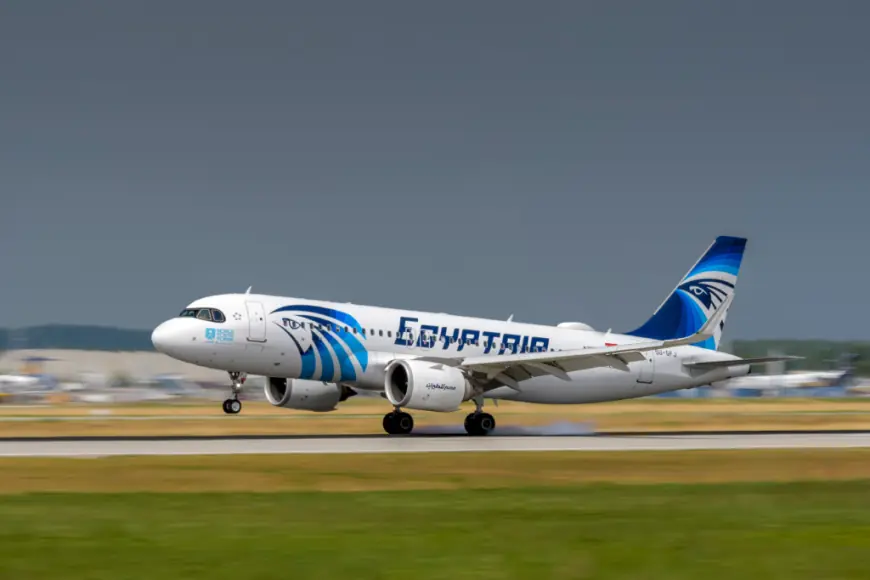

EgyptAir’s first Airbus A350 has taken to the skies for the first time, marking a critical milestone in the flag carrier’s long‑term fleet modernisation programme and signalling a new phase in its widebody operations.
The aircraft’s initial flight represents the transition from production to operational readiness, as EgyptAir prepares to introduce the A350 into commercial service. The type is set to play a central role in the airline’s intercontinental network, supporting capacity growth while delivering lower operating costs and improved environmental performance compared with older widebody aircraft.
For EgyptAir, the A350 introduction is strategically significant. The carrier operates a mixed widebody fleet across long‑haul routes linking Cairo with Europe, Asia, Africa and North America. Modernising this segment of the fleet is essential to maintaining competitiveness on long‑distance routes where fuel efficiency, reliability and passenger comfort directly influence unit costs and yield performance.
The Airbus A350 is powered by Rolls‑Royce Trent XWB engines and is designed for extended‑range missions with reduced fuel burn per seat. These characteristics align closely with EgyptAir’s network profile, which includes medium‑ to ultra‑long‑haul sectors requiring consistent performance in varied climatic and operational conditions. The aircraft’s advanced aerodynamics and lightweight composite structure also support improved dispatch reliability, an increasingly important factor as airlines focus on schedule integrity and cost control.
From a fleet planning perspective, the A350 will progressively complement and replace older widebody aircraft in EgyptAir’s portfolio. This transition is expected to simplify maintenance planning over time, enhance crew commonality and reduce lifecycle costs. For a state‑owned carrier operating in a competitive regional and global environment, these efficiency gains are central to long‑term financial sustainability.
The entry of the A350 also carries implications beyond aircraft economics. Passenger expectations on long‑haul routes continue to rise, with cabin comfort, noise reduction and onboard product playing a growing role in airline choice. The A350’s wider cabin, improved air quality and quieter operation provide EgyptAir with a platform to enhance its long‑haul product and remain competitive against regional and global network carriers operating newer‑generation fleets.
Cairo International Airport’s role as EgyptAir’s primary hub further amplifies the importance of the A350 programme. As a connecting gateway between Africa, the Middle East, Europe and parts of Asia, Cairo relies on efficient widebody operations to support sixth‑freedom traffic flows. Additional modern widebody capacity strengthens the airline’s ability to optimise bank structures, improve connection times and deploy aircraft more flexibly across its long‑haul schedule.
The first flight of the A350 also reflects broader trends across African and Middle Eastern aviation, where flag carriers are investing in next‑generation aircraft to remain relevant in an increasingly competitive global market. As network carriers in Europe, the Gulf and Asia continue to refresh fleets, access to modern widebodies has become a baseline requirement rather than a differentiator.
With flight testing underway, EgyptAir will proceed through the remaining certification and entry‑into‑service steps, including crew training, operational validation and final cabin preparations. The pace of induction will be closely watched, as the airline balances capacity growth ambitions with disciplined fleet deployment.
EgyptAir’s A350 programme underscores a clear strategic direction: prioritising long‑haul efficiency, operational resilience and product renewal. As the aircraft enters service, its performance will be central to shaping the airline’s long‑term competitiveness across intercontinental markets.