Here’s What Région Sud Launches Omneo Trains on Marseille–Toulon–Nice Line to Boost Comfort, Accessibility, and Sustainable Regional Rail Service,You Need To Know
 Munni Khatun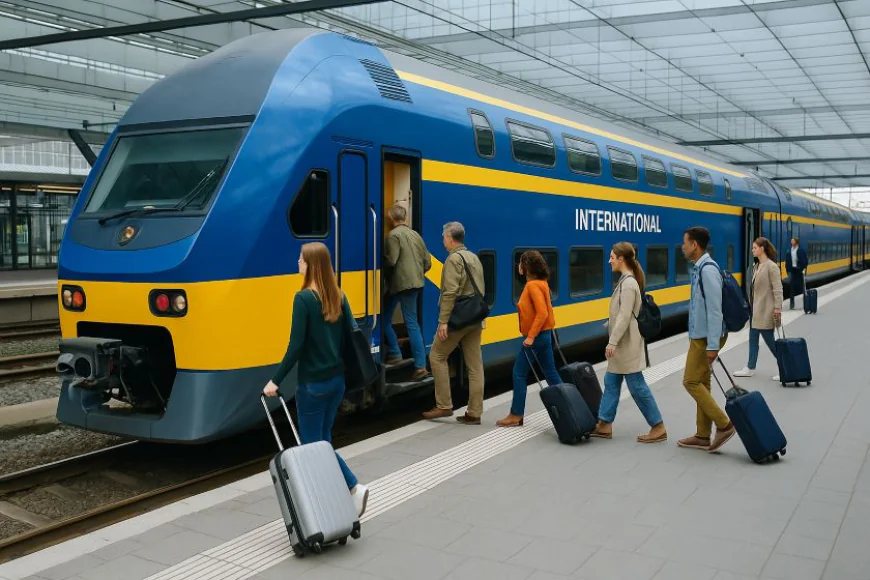

Southern France is about to experience a major transformation in public transportation. Starting June 29, the new Omneo trains will begin operating along the Marseille–Toulon–Nice railway line, introducing a faster, more eco-conscious, and passenger-friendly mode of regional transit. This development is more than just a new fleet on the tracks—it marks a milestone in the French government’s broader plan to modernize regional transport, open competition in public rail services, and deliver sustainable mobility solutions to residents and visitors across the Région Sud.
A Groundbreaking Shift in French Regional Rail
The official unveiling of the Omneo trains took place on May 19, where regional authorities and top industry leaders gathered to showcase the next generation of trains that will soon serve one of France’s most important coastal corridors. Région Sud has taken a bold step by becoming the first region in the country to introduce competition into its regional railway network. This shift is a direct response to long-term goals set by public transit policy—goals focused on improving affordability, expanding service, and making public transport greener and more efficient.
The new trains will be operated by Transdev, working in partnership with the Région Sud council, which remains actively involved in planning, oversight, and service quality. This public-private collaboration is designed to create a well-balanced model where private efficiency meets public responsibility—offering better service without sacrificing accessibility or public value.
More Trains, Lower Fares: A Win for Passengers
Starting July 1, the Marseille–Toulon–Nice line will operate on an improved timetable. Passengers can expect a train every hour on weekdays, which is double the frequency compared to the previous schedule. Weekend services will also increase, offering more flexibility and convenience for those traveling for leisure or family visits.
In addition to better frequency, there’s good news for wallets too—ticket prices will be significantly reduced. These lower fares are meant to encourage more people to choose trains over cars, helping to reduce traffic on the roads while supporting the region’s environmental goals. It’s a step toward making public transportation not only more available but also more appealing and affordable for everyone.
Comfort That Goes Beyond the Basics
The Omneo trains are built with a strong focus on comfort and practicality. The double-decker design maximizes space without sacrificing elegance. Each train offers both first and second-class compartments with modern, ergonomic seating. Spacious luggage racks make traveling with bags easier, while each train also provides dedicated room for up to 12 bicycles, promoting eco-friendly travel options even after passengers leave the station.
But comfort doesn’t stop with seating and space. These trains are equipped with free Wi-Fi, so passengers can work, browse, or stream entertainment during their trip. A built-in entertainment system and light food service onboard ensure that the ride is enjoyable from start to finish, whether you’re commuting to work or exploring the southern coastline on holiday.
Travel Without Barriers
Accessibility has been a top priority in the design of the Omneo fleet. Every train is designed for step-free boarding, which means passengers using wheelchairs or those with reduced mobility can enter and exit independently. This makes the service inclusive for everyone, including elderly passengers, parents with strollers, and travelers with heavy luggage.
The upgraded accessibility features are a reflection of national policies promoting barrier-free mobility across all modes of public transport. The Omneo trains meet these standards while also setting a new benchmark for convenience and dignity in regional rail travel.
Safety and Support on Every Journey
Beyond comfort and accessibility, the safety of passengers remains a cornerstone of the new Omneo service. Trained staff will be present onboard each train to offer support, provide information, and assist with any issues that arise during the journey.
To strengthen passenger security, surveillance will go beyond conventional cameras. Dedicated security personnel equipped with body cameras will patrol the trains, ensuring a visible and responsive presence throughout the ride. This enhanced system builds passenger confidence and reinforces the region’s commitment to providing a secure travel environment.
Modern Specs and Environmental Efficiency
Each Omneo train is 110 meters long and can seat up to 400 passengers. During peak times, the trains can run in pairs, doubling the capacity to accommodate up to 730 passengers—a capacity that is crucial for a high-traffic route like Marseille–Toulon–Nice.
Although the trains are engineered for speeds of up to 200 km/h, existing infrastructure along the route currently limits operations to 160 km/h. However, with ongoing rail modernization projects across France, these trains are future-ready and capable of adapting to upgrades in track conditions and network capabilities.
One of the most significant features of the Omneo fleet is its sustainability. These trains run on green electricity, which dramatically reduces greenhouse gas emissions compared to older diesel trains. By switching to electric traction, Région Sud takes a major step toward cleaner air, lower noise pollution, and a reduced environmental footprint—all of which align with France’s national climate and transport goals.
Maintenance Facility in Nice: A Backbone for Reliability
To keep this high-tech fleet running smoothly, a cutting-edge maintenance center has been built in Nice. Spanning 2,000 square meters, the facility is designed to meet both environmental and operational excellence standards. It uses energy-efficient technologies and eco-conscious design elements while serving as the central hub for train diagnostics, repairs, and scheduled maintenance.
With this facility in place, the fleet is expected to maintain a punctuality rate of over 97%. Fewer breakdowns and smoother operations mean passengers can rely on the service for their everyday needs—no more guessing if the next train will be late.
Public-Private Cooperation Behind the Scenes
The introduction of Omneo trains results from a long-term collaboration between Région Sud, Transdev, and Alstom, the company that manufactured the trainsets. Alstom, a major player in global rail solutions, supplied 16 eight-car trains for this corridor under a comprehensive agreement aimed at delivering efficient, high-capacity regional rail.
Before reaching French tracks, the trains underwent months of rigorous testing at the Velim rail testing center in the Czech Republic. These trials were conducted to ensure the trains meet international standards for safety, speed, and real-world functionality. The successful completion of testing confirms that Omneo trains are not just innovative in design—they’re built to perform under pressure and deliver results every day.
A Model for Regional Transit in the Future
The arrival of Omneo trains represents much more than a fleet upgrade. It signals a cultural and technological shift in how regional transportation in France can—and should—be approached. By putting comfort, reliability, and sustainability at the heart of its public transit model, Région Sud is leading the way in shaping the future of regional mobility.
The Marseille–Toulon–Nice line is now set to become a flagship route, demonstrating what’s possible when infrastructure investment, government leadership, and private expertise come together for the public good. The region’s decision to open rail to competition, invest in modern technology, and focus on passenger experience offers a replicable model for other regions seeking to transform their transportation systems.
Conclusion: Omneo Ushers in a New Era of Train Travel
As the Omneo trains begin their journey through southern France, passengers will notice more than just a new design—they’ll feel the difference in reliability, comfort, safety, and environmental impact. For the people of Région Sud, this is not just about getting from point A to B—it’s about traveling in a way that reflects the values of modern society: cleaner energy, better service, and inclusive mobility for all.
With this rollout, Région Sud doesn’t just catch up with modern rail standards—it sets them. And in doing so, it shows the rest of France and Europe that innovation in public transport can be both practical and transformative. The future of rail has arrived, and it’s boarding now in southern France.