Indian Airlines Fleet Set to Triple in 10 Years: Airbus
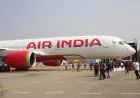
Airbus projects Indian airlines could triple their fleet size over the next decade, driven by surging demand, infrastructure expansion, and aircraft orders.
 Jishan Khan

Indian airlines are on track to triple their fleet size over the next decade, according to Airbus, highlighting the country’s emergence as one of the fastest-growing aviation markets globally. The projection reflects sustained passenger demand, large-scale aircraft orders, and continued investment in airport and aviation infrastructure across India.
Airbus estimates that rapid economic growth, a rising middle class, and improved regional connectivity are driving unprecedented demand for air travel. India has already become the world’s third-largest domestic aviation market, and aircraft manufacturers expect this position to strengthen further as air travel becomes increasingly accessible to a broader segment of the population.
Fleet expansion plans by Indian carriers are already visible through record-breaking aircraft orders placed in recent years. Airlines are prioritizing narrowbody aircraft to serve high-frequency domestic and regional routes, while widebody additions are supporting long-haul expansion to Europe, North America, and Asia-Pacific markets. Airbus sees this balanced growth as critical to supporting both domestic mobility and international connectivity.
Infrastructure development is another key enabler of fleet growth. India is investing heavily in new airports, terminal expansions, and modernization projects to ease congestion and accommodate rising traffic volumes. Improved airport capacity allows airlines to deploy more aircraft efficiently, reduce turnaround times, and expand route networks into underserved cities.
From an operational standpoint, tripling fleet size will require parallel growth in pilot training, maintenance capabilities, and aviation workforce development. Aircraft manufacturers and airlines are increasingly collaborating with Indian partners to build local maintenance, repair, and overhaul capacity, strengthening the country’s aviation ecosystem and reducing reliance on overseas facilities.
Airbus also points to sustainability as a central factor shaping future fleet growth. New-generation aircraft offer improved fuel efficiency and lower emissions, enabling airlines to scale operations while managing operating costs and environmental impact. Fleet renewal, alongside expansion, is expected to remain a priority as airlines retire older aircraft types.
The projected growth underscores India’s strategic importance to global aircraft manufacturers. With long-term demand visibility, India is becoming a cornerstone market for future aircraft programs, supply chain localization, and technology partnerships. This positioning is likely to intensify competition between manufacturers as airlines continue to place large multi-year orders.
While challenges such as airspace constraints, regulatory complexity, and infrastructure readiness remain, Airbus maintains that India’s aviation fundamentals remain strong. Passenger demand continues to outpace global averages, and airlines are aligning fleet strategies to capture this growth efficiently.
If the forecast materializes, a tripling of fleet size would reshape India’s aviation landscape, expanding connectivity, creating thousands of skilled jobs, and reinforcing the country’s role as a major global aviation hub over the next decade.