New England Patriots’ Boeing 767 Flies U.S. Marines to NATO Exercise in Norway
The New England Patriots’ private Boeing 767 was used to transport U.S. Marines to Norway for a NATO exercise, highlighting civil‑military aircraft use.
 Jishan Khan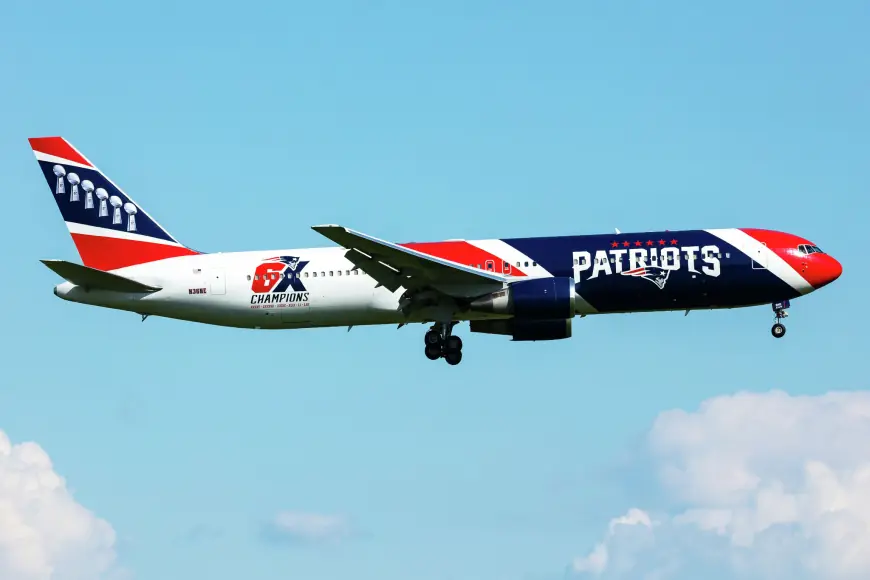

A Boeing 767 aircraft normally associated with the New England Patriots was used in early 2025 to transport United States Marines to Norway for participation in a NATO military exercise, underscoring the occasional dual use of large private jets for civil and military missions.
The aircraft involved — a Boeing 767 registered as N36NE and often seen adorned in the New England Patriots’ team livery — was observed making the transatlantic flight in support of United States Marine Corps movements bound for a cooperative NATO training event hosted in Norway. While the Patriots’ ownership and branding are civilian, the 767 type has long been used by U.S. military charter specialists and contracted aviation providers to move troops, equipment and personnel for exercises, deployments and allied operations, particularly across long distances.
Observers and aviation enthusiasts tracking the flight noted the 767’s activity on flight tracking platforms, showing the aircraft operating with a military charter callsign on legs of the routing consistent with troop transport operations. Such use of privately registered widebody aircraft under military charters is not unprecedented; aircraft of this type have been contracted to augment Department of Defense airlift capacity when commercial options are constrained or to support specific operational requirements. :contentReference[oaicite:0]{index=0}
The Marines’ journey to Norway coincided with a NATO exercise designed to enhance interoperability among allied forces in a challenging northern environment, where cold weather and Arctic conditions provide a demanding backdrop for cooperative training. Norway’s role as host for these exercises reflects both its strategic location and long history of allied engagement in high‑latitude military operations.
The Boeing 767’s participation in the movement illustrates how mixed fleets of government, military and chartered aircraft contribute to the logistics chains supporting allied forces. While larger strategic airlifters such as the C‑17 Globemaster III or C‑5 Galaxy handle a great deal of heavy cargo and troop movement for U.S. forces, contracted widebody jets provide flexibility and capacity on rotational missions that combine space, speed and range without tying up core tactical airlift assets.
For the New England Patriots, the continued visibility of their private Boeing 767 on radar feeds and at international airports has made the aircraft something of a familiar sight among civil aviation observers. Registered to a private entity and maintained to civil standards, the aircraft’s use in a military support context is facilitated by charter arrangements and appropriate regulatory approvals, allowing a civilian jet to be pressed into service for government transport requirements.
The flight also highlights broader patterns in aviation where civilian‑registered aircraft contribute to non‑combat military missions, disaster response operations and large‑scale logistics movements. These operations often involve close coordination between aircraft owners, contract operators, military planners and civil aviation authorities to ensure compliance with safety, security and operational protocols.
In tracking data shared by aviation enthusiasts and spotters, N36NE’s movements through Shannon, Ireland, and onward to Norway served as a clear example of this dual‑use utility. Shannon Airport and other European gateways frequently act as transatlantic stopovers for both military and civilian widebody aircraft, providing refueling, crew changes and logistical support for long‑range flights bound for northern Europe.
While the Patriots’ Boeing 767 remains primarily a private jet associated with team travel and charter activities, its use in support of a NATO exercise by flying Marines to Norway demonstrates the interconnected nature of civil and military aviation operations. Such missions underscore how available airlift capacity is sometimes optimised through chartered use of civil aircraft to meet specific strategic requirements.
As military exercises continue to draw participants from across the alliance, flexibility in transport solutions — blending government aircraft with chartered civilian assets — will remain an important element of allied logistics planning, ensuring that forces can arrive on time and ready for cooperative training and operations.