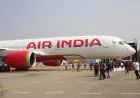
Pakistan Extends Ban on Indian Airline Airspace Access
Pakistan extends its airspace ban on Indian aircraft until February 24, continuing routing disruptions and cost pressures for Indian airlines.
 Jishan Khan

Pakistan has extended its closure of national airspace to Indian-registered aircraft, prolonging a restriction that has been in place since April 2025 and weighing on Indian airline operations and international network planning.
The Pakistan Airports Authority (PAA) issued a fresh Notice to Airmen (NOTAM) on Tuesday confirming that its airspace will remain closed to all aircraft owned, operated or leased by Indian airlines and operators — including military flights — until 5 a.m. Pakistan Standard Time on February 24, 2026.
This latest extension extends the ban beyond its previous January 23 expiration and continues a long-running airspace closure amid prolonged diplomatic tensions with India. The restriction applies from ground level to unlimited altitude over both major flight information regions (FIRs) managed by Pakistan, encompassing Karachi and Lahore airspace.
For Indian carriers, the ongoing ban has operational and economic impact. Airlines such as Air India and IndiGo have had to reroute westbound flights over longer trajectories around Pakistan’s airspace, particularly on services to the Middle East, Europe, the UK and North America. Longer flight paths increase flight time, fuel consumption and crew scheduling complexity — variables that translate into higher operating costs and logistical challenges for network planners.
Air India has previously quantified some of these impacts, estimating significant weekly losses as a result of rerouted flights. In prior extensions of the ban, the airline said that additional flight time forced by avoiding Pakistan’s FIRs was costing more than USD 1 million per week in extra fuel and operational expense.
The airspace closure is part of a broader tit-for-tat diplomatic stand-off between the two South Asian neighbours. Pakistan first closed its airspace to Indian aircraft in April 2025 following heightened tensions related to security affairs in the region. India, in turn, has reciprocated with its own airspace ban on Pakistani aircraft and operators.
Aviation analysts note that secondary effects of the closure have extended beyond route planning. Indian carriers have had to adjust flight schedules and reserve additional crew time to absorb longer duty periods while avoiding Pakistan’s airspace. The cumulative effect has been felt most acutely on ultra-long-haul flights, where bypassing Pakistan adds several hours to flight time and shifts optimal payload planning.
For passengers, the extended ban can translate into higher fares on impacted routes as carriers seek to balance demand with increased operating costs. Airlines may also adjust capacity deployment on certain international sectors in response to persistent overflight restrictions.
The PAA has framed the extension as a security and administrative measure, and it remains subject to further updates through subsequent NOTAMs. Industry observers suggest that sustained bilateral airspace bans could continue to influence route economics, network choices and alliance scheduling decisions for airlines deeply engaged in South Asia-Europe and South Asia-North America traffic flows.