Starlux Airlines Sets Airbus A350‑1000 Service Debut for Mid‑1Q26
Starlux Airlines plans to introduce its first Airbus A350‑1000 widebody into scheduled service in mid‑first quarter 2026 as it scales long‑haul operations.
 Jishan Khan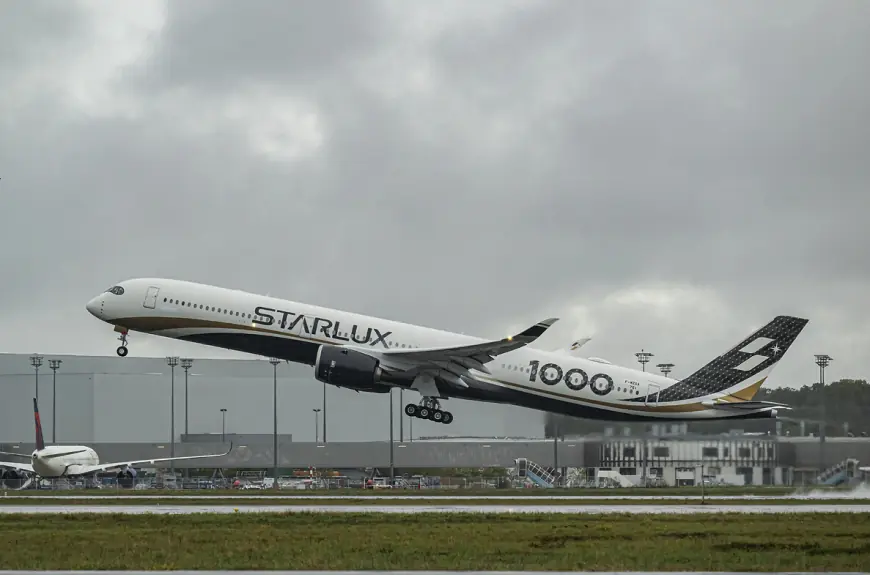

Starlux Airlines has scheduled the service debut of its first Airbus A350‑1000 widebody aircraft for mid‑first quarter 2026, marking a major milestone in the Taiwanese carrier’s fleet expansion and long‑haul network strategy.
The Airbus A350‑1000, the largest and longest‑range member of the A350 family, will reinforce Starlux’s ability to serve long‑distance international markets with enhanced capacity, fuel efficiency and passenger comfort. The aircraft is expected to enter scheduled operations on routes selected for their demand potential and strategic importance in the airline’s expanding global footprint.
Entry into service of the A350‑1000 represents a step change for Starlux, which until now has operated a fleet comprising primarily narrowbody jets and earlier widebody types such as the A350‑900. The introduction of the larger variant supports the airline’s ambitions to compete in premium long‑haul segments, offering additional business and premium cabin products alongside high‑density economy seating.
From an aircraft performance perspective, the A350‑1000 is designed for extended range and lower unit costs compared with previous generation widebody jets, making it suitable for transcontinental and intercontinental services. Its twin‑aisle layout, state‑of‑the‑art aerodynamics and advanced Rolls‑Royce Trent XWB‑97 engines combine to improve fuel efficiency and environmental performance, aligning with both carrier economics and broader sustainability objectives.
Starlux has positioned itself in recent years as a full‑service carrier with an emphasis on quality and passenger experience. The addition of the A350‑1000 is consistent with this positioning, enabling the airline to offer passengers a premium cabin experience on longer sectors and to compete more effectively with other carriers serving similar markets from Taiwan’s Taoyuan International Airport and other gateways.
Operational planners at Starlux have likely considered a range of factors in selecting the mid‑1Q26 timeframe for the A350‑1000 debut, including fleet readiness, crew training, maintenance support infrastructure and market seasonality. The first quarter of the year is traditionally associated with a mix of winter and spring travel demand in the Northern Hemisphere, which can provide a useful ramp‑up period for newly introduced aircraft types.
Introducing a new aircraft type also involves extensive coordination with regulatory authorities, including certification of operations, training of flight and cabin crews, and ensuring maintenance and parts support are in place. Airlines typically undertake rigorous simulation and in‑service trials ahead of the official service launch to ensure a seamless entry into passenger operations.
For network strategy, the A350‑1000 will enable Starlux to consider new long‑haul opportunities and to increase capacity on existing long‑distance sectors. Routes to North America, Europe and select Asia‑Pacific markets that demand greater capacity and range are likely candidates for the aircraft’s deployment. The airline’s ability to match aircraft capability with market demand will be central to maximising revenue potential from the investment.
From a competitive perspective, the introduction of the A350‑1000 places Starlux alongside other carriers that utilise the type for long‑haul growth, including major global airlines that prize the aircraft’s economics and passenger appeal. As Starlux scales its operations, the A350‑1000 may also support codeshare and interline partnerships by offering partner airlines greater capacity and enhanced service offerings on shared routes.
Industry analysts note that fleet modernisation and right‑sizing are crucial for carriers aiming to balance growth with profitability, especially in the post‑pandemic era where demand patterns fluctuate and cost pressures remain a strategic concern. Large, fuel‑efficient widebodies like the A350‑1000 play a significant role in enabling capacity growth without proportionally increasing operational costs.
The scheduled mid‑first quarter 2026 debut of the Airbus A350‑1000 is poised to be a defining moment for Starlux Airlines as it transitions toward a larger, more global airline identity. Its success will depend on execution across operations, customer experience and network alignment, but the move solidifies Starlux’s commitment to long‑haul aviation and premium market competition.