US Travel Chaos to Persist After Winter Storm as Airlines Restore Flights
US travel chaos continues as airlines work to restore schedules after a major winter storm caused widespread cancellations and persistent delays in network operations.
 Ahmed Mainul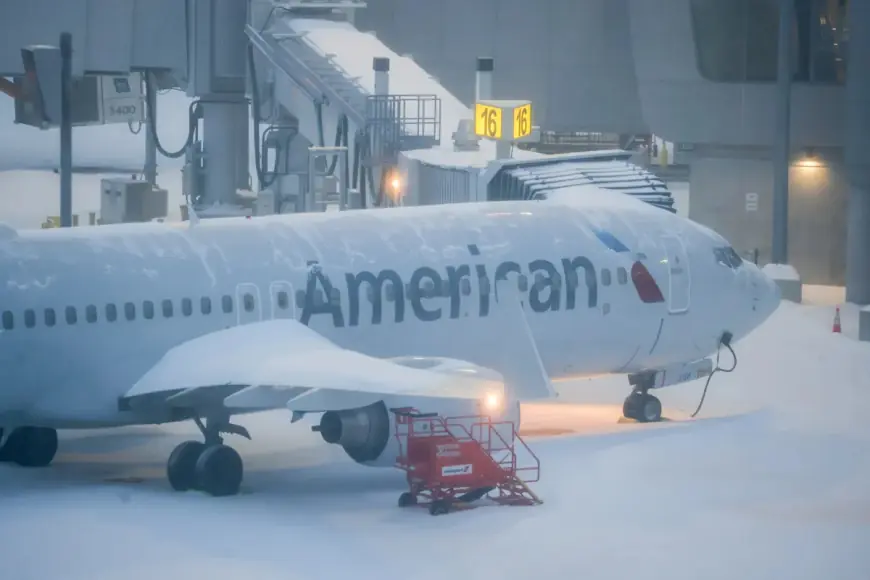

US travel chaos is set to persist this week as major airlines continue efforts to restore flight schedules following a severe winter storm that triggered widespread cancellations and operational disruption across the United States.
The storm, which moved through large parts of the South, Midwest and Northeast late last week, deposited heavy snow, freezing rain and ice, forcing carriers to cancel more than 11,000 flights over the weekend and leaving thousands of passengers stranded as the workweek began.
On Monday, close to 3,900 additional flights were cancelled by mid‑morning as subfreezing conditions and residual impacts from the storm hampered airport operations at key hubs including New York’s LaGuardia, John F. Kennedy and Newark Liberty, as well as Boston Logan and Dallas‑Fort Worth. Displaced crews and out‑of‑position aircraft further complicated restoration efforts.
Airline operations executives described the scale of cancellations as among the most disruptive since the early stages of the COVID‑19 pandemic, highlighting the susceptibility of tightly scheduled networks to extreme weather. With aircraft and crew resources scattered, carriers are prioritising phased schedule recovery over immediate restoration to pre‑storm levels.
Major US carriers including American Airlines, Delta Air Lines, United Airlines, Southwest and JetBlue have issued broad travel waivers to allow passengers to rebook without penalty and deployed additional capacity on selected routes to accommodate displaced travellers. Despite these measures, cascading delays continue to affect aircraft rotations and crew duty time limits.
Airport authorities and ground operations teams have focused on runway de‑icing and snow clearance to support safe operations, but persistent low temperatures and ice accumulation have limited departures at several facilities. The Federal Aviation Administration has issued operational advisories to guide airlines and airports as weather systems continue to impact portions of the Mid‑Atlantic and Northeast.
The economic impact of the disruption extends beyond passenger inconvenience. Airlines face elevated costs tied to extensive de‑icing operations, crew overtime, repositioning flights and additional fuel use. Airports and ancillary sectors such as ground transportation and hospitality are also reporting strain as travellers navigate extended delays.
Cargo operations have been disrupted as well, with delayed freight flights affecting supply chain timelines for companies that depend on air logistics for critical deliveries. Analysts note the interconnected nature of passenger and cargo networks, meaning persistent weather disruption can have ripple effects across broader logistics operations.
For travellers, real‑time monitoring of flight status and flexible planning remain essential as airlines work through operational backlogs. For the airline industry, the lingering travel chaos underscores the operational and economic challenges posed by extreme weather and the need for resilient contingency planning and network flexibility to manage future disruptions.