Whistleblower Report Flags 787 Fleet Defects After AI171 Crash
A new whistleblower submission to the US Senate alleges systemic electrical and system defects in Boeing 787 Dreamliners, raising safety scrutiny after the AI171 accident.
 Jishan Khan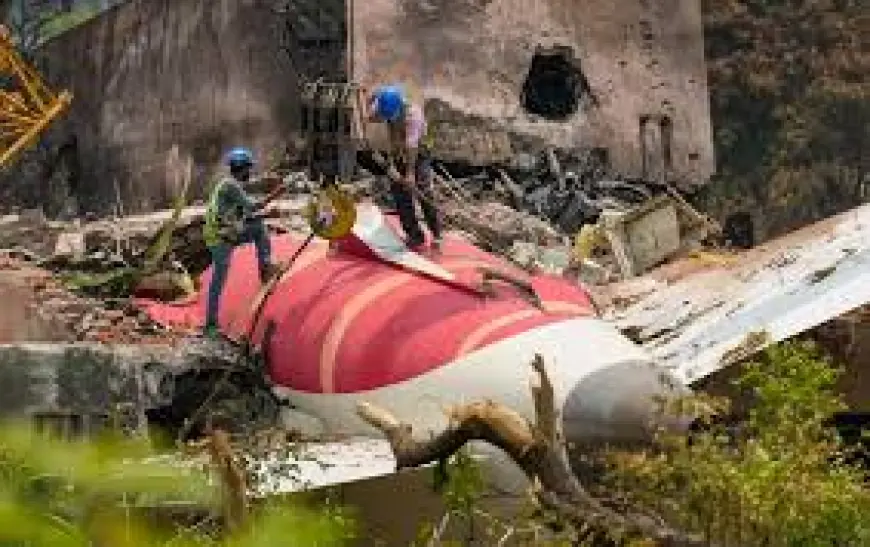

A whistleblower report submitted to the United States Senate Permanent Subcommittee on Investigations has renewed scrutiny of Boeing’s 787 Dreamliner fleet by alleging persistent electrical and system defects in aircraft including the one involved in the fatal Air India flight AI171 crash of June 12, 2025. The Senate submission, presented in January 2026, highlights recurring technical issues that, according to the whistleblower group, extend beyond an isolated incident and may reflect latent defects within the global 787 fleet. :contentReference[oaicite:0]{index=0}
The whistleblower material was provided by the Foundation for Aviation Safety to the Senate panel, which includes lawmakers from both political parties. The report states that the Air India Boeing 787-8 aircraft involved in the AI171 accident exhibited a long history of electrical and avionics faults, including circuit-breaker trips, software anomalies, wire damage, smoke and overheating of power-distribution components, and a significant electrical fire in early 2022 that required major component replacement. :contentReference[oaicite:1]{index=1}
According to the submission, the troubled aircraft — registration VT-ANB — experienced recurring issues in its primary power distribution systems and other core modules throughout its 11-year operational life. The whistleblower characterised these repeated faults as potential “latent defects” — design or manufacturing flaws that remain hidden until catalysed into visible failures — and noted similar electrical system complaints across 787 aircraft registered in the United States, Canada and Australia, suggesting fleet-wide implications. :contentReference[oaicite:2]{index=2}
The 787 Dreamliner has been at the centre of attention since the June 2025 crash that killed 260 people shortly after takeoff from Ahmedabad’s Sardar Vallabhbhai Patel International Airport. That incident, the first fatal accident involving a 787 since its 2011 entry into service, prompted regulatory inspections and a broader safety dialogue across civil aviation sectors. While preliminary accident reports focused on cockpit actions related to fuel control switches, the whistleblower submission emphasises the historical record of systemic faults that might bear on deeper safety evaluations. :contentReference[oaicite:3]{index=3}
The Senate report details incidents such as the January 2022 electrical fire in the aircraft’s primary power panel, requiring an entire unit replacement due to extensive damage. It also documents subsequent groundings and module replacements for faults in landing-gear indication systems and other avionics components. The whistleblower framed this pattern as an example of “normalisation of deviance,” whereby recurring faults become accepted over time, increasing latent operational risk. :contentReference[oaicite:4]{index=4}
US senators on the subcommittee, including figures from both sides of the aisle, have taken the whistleblower material on record. The submission urges federal aviation authorities to make full disclosures of investigative findings — including data related to historical faults — to international counterparts and to consider broader inspections of 787 systems across global operators. It also calls for transparent sharing of technical records with ongoing accident investigations led by bodies such as the Aircraft Accident Investigation Bureau (AAIB) in India. :contentReference[oaicite:5]{index=5}
The report’s implications extend beyond a single airline or operator, touching on fundamental aspects of aircraft design, certification, manufacturing quality and maintenance protocols. Aviation safety advocacy groups have pointed to similar concerns previously raised by insiders about electrical and structural weaknesses in Boeing models, although manufacturers and regulators have often countered such claims with assertions of safety confidence based on rigorous testing and oversight. :contentReference[oaicite:6]{index=6}
Boeing has, in past responses to whistleblower claims, defended the 787’s engineering and in-service performance as compliant with certification standards and devoid of any systemic structural threats to airworthiness. However, the renewed focus driven by the Senate submission underscores the persistent tension between industry assurances and external safety concerns. :contentReference[oaicite:7]{index=7}
Civil aviation regulators — including the US Federal Aviation Administration (FAA) and counterparts in Europe and Asia — are expected to consider the whistleblower evidence in conjunction with formal accident investigations and safety audits. For airlines operating 787 fleets, such scrutiny may translate into enhanced maintenance directives, additional system diagnostics or targeted inspections to pre-empt latent anomalies that could compromise safety margins.
The broader aviation community is awaiting further technical details from ongoing investigations, with both regulators and manufacturers under pressure to reconcile historical operational anomalies with contemporary safety expectations. The whistleblower report to the Senate thus contributes a distinct layer of data and concern, potentially shaping how 787 Dreamliners are evaluated and managed across international networks in the coming years.