Airbus Beluga ST Ends Service With Final Flight in “End of Era”
The last Airbus Beluga ST has completed its final flight, marking the end of the iconic oversize air transporter’s service and a shift to modern logistics.
 Jishan Khan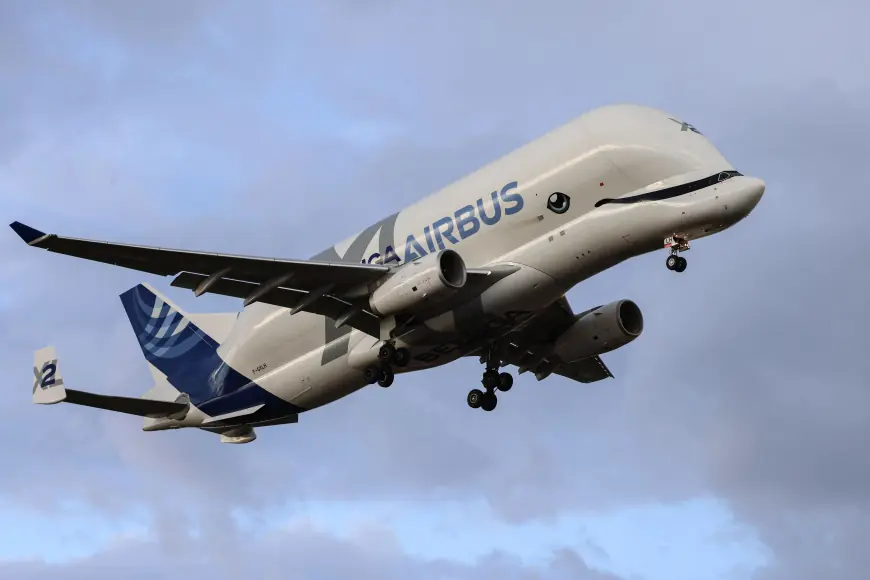

The last Airbus Beluga ST — the distinctive oversize transport aircraft that has served as a workhorse of Airbus logistics for decades — has completed its final official flight, marking the end of an era in specialised cargo aviation.
The Beluga ST, formally designated the Airbus A300‑600ST, was developed in the 1990s to transport large aircraft parts between Airbus facilities across Europe. Its unique “bubble” fuselage allowed it to carry items that could not fit in conventional freighters, including wings, fuselage sections and other oversized assemblies. This capability helped underpin Airbus’ global production system, enabling efficient movement of major components between the company’s manufacturing sites.
Since its introduction, the Beluga ST played a critical role in Airbus’ internal logistics, ferrying outsized loads domestically and internationally. Its operations supported the assembly of a wide range of Airbus models by connecting factories in Germany, France, Spain and the United Kingdom. The aircraft’s distinctive appearance made it an aviation enthusiast favourite at airshows and on spotting ramps.
Over recent years, the Beluga ST fleet saw its missions gradually reduced as newer logistics solutions and more capable aircraft were introduced. Airbus developed the Beluga XL — based on the A330 platform — to succeed the ST fleet with larger capacity and more modern systems. As the Airbus production network evolved, the Beluga XL progressively took over the duties once performed by its predecessor.
The final flight of the last Beluga ST represents both a milestone and a symbolic close to a chapter in aerospace logistics. After decades of reliable service, the ageing ST airframes reached the end of their operational viability due to factors such as maintenance costs, parts availability and the efficiency gains offered by newer transport platforms. The retirement underscores the broader trend in aviation towards fleet modernisation and optimisation.
For pilots, engineers and ground crews who worked with the Beluga ST, its retirement carries emotional weight. The aircraft was more than a cargo transporter — it was a specialised tool uniquely tailored to Airbus’ mission and a visible symbol of innovation in aviation transport. Former crew members and Airbus personnel often recall the challenges and satisfaction of operating such a unique aircraft.
With the Beluga ST now retired, Airbus and its logistics partners will focus fully on the Beluga XL and other modern logistics capabilities. The XL’s larger cargo bay, increased payload, and enhanced range offer greater flexibility for current and future aerospace logistics needs. This transition aligns with broader supply chain strategies aimed at improving efficiency while meeting the demands of a global manufacturing footprint.
Industry analysts note that the retirement of the Beluga ST reflects how niche aircraft roles evolve over time. As airlines and manufacturers invest in next‑generation platforms, specialised legacy types gradually make way for more capable and adaptable models. In the case of the Beluga ST, its successor’s design was driven by the need to support larger aircraft programmes and more complex logistics challenges.
Even as the Beluga ST fleet exits active service, its legacy will endure among aviation historians and enthusiasts. Its contribution to Airbus’ manufacturing success and its iconic silhouette in the skies ensure it will be remembered as a milestone in aerospace logistics history.
For the aviation community, the Beluga ST’s final flight closes a notable chapter but also highlights how innovation continues to shape the industry. As logistic strategies integrate digital planning, advanced aircraft and collaborative networks, the foundation built by specialised aircraft like the Beluga ST will remain part of the narrative of aviation evolution.