Restaurant Brands’ Simplification Strategy and Burger King Turnaround Plan Set to Accelerate Global Growth
Restaurant Brands International outlines its simplification strategy and Burger King turnaround plan aimed at accelerating global growth, improving franchise performance, and boosting shareholder confidence.
 Prajakta Sanjay Warwadkar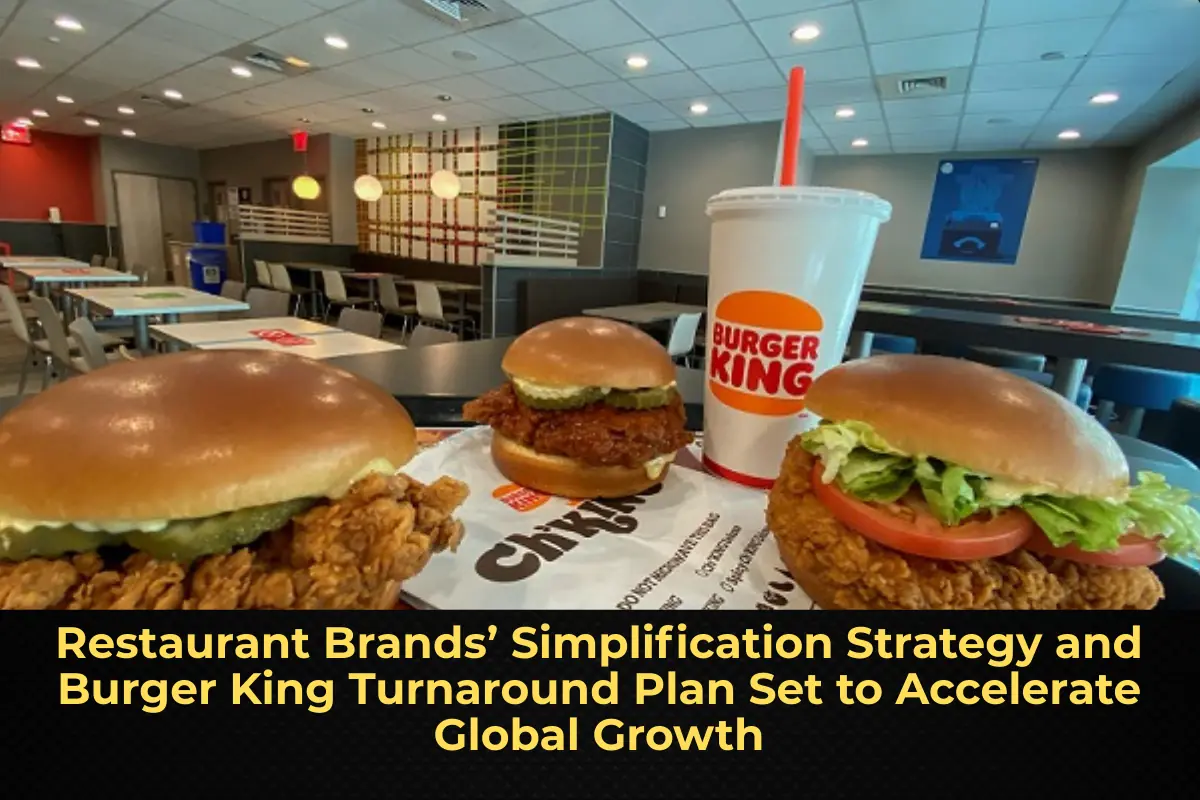

Restaurant Brands International Unveils Strategic Simplification Plan to Drive Long-Term Growth
Restaurant Brands International (RBI), the parent company of Burger King, has introduced a comprehensive simplification strategy alongside an accelerated turnaround plan for Burger King, aiming to strengthen operational performance and unlock sustainable global growth. The move reflects the company’s commitment to streamlining its corporate structure, improving franchisee support, and enhancing brand competitiveness across international markets.
The strategy centers on reducing operational complexity, increasing efficiency, and ensuring sharper focus on core brand priorities. As the quick-service restaurant (QSR) sector faces evolving consumer expectations and intensified competition, RBI’s approach signals a proactive effort to reinforce its market position while delivering stronger financial results.
Driving Efficiency Through Simplification
The simplification initiative is designed to eliminate redundancies within corporate and regional structures, enabling faster decision-making and improved coordination between headquarters and franchise operators. By refining internal processes and reallocating resources more strategically, RBI aims to enhance agility across its global network.
Industry analysts note that large multinational restaurant groups often face operational complexity due to diverse regional markets and brand portfolios. Streamlining governance frameworks and clarifying performance metrics can help align incentives and foster consistent execution across territories.
Burger King Turnaround Strategy Gains Momentum
Central to the broader growth vision is the continued turnaround of Burger King, one of the world’s most recognized fast-food brands. The turnaround plan emphasizes restaurant modernization, improved menu innovation, targeted marketing campaigns, and enhanced franchise profitability.
Investment in store remodeling programs forms a significant component of the strategy. Upgraded restaurant designs, digital ordering kiosks, and drive-thru enhancements are expected to elevate the customer experience while increasing operational efficiency. By refreshing its physical footprint, Burger King seeks to strengthen brand perception and drive higher traffic volumes.
Strengthening Franchise Partnerships
Franchisees remain a cornerstone of RBI’s business model. The company’s updated approach includes expanded operational support, data-driven performance tracking, and financial initiatives aimed at improving unit-level economics. Ensuring that franchise partners achieve sustainable profitability is critical for long-term system-wide expansion.
Enhanced collaboration between corporate leadership and franchise operators is expected to foster more consistent execution of promotional campaigns and product launches. This alignment may prove instrumental in boosting comparable sales growth across key markets.
Capital Allocation and Strategic Investment
RBI’s growth roadmap includes disciplined capital allocation to prioritize high-return investments. Funds are being directed toward restaurant renovations, technology integration, and supply chain optimization. These investments are intended to generate measurable performance improvements and reinforce competitive positioning within the QSR segment.
Digital transformation plays a central role in the strategy. Expanding mobile ordering capabilities, loyalty programs, and delivery partnerships can help drive repeat visits while capturing valuable consumer data. In an increasingly digital-first marketplace, such capabilities are essential for maintaining relevance.
Global Expansion Opportunities
Beyond operational refinement, RBI continues to pursue expansion opportunities in high-growth international markets. Emerging economies, urbanizing regions, and underpenetrated territories offer significant white space for new restaurant development. By combining a simplified organizational structure with a revitalized Burger King brand, the company aims to accelerate new unit openings globally.
Market diversification reduces reliance on any single geography while enabling tailored strategies that reflect local consumer preferences. This balanced expansion model supports resilience amid economic fluctuations.
Competitive Landscape and Market Dynamics
The global fast-food industry remains highly competitive, with established players investing heavily in innovation, pricing strategies, and digital engagement. Consumer demand continues to shift toward convenience, value, and personalization. RBI’s renewed focus on operational excellence and brand differentiation positions it to compete effectively within this environment.
As inflationary pressures impact food and labor costs, efficiency improvements become even more critical. Simplification efforts can reduce overhead expenses, enabling reinvestment into growth-oriented initiatives.
Investor Confidence and Long-Term Vision
The announcement of the simplification and turnaround plans has drawn attention from investors seeking clarity on the company’s long-term direction. Transparent performance targets and measurable milestones are expected to provide greater visibility into progress.
Leadership has emphasized that sustainable growth requires disciplined execution rather than short-term gains. By aligning strategic initiatives with franchisee performance and consumer expectations, RBI aims to build durable shareholder value.
Outlook for the Quick-Service Restaurant Sector
The QSR sector continues to evolve in response to technological advancements and shifting dining habits. Companies that adapt quickly, maintain strong franchise networks, and deliver consistent value are likely to outperform peers.
Restaurant Brands International’s simplification strategy and Burger King turnaround plan reflect a broader industry trend toward operational optimization and targeted brand revitalization. If successfully executed, these initiatives could accelerate system-wide growth and reinforce the company’s position as a leading global restaurant operator.
As implementation progresses, industry observers will closely monitor key performance indicators, including same-store sales growth, new unit development, and franchisee profitability. The coming quarters may prove pivotal in determining the long-term impact of this strategic transformation.