Arajet Breaks Records in 2025, Aims for Over Two Million Passengers in 2026
Arajet posted record performance in 2025 and is targeting more than two million passengers in 2026 while expanding routes across the Americas and beyond.
 Jishan Khan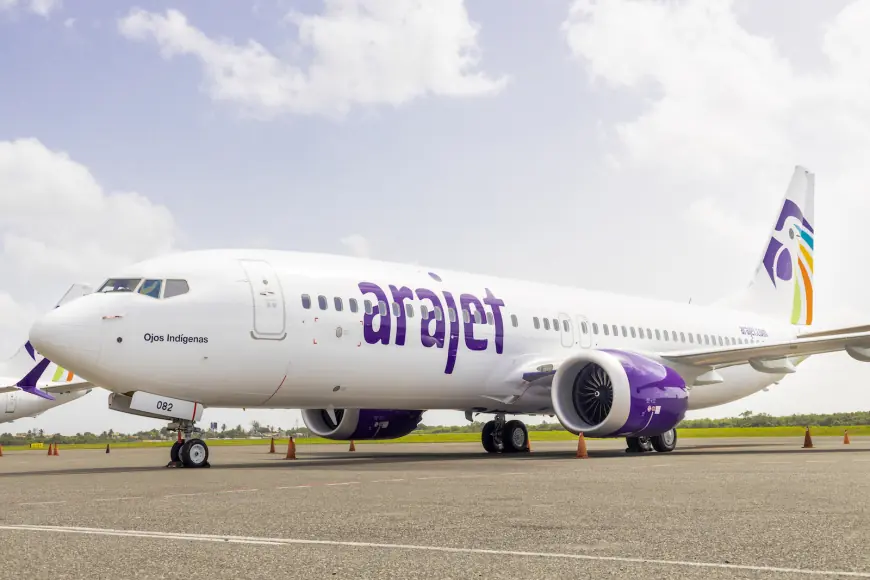
Arajet, the Dominican Republic’s low‑cost carrier, has reported a record performance in 2025 and set an ambitious target of carrying more than two million passengers in 2026, driven by significant network expansion and fleet utilisation improvements. The airline’s operational and commercial milestones reflect its growing influence in Caribbean and international aviation markets.
In 2025, Arajet posted passenger traffic and load factor figures that surpassed its previous performance benchmarks, bolstering its reputation as a dynamic growth airline amid a competitive regional landscape. While exact annual totals have not been disclosed publicly, aviation analysts say Arajet’s growth has placed it among the fastest‑expanding carriers originating from the Caribbean region. The airline attributes its performance to a combination of strong leisure travel demand, competitive fare structures, and strategic expansion into high‑yield markets.
Looking ahead to 2026, Arajet has set a bold target of exceeding two million passengers, a milestone that underscores both its confidence in demand recovery and its expanding route network. The airline’s existing services connect Santo Domingo and Punta Cana with a broad array of destinations across the Americas, including major cities in North, Central and South America. From its bases, Arajet already serves gateways such as Miami, Newark, Bogotá, São Paulo, Cancún, Medellín and Cartagena, catering to a mix of leisure tourists and diaspora traffic. :contentReference[oaicite:0]{index=0}
Arajet’s network strategy emphasises connectivity between the Caribbean and key population centres in the broader Western Hemisphere. Newer services slated for 2026 include expanded frequencies and seasonal routes, designed to capture peak leisure travel windows while responding to emerging business travel demand. By diversifying its destination portfolio, the airline aims to reduce reliance on any single market and build a more resilient route network.
The airline’s growth trajectory has been supported by a modern and expanding fleet of Boeing 737 MAX‑8 aircraft. According to fleet data, Arajet operates more than a dozen MAX‑8 jets with additional aircraft on order, providing both capacity and operational flexibility. The younger average age of its fleet — under four years — also helps limit maintenance costs and supports fuel efficiency, enabling the carrier to compete effectively on unit costs and schedule reliability. :contentReference[oaicite:1]{index=1}
Analysts note that Arajet’s expansion plan aligns with broader Caribbean aviation trends, where carriers are increasingly targeting underserved long‑haul markets and capitalising on transborder connectivity. The geographic position of the Dominican Republic, combined with strong tourism fundamentals, creates favourable conditions for airlines that can link Caribbean leisure hubs with large metropolitan markets in the Americas.
However, rapid growth also presents challenges. As with other fast‑expanding carriers, Arajet must manage the complexities of scaling operations, including crew training, maintenance support, ground operations and regulatory compliance across multiple jurisdictions. Ensuring consistent service quality while integrating new destinations and slots into congested airport systems will test the airline’s operational capabilities.
Another factor shaping Arajet’s 2026 outlook is competitive dynamics. Larger network carriers and low‑cost competitors also eye traffic between the Caribbean and the United States, Latin America and beyond, pressing Arajet to differentiate through pricing, service frequency and ancillary revenue streams. Opportunities in the leisure and VFR (visiting friends and relatives) segments remain robust, but sustaining yield and load factors will require careful capacity discipline.
Infrastructure developments in both origin and destination markets may further influence Arajet’s expansion. Airports in the Caribbean region are investing in terminal enhancements and runway capacity to handle growing international traffic. Improved airport facilities, coupled with tourism‑driven demand, are expected to support higher service frequencies and new route launches.
For 2026, Arajet’s goals reflect an airline transitioning from a regional upstart to a more mature network operator with a clear strategic vision. Exceeding two million passengers would mark a significant milestone in the airline’s evolution and would position Arajet as a leading Caribbean carrier with a broad footprint across the Western Hemisphere.
As passenger numbers grow and competitive pressures evolve, the airline’s ability to maintain operational excellence while scaling its network will be central to achieving its growth targets. Industry watchers will be closely tracking Arajet’s performance metrics, network announcements and strategic partnerships as it implements its ambitious 2026 agenda.