Avelo Extends Charlotte–Concord Flights Through Summer
Avelo Airlines extends its Charlotte–Concord schedule through summer, reinforcing leisure demand strategy and secondary airport utilisation in the US market.
 Jishan Khan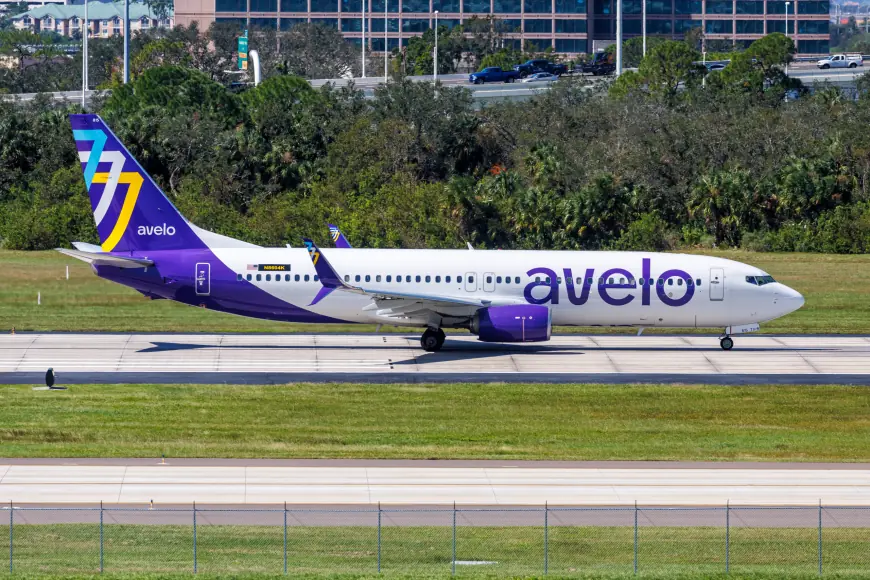

Avelo Airlines has extended its Charlotte–Concord flight schedule through the peak summer travel season, reinforcing the carrier’s strategy of concentrating capacity at secondary airports while targeting price‑sensitive leisure demand in the United States.
The extension secures continued service at Concord-Padgett Regional Airport, located northeast of Charlotte, a market that has increasingly attracted low-cost operators seeking lower operating costs and reduced congestion compared with major hub airports. For Avelo, the decision aligns with its broader network model built around underserved city pairs and point‑to‑point flying.
Avelo operates a fleet of Boeing 737 aircraft, primarily the 737‑700 and 737‑800 variants, configured to support short‑ and medium‑haul leisure markets. Since launching operations in 2021, the airline has steadily expanded its footprint across secondary airports, positioning itself as an alternative to ultra‑low‑cost and legacy carriers at larger metropolitan hubs.
Extending the Charlotte–Concord schedule through summer signals sustained demand on the route and provides schedule certainty during the industry’s highest traffic period. Summer remains a critical revenue window for leisure-focused airlines, particularly those reliant on discretionary travel rather than corporate traffic.
Secondary airports such as Concord offer airlines lower landing fees, faster turnarounds and fewer air traffic constraints. These factors can materially improve aircraft utilisation and cost efficiency, particularly for operators running high‑frequency, point‑to‑point networks. For passengers, the appeal often lies in easier airport access and less terminal congestion.
The move also reflects competitive dynamics in the US domestic market, where airlines continue to calibrate capacity carefully amid evolving demand patterns. While overall domestic traffic has remained resilient, operators have become increasingly selective about where incremental capacity is deployed, favouring routes with demonstrated load factors and yield stability.
Avelo’s continued presence in the Charlotte region places it alongside other low-cost carriers exploring alternative airports around major population centres. This strategy has gained traction as infrastructure constraints and operational complexity at primary hubs continue to rise.
From an airport perspective, extended airline commitments support traffic stability and long‑term planning. Sustained service through the summer season enhances Concord’s role within the regional aviation ecosystem and strengthens its case for further airline engagement.
For Avelo, the schedule extension underscores a disciplined approach to growth, prioritising route performance and operational efficiency over rapid network expansion. As the airline navigates a competitive low‑cost landscape, decisions around seasonal capacity deployment remain central to maintaining financial resilience and market relevance.