Denmark’s F-16s Face Tough Test Supporting Ukraine’s Air Effort
Denmark’s F-16 fighter jets are being committed to Ukraine’s conflict, confronting intense combat airspace and operational challenges in the ongoing war with Russia.
 Jishan Khan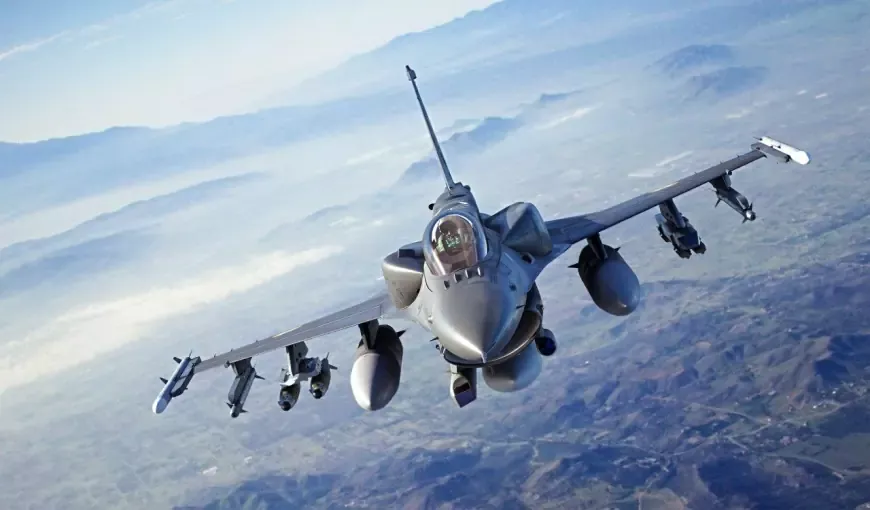

Denmark’s fleet of F-16 fighter jets is entering one of the most demanding operational environments Western fourth-generation fighters have faced, as these aircraft are rolled into support for Ukraine’s defence against Russian air and ground threats.
The Royal Danish Air Force formally retired its F-16 Fighting Falcons in January 2026 after more than four decades of service, transitioning to the fifth-generation F-35A Lightning II fleet. However, rather than mothballing the venerable F-16s, Copenhagen has transferred a substantial portion of the type to allied nations — including Ukraine — where they will remain in frontline use for the foreseeable future. :contentReference[oaicite:0]{index=0}
Denmark’s decision to donate F-16s to Ukraine forms part of a broader international effort to bolster Kyiv’s air combat capability in the face of sustained Russian aerial operations and layered air defences. The move dovetails with a multi-nation F-16 training coalition led by Denmark, the Netherlands and the United States, aimed at readying Ukrainian pilots, engineers and ground crews for Western-style fighter operations. :contentReference[oaicite:1]{index=1}
Deploying F-16s into an active air war exposes these jets to high risk. Ukrainian pilots transitioning from legacy Soviet aircraft have had to master new flight doctrines, avionics and combat employment methods under duress — a task that typically takes Western air crews years to perfect. This steep learning curve, in a high-threat airspace dominated by Russian fighters, air defences and electronic warfare systems, underscores the difficulty of using 1970s-era fourth-generation platforms in a modern contested battlespace. :contentReference[oaicite:2]{index=2}
Ukraine’s air force, long without Western fighter jets prior to F-16 deliveries, has had to reorganise its pilot training pipelines and integrate these aircraft into existing tactical frameworks as quickly as possible, while continuing to face intense operational demand from Russian aviation assets. Analysts note that even when properly trained, Ukrainian crews will be up against integrated air defence systems, long-range surface-to-air missiles and high performance adversary aircraft that dominate the region’s contested skies. :contentReference[oaicite:3]{index=3}
The F-16’s role in the Ukraine conflict is a strategic decision informed both by necessity and by international political will. Previous Western restrictions on how Ukrainian forces could employ supplied aircraft and weapons — particularly restrictions on striking targets deep within Russian territory — have further complicated operational planning. Such constraints can expose jets to higher risk by limiting tactical options. :contentReference[oaicite:4]{index=4}
For Denmark, the transfer of its F-16s represents both a closure of a national chapter — phasing out a cornerstone of its air defence — and a continuation of that platform’s service under allied flags. Denmark’s F-16s have already been delivered in part to Argentina and to Ukraine, with further transfers planned as part of allied support programmes. :contentReference[oaicite:5]{index=5}
The airspace over Ukraine and along its eastern front remains one of the highest-intensity zones of combat aviation since World War II, with Russian aircraft sorties, air defence networks and electronic warfare systems presenting persistent threats. F-16 pilots flying these jets must confront a tactical environment defined by adversary capability depth and saturation, which places premium value on situational awareness, integrated sensor use and cooperative tactics. :contentReference[oaicite:6]{index=6}
Whether Denmark’s donated F-16s will decisively shift combat dynamics remains uncertain, but their deployment signals a deepening of Western material support to Ukraine’s air defence and counter-air efforts. As these aircraft equip Ukrainian units, the broader coalition’s training, logistics, and maintenance frameworks will determine how effectively they are employed in one of Europe’s toughest current wars. :contentReference[oaicite:7]{index=7}