Goa Govt Offers ₹2L Incentive per New Flight to Attract Airlines
Goa government unveils ₹2 lakh incentive per new flight to lure airlines and boost connectivity, targeting tourism growth and airport utilisation.
 Jishan Khan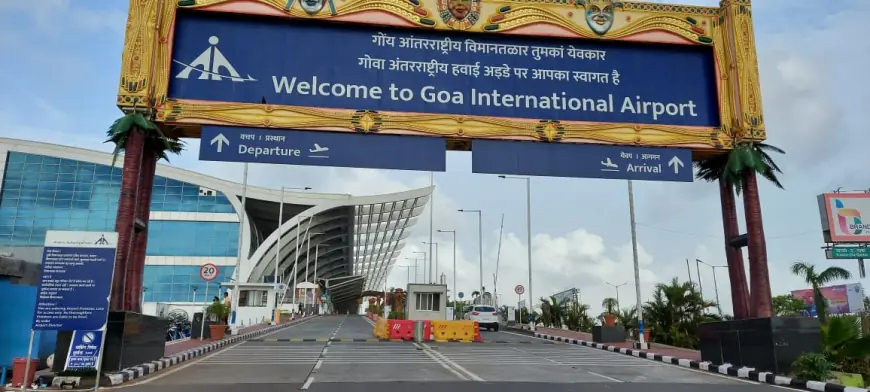

The government of Goa has introduced a new incentive scheme offering up to ₹2 lakh for every new flight operation to and from Goa’s airport, a bid to expand air connectivity and stimulate tourism and business travel in the coastal Indian state.
Under the policy, which forms part of the state’s aviation and tourism strategy, airlines launching scheduled services to Goa that were not previously operating on those city pairs will be eligible for a one-time grant of ₹2 lakh per flight. The incentive is aimed at encouraging carriers to introduce new routes, particularly from underserved and emerging markets, thereby strengthening Goa’s linkages with major domestic and international markets.
Goa’s aviation ecosystem is heavily reliant on air access to sustain inbound tourism, a key economic driver for the region. The state’s tourism department has cited market data showing that enhanced air connectivity correlates with higher visitor arrivals, hotel occupancy and business activity, especially during peak and shoulder seasons. By offering targeted incentives, the government aims to reduce the commercial risk borne by airlines when opening new routes.
Airline executives typically base new route decisions on projected yield, operational costs, competitive landscape and secondary destination demand. Small incentives such as per-flight grants can improve a new service’s early-stage economics, offsetting initial marketing or slot acquisition costs and shortening the break-even timeline for route launches.
The incentive scheme covers flights operated from Goa’s main airport — Dabolim Airport in Vasco da Gama — and the Mopa International Airport near North Goa, which has been positioned as a catalytic gateway for future growth. Authorities expect that the addition of new routes, particularly from tier-2 and tier-3 cities, will distribute visitor arrivals more evenly and support economic diversification beyond core tourism zones.
Officials in Goa pointed to similar incentive models used by other Indian states and international destinations where aviation access is strategically important. Such policies have been known to influence airline network planning when coupled with broader marketing partnerships and airport capacity enhancements.
For airlines, eligibility criteria include flight frequency commitments and sustainability of services over initial seasons. The scheme does not cover all operating costs but provides a financial contribution tied to service initiation, requiring carriers to demonstrate that new flights are commercially viable even after incentives lapse.
From an airport operations perspective, increased flight activity can drive higher landing fees, apron utilisation and ancillary revenue streams such as ground handling and passenger services. Enhanced connectivity also supports cargo opportunities, which are increasingly relevant for regions seeking to expand beyond passenger travel.
Tourism stakeholders have welcomed the initiative as a pragmatic tool to improve connectivity, particularly from non-metro and international points with latent demand. Strong air connectivity is viewed as essential for positioning Goa competitively against other leisure destinations, where carriers have historically prioritised capacity.
However, some industry analysts caution that incentives should be complemented by long-term demand development strategies, including marketing support, seasonal scheduling alignment and stakeholder collaboration to ensure new routes maintain sustainable traffic levels beyond initial launch periods.
For airlines evaluating expansion into Goa, the incentive adds a marginal benefit to route economics but remains one of several factors in network decision-making. Continued dialogue between state authorities, airport operators and airline planners will be required to align future incentives with broader connectivity goals and ensure that new air services contribute meaningfully to regional aviation growth and economic outcomes.