Jiaxing Airport Opens to Civilian Traffic as China Targets Regional Air Cargo Growth
China’s Jiaxing Airport has opened to civilian operations with a cargo‑led strategy, strengthening regional logistics capacity in the Yangtze River Delta.
 Jishan Khan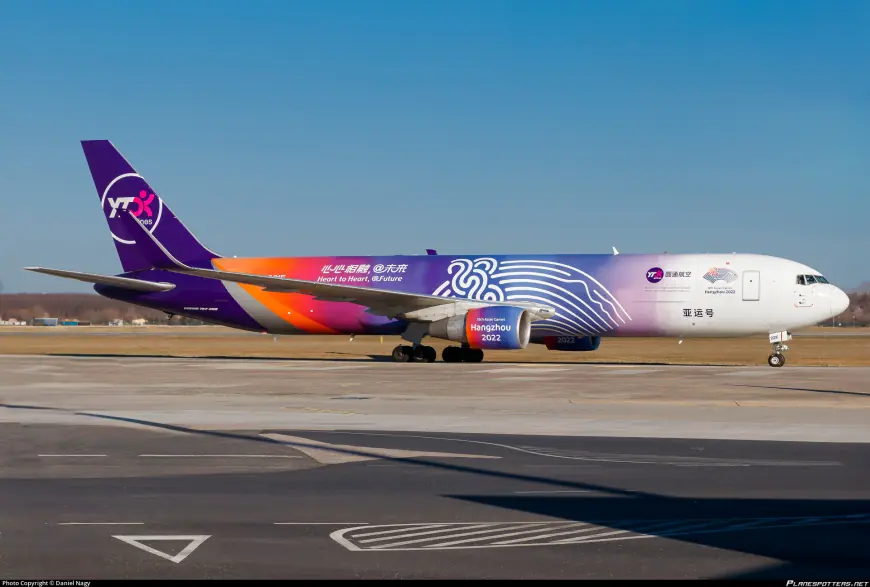

Jiaxing Airport in eastern China has officially opened to civilian air traffic, marking a strategic shift toward cargo‑focused aviation development aimed at strengthening regional logistics capacity in the Yangtze River Delta.
Located in Zhejiang province, the airport had previously operated under restricted use, primarily supporting military and limited government operations. Its transition to civilian status positions Jiaxing as a new node in China’s expanding regional air cargo network, supporting freight movement linked to manufacturing, e‑commerce and high‑value industrial supply chains.
The airport’s initial operational focus will centre on dedicated cargo services rather than large‑scale passenger traffic. Authorities view the move as aligned with national aviation policy prioritising specialised regional airports that relieve congestion at major hubs while supporting industrial clusters and time‑sensitive logistics.
Jiaxing lies within one of China’s most economically dense regions, situated between Shanghai, Hangzhou and Suzhou. The area hosts a concentration of export‑oriented manufacturing, technology firms and cross‑border e‑commerce operators, creating sustained demand for air freight capacity and multimodal logistics integration.
Infrastructure at Jiaxing Airport has been configured to support narrow‑body and medium wide‑body freighter operations, with apron space, cargo handling facilities and ground connectivity designed for rapid turnaround. The airport is expected to accommodate operators using aircraft such as the Boeing 737 freighter, Airbus A321P2F and similar platforms commonly deployed on regional cargo routes.
Chinese aviation planners increasingly see secondary airports as critical to long‑term cargo growth, particularly as primary hubs like Shanghai Pudong face slot constraints and operational saturation. By decentralising freight flows, authorities aim to improve network resilience and reduce bottlenecks in peak operating periods.
The opening of Jiaxing to civilian traffic also reflects broader policy objectives under China’s civil‑military airport integration framework, which seeks to unlock underutilised infrastructure for commercial use while maintaining strategic oversight. Several regional airports across the country have undergone similar transitions in recent years.
For cargo airlines and logistics providers, Jiaxing offers potential advantages including lower operating costs, faster ground handling and proximity to manufacturing centres without the congestion associated with larger metropolitan airports. Industry analysts note that such airports can be particularly attractive for overnight express, e‑commerce fulfilment and regional feeder operations.
While passenger services are not the immediate priority, aviation officials have indicated that limited commercial flights could be introduced in later phases, subject to demand assessments and regulatory approvals. Any passenger expansion would likely focus on regional connectivity rather than long‑haul operations.
The development of Jiaxing Airport underscores China’s continued investment in aviation infrastructure as a tool for economic growth and supply chain efficiency. As air cargo demand remains structurally elevated, particularly for high‑value and time‑critical goods, regional airports like Jiaxing are expected to play a growing role in the country’s logistics ecosystem.