Korean Air and Asiana Sue Government Over $45 Million Fine in Merger Approval Dispute
Korean Air and Asiana Airlines have filed a lawsuit challenging a $45 million government fine linked to merger approval conditions and compliance disputes.
 Jishan Khan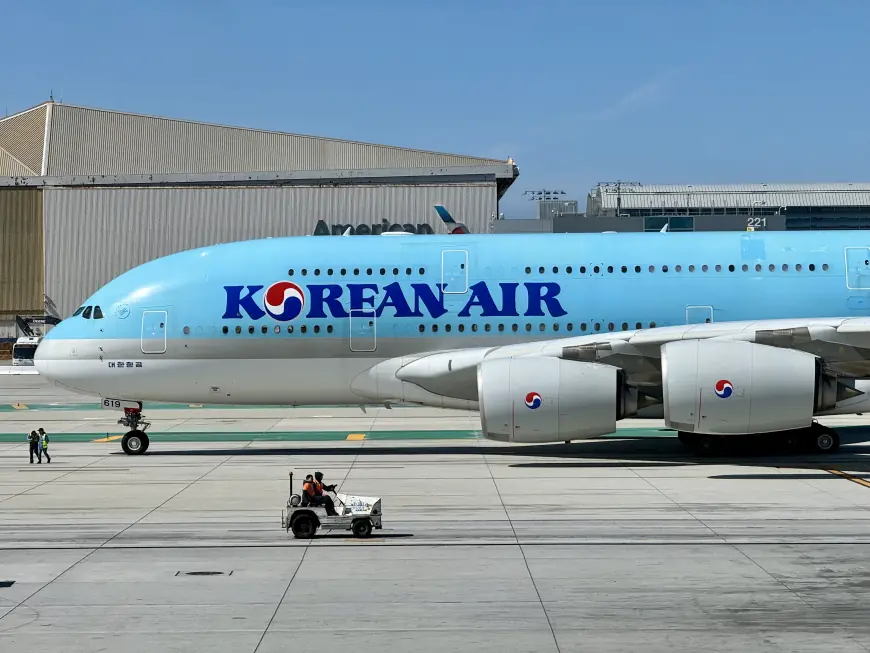

Korean Air and Asiana Airlines have filed a lawsuit against the South Korean government, challenging a combined $45 million fine imposed over alleged violations tied to merger approval conditions, escalating regulatory tensions surrounding one of Asia’s most closely watched airline consolidations.
The fines were issued by South Korea’s Fair Trade Commission, which concluded that the airlines breached commitments made during the approval process of Korean Air’s acquisition of Asiana Airlines. The regulator cited violations related to capacity controls and pricing behaviour on certain international routes during the integration period.
In court filings, the airlines argue that the penalties are excessive and misinterpret operational decisions made under volatile market conditions, including fluctuating post‑pandemic demand and capacity constraints driven by aircraft availability and crew limitations. The carriers maintain that their actions were commercially justified and did not undermine competition.
The lawsuit marks a significant development in the ongoing merger process, which aims to combine South Korea’s two largest full‑service carriers into a single national champion. The transaction has already cleared multiple international regulatory hurdles, including approvals from competition authorities in the European Union, Japan and the United States, subject to various remedial measures.
Korean Air’s acquisition of Asiana is intended to stabilise the latter’s finances after years of losses and reduce structural inefficiencies in the Korean aviation market. Together, the airlines operate a combined fleet exceeding 240 aircraft, including Boeing 787 Dreamliners, Airbus A350s and wide‑body freighters supporting South Korea’s export‑driven economy.
Regulators imposed behavioural conditions during merger approval to prevent fare increases and capacity reductions on overlapping routes. The Fair Trade Commission alleges that the airlines failed to fully comply with these commitments, prompting enforcement action and financial penalties.
Industry observers note that the dispute highlights the complexity of airline mergers, particularly in markets where consolidation intersects with national interest, competition policy and global regulatory scrutiny. Legal challenges of this nature could prolong integration timelines and create uncertainty for network planning, fleet harmonisation and labour integration.
The outcome of the case could also set a precedent for how competition authorities enforce post‑approval commitments in future airline mergers across Asia. Investors, aircraft lessors and alliance partners are closely monitoring the dispute for signals on regulatory risk and compliance expectations.
Despite the legal action, Korean Air has stated that integration planning with Asiana continues, subject to regulatory timelines and judicial outcomes. Analysts caution that prolonged litigation could divert management focus and delay synergy realisation, although the strategic rationale for consolidation remains intact.
The court’s ruling will be pivotal in determining not only the financial liability faced by the airlines but also the broader regulatory framework governing airline mergers in South Korea’s aviation sector.