Taj Bangalore Expansion by Morphogenesis Redefines Luxury Transit Hospitality at Kempegowda International Airport
Taj Bangalore, designed by Morphogenesis, unveils a stunning architectural expansion at Kempegowda International Airport. The new 220-room extension integrates sustainability, culture, and modern design to redefine luxury transit hospitality in Bengaluru.
 Munni Khatun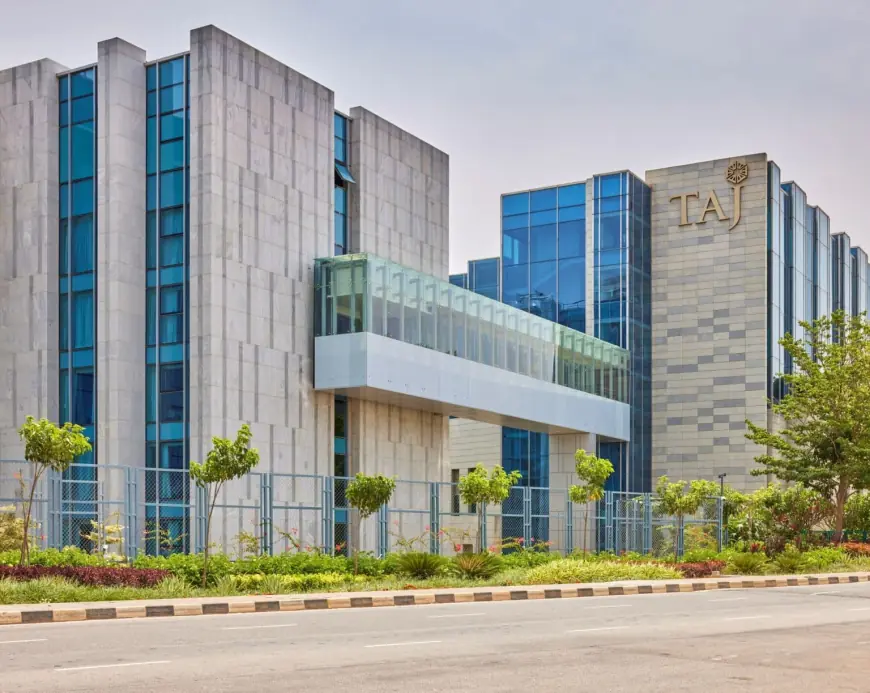

Taj Bangalore by Morphogenesis Redefines Luxury Transit Hospitality at Kempegowda International Airport
Taj Bangalore, designed by acclaimed architecture firm Morphogenesis, sets a new benchmark for transit hospitality within Kempegowda International Airport (BIAL). This landmark expansion — a collaboration between Taj Hotels and Bengaluru International Airport Limited (BIAL) — addresses the rising demand for premium airport accommodation while exemplifying India’s evolving design ethos.
The newly added 220 rooms and suites, including premium categories, have been strategically designed to offer guests maximum privacy and panoramic runway views, ensuring seamless design continuity with the existing structure while enhancing spatial efficiency and guest comfort.
Architectural Language and Spatial Planning
The architectural expression adopts a C-shaped form, maximizing natural light and runway vistas. Morphogenesis draws inspiration from traditional South Indian courtyard typologies, crafting a design that harmonizes contextual heritage with contemporary functionality.
Both phases of the hotel are connected through a ground-level corridor, integrating lobbies to enable smooth operational flow. A third-level bridge adds visual drama while serving as a functional connector, offering striking views across the airport’s landscape — an architectural gesture that underscores the hotel’s identity as both a gateway and destination.
Atrium as the Symbolic and Spatial Core
At the heart of the design lies a five-level atrium, illuminated by a skylit roof and anchored by a sculptural installation inspired by the banyan tree — a nod to Bengaluru’s moniker, “The Garden City.”
This luminous central space, surrounded by landscaped sunken courts and open dining areas, creates a serene transition between movement and stillness — echoing the Taj philosophy of balance. The fifth-floor semi-open restaurant, inspired by traditional Indian pavilions, blurs the boundaries between interior and exterior, offering guests a unique dining experience with panoramic runway views.
Materiality and Interior Expression
The interior palette celebrates Indian craftsmanship and regional context. Using Serpeggiante marble, locally sourced Sadarhalli granite, and warm wooden finishes, the hotel establishes a tactile and visual link to Karnataka’s natural landscape.
Hues of green and blue reflect the region’s lakes and hills, while custom furnishings and artisan-made carpets evoke the richness of local craftsmanship. Curated artworks by regional artists enhance the narrative of place, making every space an expression of Bengaluru’s cultural identity.
Environmental Response and Sustainability
Sustainability is woven into every layer of the design. The facade’s rhythmic vertical planes, alternating between granite and glass, enhance thermal performance and aesthetics.
The use of locally sourced materials minimizes embodied energy, while passive design strategies such as self-shading, natural ventilation, and optimal orientation ensure reduced energy consumption and improved comfort. This approach aligns with Morphogenesis’ philosophy of sustainable luxury, where form and performance co-exist harmoniously.
Integrating Travel, Culture, and Sustainability
The Taj Bangalore expansion stands as a model for airport-oriented development, merging operational efficiency, environmental responsibility, and cultural depth.
By integrating hospitality, architecture, and sustainability, the project captures the dual spirit of Bengaluru’s technological dynamism and cultural heritage. Morphogenesis’ thoughtful spatial planning establishes a precedent for future airport hotels that emphasize human experience, regional identity, and ecological intelligence.
A Landmark in Airport Hospitality Design
Through this collaboration between Taj Hotels and BIAL, Taj Bangalore emerges not just as a hotel, but as a living showcase of Indian design innovation. The expansion represents a fusion of tradition, technology, and timeless elegance, reinforcing Bengaluru’s reputation as both a global hub and cultural heart of India.