Etihad CEO Says India Key Market, Ready to Expand If Traffic Rights Open Up
Etihad’s CEO says India is a key aviation market and the airline is ready to expand flights if bilateral traffic rights are made available.
 Jishan Khan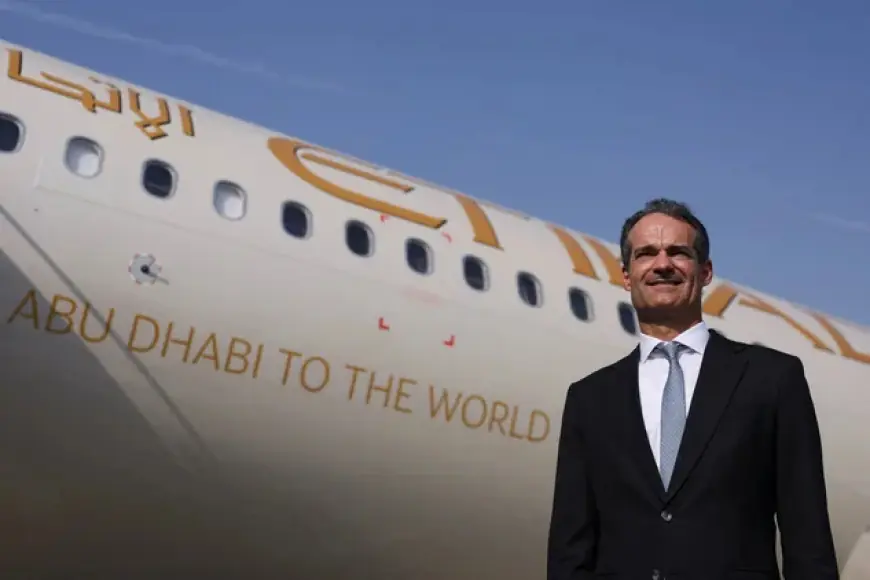

Etihad Airways’ Group Chief Executive Officer Antonoaldo Neves has reaffirmed India’s strategic importance to the airline and stated that Etihad is ready to expand its flight network in the Indian market if additional bilateral traffic rights are granted. The comments came on the sidelines of the Wings India 2026 aviation summit in Hyderabad, where global airline leaders and policymakers are discussing connectivity, partnerships and growth opportunities.
Neves highlighted that India remains one of the airline’s key growth markets despite current caps on traffic entitlements, underscoring the size and potential of passenger flows between India and the United Arab Emirates. “India is important for us,” he told reporters, adding that the carrier currently carries around 3.7 million passengers annually on India routes, with approximately 1.9 million inbound into India. He emphasised that this figure dispels the misconception that Etihad primarily carries passengers away from India, explaining that a majority of flows — particularly leisure and visiting friends and relatives traffic — come into the country.
However, Neves noted that Etihad’s expansion in India has been constrained by bilateral traffic rights, with entitlements on the UAE–India air services largely utilised by existing carriers. “In 2025, we did not grow in India because the traffic rights are all taken. It’s not a concern. It’s just a fact,” he said, reflecting on the practical limitations imposed by existing bilateral agreements and allocation caps.
The CEO emphasised that while Etihad is not retreating from the Indian market, the carrier has looked at alternative markets where rights are available, including routes to Thailand, Hong Kong and across Europe. “If I don’t have traffic rights in India, I fly to Thailand, I fly to Hong Kong,” he said, underscoring the need for flexibility in global network planning when bilateral entitlements are fully utilised.
Neves also pointed out that significant seat entitlements remain unexploited on the Indian side, noting that Indian carriers could operate more flights to Abu Dhabi under the existing framework. “There are still about 10,000 seats per week available on the Indian side. Indian carriers can add four to five daily flights to Abu Dhabi today, and we welcome that,” he said. The CEO suggested that utilising these remaining entitlements could serve as a foundation for future discussions on expanding overall rights.
Looking ahead, Neves expressed optimism about the potential for change within the next six months, anticipating that discussions around additional entitlements could be unlocked once existing allocations are fully deployed. He framed traffic rights as a catalyst for mutual growth rather than a barrier, encouraging Indian carriers to maximise their available entitlements to Abu Dhabi in order to stimulate reciprocal opportunities.
The remarks reflect Etihad’s broader strategy of balancing growth in established markets with flexibility to pursue opportunities elsewhere when regulatory constraints arise. While India accounts for an estimated 15–20% of future growth plans, Neves reiterated that the airline remains prepared to adapt its network strategy, whether that involves expanding services in India or reorienting capacity toward other high‑potential regions.
Experts say that such discussions around traffic rights are central to liberalising air services between nations, and that additional entitlements could pave the way for increased seat capacity, new routes and enhanced connectivity between India and the Middle East. For Etihad, securing these rights could complement existing partnerships, enhance tourism flows and strengthen trade links between the regions.
India’s aviation market continues its rapid growth trajectory, with domestic and international passenger volumes rising year on year. As carriers like Etihad watch this development, decisions around bilateral agreements and traffic rights will play a significant role in shaping future network expansions and competitive dynamics.