Jack in the Box Board Fight Ends as Olo Launches New Consumer Ordering App and Slutty Vegan Continues Expansion Momentum
Jack in the Box resolves a shareholder proxy fight, Olo launches a consumer-facing ordering app for restaurant brands, and Slutty Vegan continues gaining momentum in the restaurant industry.
 Prajakta Sanjay Warwadkar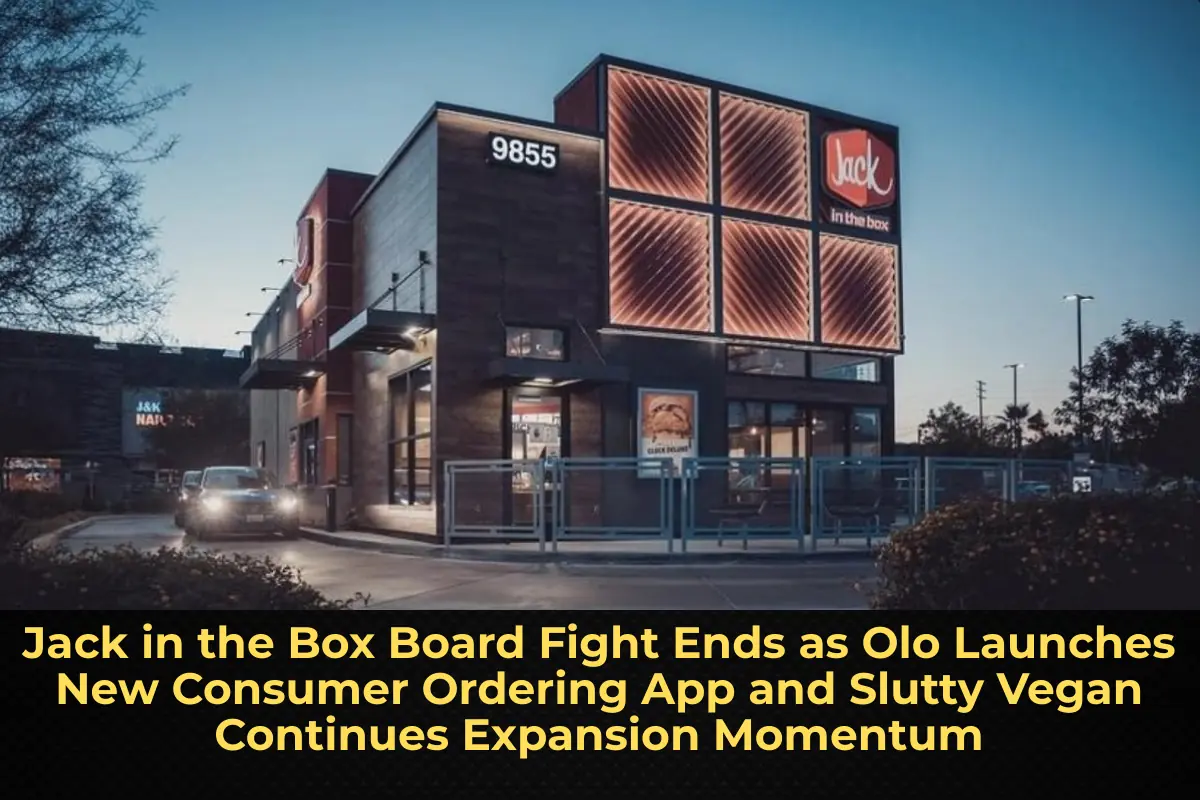

Jack in the Box Navigates Boardroom Changes Amid Challenging Industry Conditions
The quick-service restaurant industry continues to evolve rapidly as companies face financial pressures, technological disruption, and shifting consumer expectations. Recent developments involving Jack in the Box, restaurant technology company Olo, and fast-growing vegan concept Slutty Vegan highlight how brands across the restaurant landscape are adapting to new realities.
From corporate governance battles to digital ordering innovations and bold restaurant expansion strategies, these developments illustrate the ongoing transformation taking place across the hospitality and foodservice sector.
Jack in the Box Resolves High-Profile Proxy Fight
Jack in the Box recently concluded a closely watched proxy fight with activist investor Sardar Biglari, marking a significant moment in the company’s corporate governance. During the company’s 2026 annual shareholder meeting, investors ultimately voted to re-elect all ten of the company’s board nominees.
The vote effectively ended the immediate challenge from Biglari, who had sought significant changes to the company's leadership structure and board composition. Although the investor did not succeed in replacing directors, the proxy battle highlighted shareholder concerns regarding the brand’s recent financial performance and strategic direction.
The conflict emerged during a difficult period for the quick-service chain. In 2025, the company experienced declining same-store sales and shrinking profit margins, raising questions among investors about the company’s ability to maintain competitiveness in an increasingly crowded fast-food market.
Despite the tensions surrounding the proxy contest, one notable leadership change did occur following the annual meeting.
Leadership Transition at the Board Level
Independent board chair David Goebel decided not to seek re-election, stepping down from the leadership role after years of service to the company. The board selected Mark King to succeed him as chair.
King officially assumed the role toward the end of February, signaling a new phase of governance for the restaurant company. Leadership transitions often occur during periods of shareholder pressure, as companies attempt to demonstrate responsiveness to investor concerns while maintaining continuity in strategy.
For Jack in the Box, the new leadership structure arrives at a time when the brand must focus on improving financial performance and strengthening its market position in the highly competitive quick-service segment.
The chain faces competition not only from traditional burger brands but also from emerging fast-casual players and technology-driven food delivery platforms.
Olo Introduces Consumer-Facing Ordering App
While legacy restaurant brands work through governance challenges, restaurant technology providers are moving aggressively to reshape how customers interact with foodservice brands.
Olo, a leading digital ordering and restaurant technology company, has announced the launch of its first consumer-facing ordering app. The new platform represents a significant shift for the company, which has historically operated as a backend technology provider for restaurant chains.
The newly introduced Olo App is designed to aggregate restaurant brands that already use the company’s technology infrastructure. At launch, the app is expected to feature approximately 500 restaurant chains.
This large initial network reflects the company's extensive client base and positions the app as a potentially powerful new player in the digital food ordering space.
A New Type of Restaurant Ordering Platform
Olo is positioning the new application as what it calls a “second-party ordering channel.” Unlike third-party delivery platforms that control customer relationships and charge significant commissions, the Olo App is designed to help restaurants maintain stronger control over customer data and digital ordering experiences.
In the current restaurant technology landscape, third-party delivery services such as app-based aggregators dominate digital ordering. However, many restaurant operators have expressed concerns about high fees and limited control over branding and customer information.
Olo’s new platform aims to offer an alternative approach.
The app allows customers to create personalized homepages where they can select and follow their favorite restaurant brands. This customizable interface enables users to quickly reorder from preferred restaurants while discovering other brands within the same digital ecosystem.
By aggregating restaurant partners without positioning itself as a traditional third-party marketplace, the platform attempts to balance convenience for consumers with greater ownership for restaurant operators.
Implications for the Restaurant Industry
The introduction of the Olo App reflects a broader trend across the hospitality industry toward direct digital engagement with customers. Restaurants increasingly seek ways to reduce dependency on large delivery aggregators while still offering seamless online ordering experiences.
Technology companies serving the restaurant sector are therefore focusing on tools that allow brands to maintain their own digital identity and customer relationships.
If successful, the Olo App could reshape how restaurants approach digital ordering strategies. Instead of relying solely on large third-party marketplaces, restaurants may begin exploring hybrid models that combine direct ordering channels with technology platforms designed to support brand ownership.
For consumers, the platform could simplify the process of discovering and ordering from multiple restaurant brands through a single application.
Slutty Vegan Continues Building Cultural and Culinary Momentum
Alongside corporate governance changes and digital innovation, the restaurant industry is also seeing continued growth from emerging brands that resonate strongly with modern consumers.
One such concept is Slutty Vegan, a plant-based burger brand that has quickly built a national reputation for its bold marketing, unique brand voice, and mission-driven approach to food service.
Founded by entrepreneur Pinky Cole, the brand has attracted widespread attention not only for its vegan menu but also for its strong cultural identity and community engagement.
A Distinctive Brand Strategy
Slutty Vegan stands out in the competitive restaurant landscape through its unconventional branding and energetic customer experience. The company’s restaurants often feature vibrant atmospheres, playful menu names, and a strong emphasis on creating memorable dining moments.
This approach has helped the brand cultivate a passionate fan base and significant social media visibility.
Unlike traditional fast-food chains that rely primarily on standardized branding and national advertising campaigns, Slutty Vegan has leveraged community engagement and digital buzz to fuel its growth.
The brand’s success demonstrates how emerging restaurant concepts can capture consumer attention by combining culinary innovation with cultural storytelling.
The Rise of Plant-Based Dining
The continued growth of plant-based restaurants like Slutty Vegan also reflects broader shifts in consumer dining habits.
Across the global foodservice industry, demand for plant-based meals has increased significantly in recent years. Consumers are exploring alternatives to traditional meat-based dishes for a variety of reasons, including health considerations, environmental awareness, and curiosity about new culinary experiences.
While major fast-food chains have experimented with plant-based menu items, independent concepts such as Slutty Vegan have built entire brands around the plant-based dining movement.
This positioning allows them to appeal strongly to customers seeking dedicated vegan or vegetarian restaurant experiences rather than limited menu substitutions.
The Changing Landscape of Quick-Service Restaurants
The developments involving Jack in the Box, Olo, and Slutty Vegan illustrate three distinct forces shaping the future of the restaurant industry.
First, established quick-service brands must continuously adapt their leadership structures and business strategies to respond to financial pressures and investor expectations.
Second, technology companies are redefining how customers interact with restaurants through digital ordering platforms, data-driven personalization, and integrated mobile experiences.
Third, new restaurant concepts are gaining traction by aligning their brands with evolving consumer values such as sustainability, inclusivity, and culinary creativity.
Together, these trends highlight how the hospitality industry is entering a new phase of transformation driven by innovation, competition, and changing consumer preferences.
Looking Ahead for Restaurant Operators
For restaurant operators and hospitality professionals, the latest industry developments offer valuable insights into the strategic priorities shaping the sector.
Companies must balance operational efficiency with digital innovation, maintain strong governance practices to satisfy investors, and remain responsive to emerging dining trends.
Technology adoption, brand authenticity, and leadership stability will likely continue to play critical roles in determining which restaurant brands succeed in the coming years.
As the industry continues to evolve, restaurant companies that successfully integrate technology, customer experience, and strategic leadership will be best positioned to navigate the rapidly changing foodservice landscape.
The events surrounding Jack in the Box, the launch of Olo’s consumer ordering platform, and the ongoing rise of Slutty Vegan demonstrate that the restaurant industry remains one of the most dynamic sectors within hospitality.
From boardrooms to mobile apps and innovative restaurant concepts, the forces shaping the future of dining are unfolding across multiple fronts simultaneously.
For hospitality professionals and restaurant operators, staying informed about these developments is essential for understanding where the industry is heading next.