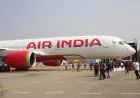
Eurobusiness Class Debate Highlights Premium Product Value in Aviation
Aviation analysts defend Eurobusiness class as airlines adjust premium offerings amid evolving passenger demand and revenue strategies.
 Jishan Khan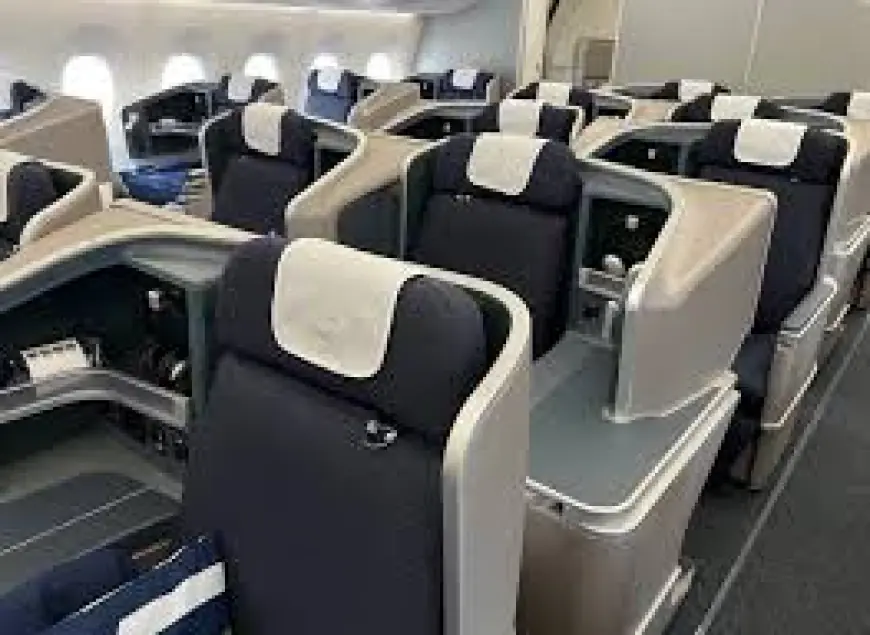

Aviation analysts and industry commentators are offering an uncommon defence of “Eurobusiness class”, urging airlines to reconsider premium cabin offerings on short-to-medium haul European services as carriers adapt to shifting demand patterns and revenue dynamics.
The concept of Eurobusiness — a premium seat tier positioned above economy but distinct from full long-haul business class — has historically appealed to corporate travellers and affluent flyers seeking additional comfort without the cost of full business products. Yet in recent years, many European carriers have reduced or eliminated premium cabin services on regional routes in favour of all-economy layouts or revenue enhancements through ancillary upgrades.
Proponents argue that Eurobusiness seating can produce disproportionately strong yields by capturing customers willing to pay for extra legroom, dedicated services and flexible ticketing on intra-continental flights. In an era where airline network planners are balancing capacity utilisation against profitability, nuanced premium products offer a potential lever to improve unit revenue without resorting solely to ancillary revenue streams.
The debate gains prominence as airlines restructure their long-haul and short-haul strategies post-pandemic. Carriers such as Lufthansa and Swiss historically operated robust Eurobusiness products on flights within Europe, competing with legacy rivals and low-cost carriers that focused on lower fares. However, market pressures and cost rationalisation pushed some airlines to rethink multi-tier cabins where average sector length runs three to five hours.
Industry data suggests that travellers on business-centric European city pairs — for example Frankfurt-London or Paris-Milan — may value premium product differentiation differently from long-haul markets where lie-flat seats and full lounge access are decisive. Eurobusiness advocates point to these routes as examples where a tailored premium offering could yield higher load factors in upmarket segments while preserving pricing integrity.
Airline revenue management executives emphasise that premium seats generate higher yields, often subsidising lower yields in economy cabins. Where carriers have stripped premium seats from narrowbody operations, they risk compressing yield curves and ceding high-value travellers to competitors or rail alternatives on short distances. A robust Eurobusiness cabin could help airlines retain corporate contracts and mitigate yield dilution.
Digital booking patterns also inform this discussion. Data reveals that passengers on inter-European travel increasingly book premium economy or business fares when flexibility, lounge access and added comfort align with trip purpose. As distributors refine segmentation analytics, the ability to price and market Eurobusiness seats dynamically may support demand capture without undermining overall revenue per available seat kilometre (RASK).
Regulators and aviation planners observe that product strategy changes interplay with broader network decisions, including fleet choice and aircraft utilisation. Airlines deciding between narrowbody and long-range narrowbody aircraft must weigh cabin layout flexibility against route economics. Eurobusiness configurations affect overall seating density and weight distribution, influencing aircraft performance and cost profiles.
Passenger experience advocates also highlight that premium cabin options contribute to airline brand differentiation and loyalty programme engagement. In a market where loyalty and customer retention are central to yield optimisation, tailored product tiers can reinforce brand affinity and repeat purchases.
The discussion around Eurobusiness class reflects broader industry challenges as airlines juggle cost containment, competitive positioning, and evolving passenger expectations. While long-haul business class retains its strategic importance, the role of premium seating on shorter networks is emerging as a topic of renewed focus among airline strategists, product planners, and network revenue officers.