Pawan Hans Leads India's Seaplane Revival With Government Funding
Pawan Hans is helping revive India's seaplane industry with government funding, 150 planned UDAN routes and electric amphibious aircraft plans.
 Jishan Khan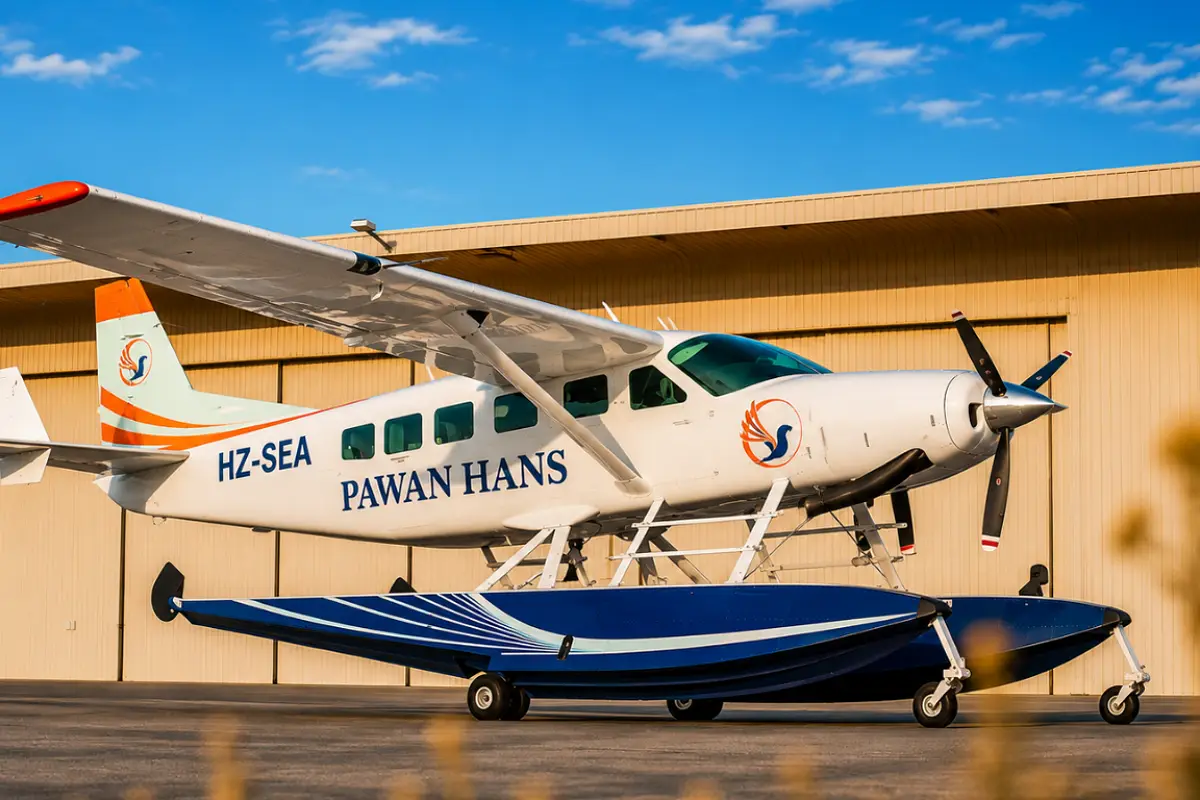
India Has Been Trying to Build a Seaplane Industry for 30 Years, This Time the Government Brought Money
Pawan Hans signed an MoU with Norway-based NOEMI Aerospace on August 10, 2026 to explore electric amphibious aircraft for India's islands and coastal regions. The announcement coincided with India's Union Budget 2026 introducing a new Seaplane Viability Gap Funding scheme and incentives for domestic seaplane manufacturing. UDAN's regional connectivity programme has plans for roughly 150 new seaplane routes nationwide.
Every one of those numbers sounds promising. Every previous Indian seaplane initiative also sounded promising at the MoU stage. The difference this time is that the government is finally putting money behind the ambition rather than just the paperwork.
What Happened Every Time Before
Pawan Hans has been here before. The operator deployed Cessna 208A amphibious seaplanes in the Andaman and Nicobar Islands as a pilot project, connecting Port Blair with Havelock, Diglipur and Hutbay, and suspended operations when infrastructure limitations and inconsistent demand made the economics unworkable. Jal Hans, India's first commercial seaplane service launched jointly by Pawan Hans and the Andaman and Nicobar Administration, operated a single Cessna 208A and eventually wound down without achieving commercial scale.
Beyond Pawan Hans, the broader seaplane story in India is a catalogue of launches, suspensions and relaunches. SpiceJet's seaplane subsidiary launched Ahmedabad to Statue of Unity services in 2020 amid significant fanfare and suspended them within months. Mehair launched Gujarat coastal services and discontinued them. Flybig announced seaplane ambitions that stalled at the feasibility stage. The Andaman services, the Kerala backwaters pilot, the Maharashtra coast programme, each announced, each underperformed, each quietly retired.
The reasons are consistent across every failed attempt. India lacks waterdrome infrastructure at scale, the purpose-built facilities required for seaplane operations simply do not exist at most of the 150 routes UDAN is now planning. Maintenance of amphibious aircraft in tropical coastal environments is technically demanding and expensive. Ticket prices required to cover those costs have historically exceeded what leisure and local passengers are willing to pay without subsidy. And DGCA certification for new seaplane types has added months and sometimes years to any operator's timeline.
Why 2026 Is Structurally Different for the India Seaplane Industry
The Seaplane Viability Gap Funding scheme in the Union Budget 2026 is the element that changes the calculus. VGF, the mechanism India already uses to support UDAN regional fixed-wing routes, covers the gap between what an airline needs to charge to break even and what the market will bear, paid directly from government funds. Applying that same mechanism to seaplane routes removes the single biggest barrier that has killed every previous attempt: the inability to price competitively while covering unusually high operating costs.
Electric propulsion adds a second structural change. NOEMI's aircraft, still in development, promises significantly lower operating costs than the Cessna 208A turboprops that Pawan Hans previously flew. Electric motors have fewer moving parts, lower fuel costs and simpler maintenance requirements than piston or turboprop engines. On short hops of 50 to 150 kilometres, exactly the distances separating Andaman island groups, Lakshadweep atolls, Kerala backwaters destinations and Goa coastal points, electric range limitations are not a constraint. The economics that made turboprop seaplane operations marginal look different when the powerplant cost structure changes fundamentally.
Pawan Hans Seaplane Plans Get a New Policy Backing
The MoU is not an aircraft order, a financial commitment or a deployment timeline. NOEMI's electric seaplane has not yet received DGCA certification. India has no waterdrome construction programme underway at the scale required for 150 routes. The VGF scheme exists in the budget but implementation guidelines have not been published. Domestic manufacturing incentives require a domestic seaplane manufacturing ecosystem that currently does not exist.
The vision extends beyond operating seaplanes in India toward domestic manufacturing, an ambition that requires years of technology transfer, engineering development and regulatory framework building before a single aircraft rolls out of an Indian facility.
India's seaplane industry has a better policy foundation in 2026 than it has ever had. Whether that foundation produces commercial operations or another chapter in the same thirty-year story of promising announcements depends on whether the VGF money flows, the waterdromes get built and the certification process moves at the pace the technology requires. The MoU with NOEMI is the right first step. It is only the first step.