Cross Contamination Prevention Methods Training for Hotel Operations
Learn cross contamination prevention methods training with SOP procedures, food handling controls, and hygiene standards, for hotel operations.
 Jyoti Kushwaha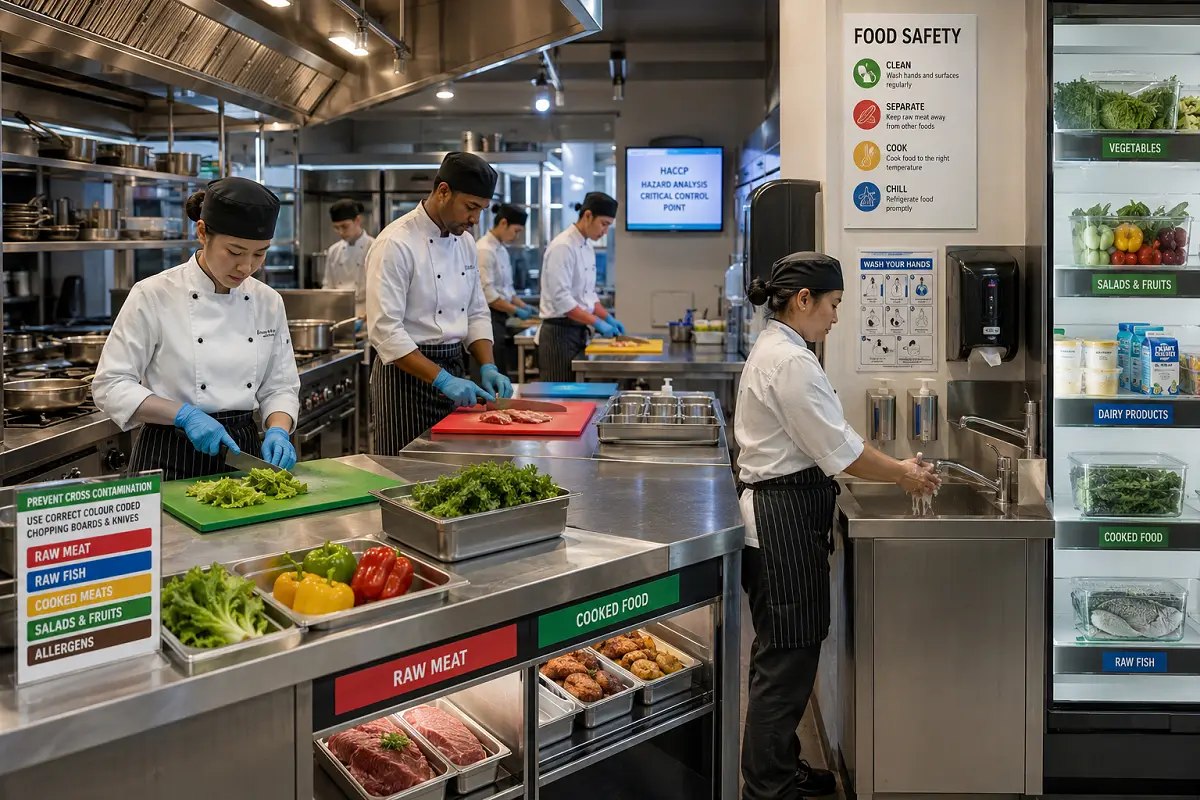
Talk in the pantry is focused on one thing: food safety mistakes rarely start with bad intentions. They start with shortcuts. One cutting board, one missed handwash, one wrong storage shelf, and you've got a problem that can reach the guest's table fast.
Overview of Cross Contamination Prevention in Hospitality Operations
Cross contamination happens when harmful microorganisms, allergens, chemicals, or foreign materials move from one surface, food item, person, or piece of equipment to another.
In hotels and restaurants, contamination can happen during receiving, storage, preparation, cooking, holding, or service. Every stage carries risk.
Cross contamination prevention methods training focuses on spotting those risks and controlling them before they become food safety incidents. Done properly, it protects guests from foodborne illness and helps operations meet food safety requirements.
Common sources include raw meat touching ready-to-eat foods, poor hand hygiene, dirty equipment, shared cutting boards, contaminated utensils, and incorrect storage practices. And allergens can move just as easily when handling procedures break down.
Every employee handling food plays a role. Prevention starts with discipline, consistency, and following SOPs every single shift.
Pro-tip: Most contamination issues don't come from what staff don't know. They come from what staff skip.
SOP Procedure for Cross Contamination Prevention
Cross contamination prevention methods training follows a structured SOP designed to control hazards throughout food handling operations.
1. Personal Hygiene Compliance
Wash hands thoroughly before food handling, after handling raw products, after touching waste, and after any activity that may cause contamination.
2. Receiving Inspection
Inspect food deliveries for cleanliness, packaging integrity, temperature compliance, and signs of contamination.
3. Segregated Storage
Store raw and cooked foods separately. Place raw meat, poultry, and seafood on lower shelves to prevent dripping onto ready-to-eat foods.
4. Equipment Separation
Use dedicated cutting boards, knives, containers, and utensils for different food categories.
5. Safe Food Preparation
Prepare raw and ready-to-eat foods in separate work areas whenever possible.
6. Cleaning and Sanitizing
Clean and sanitize food contact surfaces between tasks according to established schedules.
7. Service Control
Protect prepared foods during holding, display, and service using proper covers and utensils.
8. Monitoring and Documentation
Record sanitation activities, temperature checks, and corrective actions as required.
Follow these steps every day. Consistency is what keeps contamination out of the operation.
Operational Steps and Kitchen Workflow Controls
Cross contamination prevention requires controls at every stage of the workflow.
Receiving Stage
• Verify supplier compliance
• Check delivery vehicle cleanliness
• Inspect packaging condition
• Confirm required temperatures
• Reject contaminated products
Storage Stage
• Store raw foods separately from ready-to-eat items
• Label and date all products
• Maintain FIFO inventory rotation
• Use sealed containers
• Monitor refrigeration temperatures regularly
Preparation Stage
• Wash hands before preparation
• Use designated preparation areas
• Separate raw and cooked ingredients
• Change gloves when required
• Sanitize surfaces after each task
Cooking Stage
• Use clean utensils for cooked products
• Avoid placing cooked food on raw food surfaces
• Verify cooking temperatures
• Minimize unnecessary handling
Holding and Service Stage
• Protect food from environmental exposure
• Use separate serving utensils
• Replace contaminated utensils immediately
• Monitor buffet and display areas continuously
Operational Control Measures
• Handwashing compliance before every food task
• Sanitizing between preparation activities
• Immediate cleaning of spills and contamination risks
• Continuous supervision of food handling practices
Every control point closes a gap where contamination can happen.
Pro-tip: Raw food and ready-to-eat food should never become roommates.
Guest Service Interaction and Food Handling Practices
Food safety doesn't stop at the kitchen door. Service teams are part of the protection system too.
Order Taking Procedures
• Confirm food allergy information accurately
• Record special dietary requirements clearly
• Communicate allergy alerts to the kitchen immediately
• Verify modifications before order transmission
Food Delivery Procedures
• Verify correct order before service
• Handle plates by edges only
• Avoid contact with food surfaces
• Deliver allergy-sensitive meals separately
Buffet Service Controls
• Use dedicated utensils for each item
• Replace serving utensils regularly
• Monitor guest handling practices
• Protect food with sneeze guards where applicable
Allergen Cross Contact Prevention
• Maintain separate preparation areas when possible
• Use dedicated equipment for allergen-sensitive orders
• Clean workstations thoroughly before preparation
• Verify ingredient information before service
Common Food Handling Errors
• Using the same cutting board for raw and cooked foods
• Failing to wash hands between tasks
• Mixing clean and dirty equipment
• Improper glove use
• Inadequate sanitation of food contact surfaces
One missed allergy alert can create far more service friction than a delayed order ever will.
Tools and Equipment Used for Contamination Control
Strong food safety systems depend on having the right equipment and using it correctly.
Food Preparation Equipment
• Color-coded cutting boards
• Dedicated knives
• Food-grade storage containers
• Preparation tables
Sanitation Equipment
- Handwashing stations
- Sanitizer solutions
- Cleaning chemicals approved for food areas
- Disposable towels and wipes
Storage Equipment
• Refrigerators and freezers
• Shelving systems
• Covered food containers
• Temperature monitoring devices
Protective Equipment
• Disposable gloves
• Hair restraints
• Aprons
• Protective uniforms
Equipment Usage Guidelines
• Clean and sanitize after every use
• Store equipment in designated locations
• Replace damaged equipment immediately
• Follow manufacturer cleaning instructions
Good equipment helps. Proper habits make it effective.
Pro-tip: A sanitized tool left in the wrong place can become contaminated again in minutes.
Food Safety Standards and Performance Monitoring
Cross contamination prevention methods training requires measurable standards to maintain control and compliance.
Key Food Safety Standards
• Handwashing compliance: 100% adherence
• Raw and cooked food separation: 100% compliance
• Cleaning schedule completion: 100% adherence
• Equipment sanitation compliance: 100% target
• Allergen handling accuracy: zero tolerance for errors
• Food storage compliance: according to SOP requirements
Monitoring Activities
• Daily hygiene inspections
• Food storage audits
• Temperature monitoring records
• Cleaning verification checks
• Supervisor observations during operations
Corrective Actions
• Discard contaminated food immediately
• Re-sanitize affected areas
• Retrain employees when violations occur
• Document incidents and corrective measures
Performance Evaluation Methods
• Internal food safety audits
• Hygiene inspections
• Staff competency assessments
• Guest complaint analysis
• Food safety compliance reviews
Common gaps include weak hand hygiene, equipment misuse, improper storage, and poor allergen awareness. Regular training, active supervision, and SOP discipline close those gaps fast.
Cross contamination prevention methods training gives hospitality teams the practical skills needed to protect food from receiving to service. Strong hygiene practices, smart workflow controls, proper equipment management, and continuous monitoring keep guests safe and help operations maintain the standards every professional kitchen is expected to deliver.
Read more about Cocktail training.