Tofu Karaage: Crispy Japanese Fried Tofu
Tofu karaage with press-and-freeze texture trick, umami soy marinade, potato starch & double-fry. Vegan, shatter-crispy, ready in 35 mins.
 Tripti Srivastava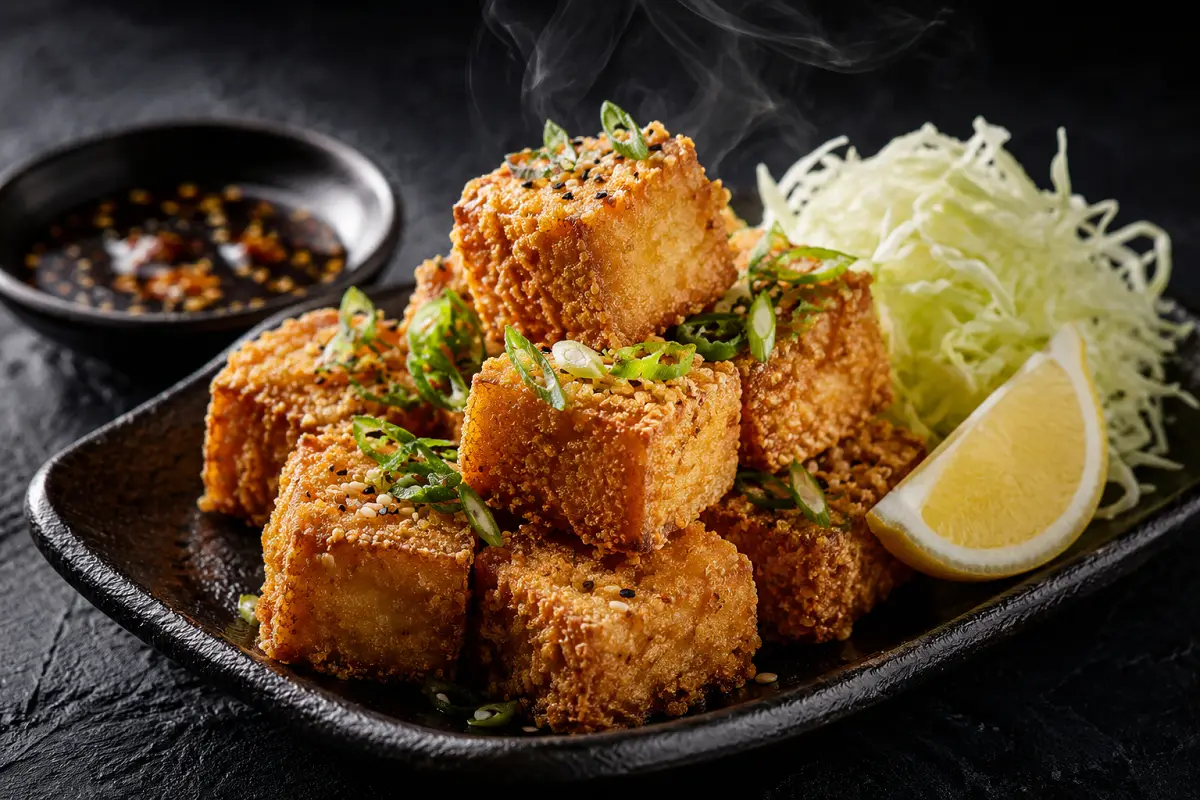
Mention tofu karaage to someone who has spent years ignoring tofu and watch their expression change the moment they take the first bite. The outside shatters genuinely shatters, in the way that only a thin potato-starch coating fried at the correct temperature can and the inside is soft, dense, faintly chewy, and so deeply seasoned with soy, sake, ginger, and garlic that it bears almost no resemblance to the pale, flavourless tofu they were expecting. This is not tofu pretending to be something else. This is tofu prepared in the way it deserves to be prepared treated with the same seriousness and technique as any Japanese karaage, and producing a result that is genuinely impressive regardless of whether you eat meat or not.
Pressing firm tofu under a weight removes pockets of water, which collapse to form layers of protein with a meat-like texture. Marinating the tofu in ingredients rich in amino acids such as soy sauce, sake, and kombu tea imbues the tofu with meaty umami. Tearing the tofu into irregular chunks and dusting it with potato starch makes this plant-based karaage visually identical to karaage made with meat. Double frying the tofu creates a lasting extra crispy crust. These four principles pressing, marinating with umami-rich ingredients, tearing rather than cutting, and double frying are the complete technical framework of this recipe, and understanding why each one matters is what makes the difference between tofu karaage that is genuinely good and tofu karaage that tastes like something you had to settle for.
This recipe gives you everything: the pressing technique, the optional freeze-thaw method that takes the texture to the next level, the umami-layered marinade, the tearing method for irregular authentic-looking pieces, the double-fry, the air fryer and baked alternatives, the kakushi aji secret ingredient, and a full SOP and presentation guide. Make it once and you will understand why this dish has become one of the most convincing plant-based versions of a traditionally meat-based dish anywhere in Japanese cuisine.
What Makes This Tofu Karaage Recipe Special
Tofu karaage at its best is not a compromise it is a distinct and excellent dish in its own right. Getting there requires a few specific choices that most casual recipes skip. This version makes every one of them.
- The freeze-thaw texture transformation the optional step that changes everything. Pressing the tofu first and then freezing it for at least four hours transforms the texture fundamentally. When tofu freezes, the water inside the protein matrix forms ice crystals that expand and break down the internal structure. When it thaws, the water drains away and the tofu is left with a spongy, slightly fibrous, meat-like texture with a network of small channels and cavities that absorb the marinade far more deeply than unpressed, unfrozen tofu can. This technique creates a meaty, chewy interior that is difficult to distinguish from chicken karaage when the finished piece is bitten into. It requires planning ahead four hours minimum, overnight is better but the result is worth every minute of the wait.
- Tearing rather than cutting the tofu. Tearing the tofu into irregular chunks rather than cutting with a knife makes this plant-based karaage visually identical to karaage made with meat. Cut edges are clean, flat, and geometrically perfect they look like tofu. Torn edges are irregular, textured, and craggy they look exactly like pieces of marinated chicken. The torn surfaces also create more surface area for the potato starch to adhere to, which produces a more textured, complex crust than flat cut surfaces do. This single step costs nothing extra and completely changes the visual identity of the finished dish.
- Layered umami in the marinade. Nutmeg acts as a kakushi aji a Japanese culinary concept meaning a hidden flavour adding a subtle depth to the dish that enhances the overall experience without being identifiable as nutmeg specifically. This recipe uses that principle throughout the marinade: soy sauce and sake provide the primary savoury layer, but a small amount of sugar encourages caramelisation during frying, white pepper adds a clean heat, and nutmeg provides the kakushi aji depth that makes the marinade taste more complex than its ingredients individually suggest. For the deepest umami layer, adding a teaspoon of kombu powder or konbu tea to the marinade adds an oceanic mineral depth that makes the tofu taste genuinely meaty in a way that no other vegan seasoning quite replicates.
- Potato starch for the thin, shattering crust. Cornstarch will work in a pinch, but the texture is heavier and more crunchy than crispy. Potato starch produces a lighter, more delicate crunch. The coating on potato-starch karaage is so thin it is almost translucent a lacquered shell that breaks apart with very little resistance, revealing the marinated tofu beneath. This is the visual and textural signature of authentic karaage and potato starch is what produces it.
- The double-fry for a lasting crust. Double frying the tofu creates a lasting extra crispy crust that holds its character noticeably longer than a single-fry coating. The first fry at lower temperature cooks the tofu through gently. The second fry at higher temperature drives the remaining moisture from the surface and produces the deeply golden, audibly crackling shell. The gap between the two fries when the tofu rests on a wire rack is also important: the steam from the first fry can escape rather than softening the coating from inside.
Ingredients Overview
Firm tofu is the non-negotiable foundation of this recipe. Silken tofu is too soft and will not work for this recipe. Firm tofu is made by curdling soy milk and pressing the curds into a mold the firmness is determined by how much water is squeezed out during this process. For tofu karaage, you want the firmest tofu available often labelled "extra-firm" at Western supermarkets or simply "firm" (momen tofu) at Asian grocery stores. The firmer the starting tofu, the better the final texture after pressing and freezing. Avoid pre-seasoned, smoked, or flavoured tofu the marinade needs to penetrate neutral tofu to produce the correct result.
The marinade is the flavour foundation and every element has a role. Soy sauce (or tamari for gluten-free) provides the primary savoury, umami backbone. Sake adds complexity, removes any residual beany edge from the tofu, and helps the marinade penetrate the protein structure. Mirin adds natural sweetness that helps the coating caramelise to a golden colour during frying. Fresh ginger adds clean, bright heat. Garlic either freshly grated or as garlic powder (which has less risk of burning during frying) adds depth and the characteristic karaage aroma. A small amount of sugar encourages faster caramelisation. White pepper adds warmth without colour. Nutmeg is the kakushi aji the hidden flavour that makes the marinade taste more layered and complex. Kombu powder or konbu tea is the optional umami depth layer that comes closest to giving the tofu a meaty, oceanic quality.
Potato starch is the coating find it at any Asian grocery store. Cornstarch, arrowroot, and tapioca starch are all acceptable alternatives, though potato starch creates a slightly lighter coating. For a richer crust, mix three tablespoons of potato starch with one tablespoon of plain flour the flour adds a slight thickness that produces more surface area for the crust to develop. For a fully gluten-free version, use potato starch alone.
How to Make It
The process has four stages. Stage one is preparing the tofu pressing, and optionally freezing and thawing for the meaty texture. Stage two is tearing the pressed tofu into irregular chunks and marinating for 20 minutes. Stage three is dusting in potato starch and double frying. Stage four is plating immediately and serving with the dipping sauce, shredded cabbage, and lemon.
The most important single thing to understand about tofu karaage is that tofu naturally holds a great deal of water and water is the enemy of a crispy coating. Every preparatory step in this recipe is designed around removing as much water from the tofu as possible before it goes into the oil. Pressing removes the bulk of it. Freezing and thawing removes more. Patting dry after marinating removes the last surface moisture. And dusting in potato starch immediately before frying creates a dry surface that the oil can sear and crisp rather than steam. This disciplined approach to moisture management is what separates excellent tofu karaage from soggy, pale, disappointing tofu karaage.
Tips for Best Results
- Press the tofu for at least 20 to 30 minutes. Place the tofu block on a clean plate lined with kitchen paper. Put another piece of kitchen paper on top, then a cutting board, then a heavy object a cast-iron pan, a large book, or a few tins. The longer it presses, the more water it releases. For the best possible result, press overnight in the refrigerator. A tofu press device (available online and in Asian kitchen shops) makes this hands-free and produces a very consistent result.
- Try the freeze-thaw method at least once. It requires planning ahead, but the texture transformation it produces is remarkable. Press the tofu first, freeze in a sealed container for at least four hours (overnight is better), then thaw completely in the refrigerator before tearing and marinating. The tofu will look slightly yellowish after thawing this is completely normal and the colour is not present in the finished dish. Squeeze the thawed tofu gently to remove the water released during thawing before adding to the marinade.
- Tear, do not cut. Once the tofu is pressed and ready, use your hands to tear it into irregular pieces approximately 3 to 4 cm across. The irregular, craggy torn surfaces create the visual identity of karaage and produce a more textured crust than flat knife cuts. No two pieces should look exactly the same that irregularity is the point.
- Do not over-marinate. Twenty minutes is sufficient for tofu that has been pressed and ideally freeze-thawed. The open, spongy structure of prepared tofu absorbs the marinade quickly particularly after the freeze-thaw method opens the internal structure further. Over-marinating for hours can produce tofu that is very salty and too soft at the surface to hold a crispy coating.
- Dust in potato starch immediately before frying. Do not dust the tofu pieces in potato starch and then let them sit the moisture from the marinade will begin dissolving the starch within minutes, turning the coating into a damp paste that fries unevenly. Dust one small batch at a time, shake off the excess starch, and fry that batch immediately.
- Keep the first fry gentle. Tofu is more fragile than chicken during frying it needs a lower first-fry temperature and more careful handling in the oil. Frying at 160°C for the first fry, turning gently with a mesh skimmer rather than tongs, and giving each piece enough space to float freely prevents the pieces from breaking apart or sticking together.
Serving Suggestions
Tofu karaage is served in exactly the same way and spirit as any other karaage in the izakaya tradition, as a casual, flavourful snack or starter alongside cold drinks, with dipping sauces and accompaniments that add freshness and contrast. A small mound of very finely shredded green cabbage dressed with a few drops of rice vinegar and a pinch of salt is the essential pairing the cool, slightly acidic crunch of the cabbage against the hot, crackling tofu is one of the most considered flavour combinations in Japanese casual dining. A wedge of fresh lemon or yuzu squeezed over the tofu immediately before eating brightens the whole preparation significantly.
For dipping, a small bowl of vegan Japanese-style mayo made with a plant-based egg substitute or purchased as a ready-made vegan kewpie is the most popular option. A small bowl of ponzu sauce (citrus soy) is the lighter, more traditional alternative. For a full Japanese meal at home, serve tofu karaage alongside a bowl of steamed short-grain rice, homemade miso soup, and a simple cucumber salad. For a party spread, a large plate of tofu karaage with two dipping sauces and the shredded cabbage as a centrepiece creates an effortlessly impressive shared starter that satisfies every guest regardless of dietary preference.
Storage and Reheating
Best eaten immediately within 3 to 4 minutes of the second fry, while the coating is audibly crispy and the tofu inside is still warm and soft. If holding briefly for a party, keep on a wire rack in a 100°C oven, uncovered, for up to 10 minutes. Never cover or stack hot karaage.
Fridge: Store in an airtight container for up to 2 days. Reheat in an oven at 180°C for 6 to 8 minutes on a wire rack, or air fry at 180°C for 4 to 5 minutes. Freezer: Tofu karaage can be stored in the freezer for up to one month. To thaw, remove from the freezer and let it sit in the refrigerator overnight or thaw on the counter for one to two hours. Reheat in the oven or air fryer from thawed. Make-ahead for parties: Complete the first fry up to one hour ahead and keep on a wire rack at room temperature. Perform the second fry in batches as guests arrive each batch takes under a minute and produces genuinely fresh, hot, crackling karaage at the table.
Variations and Substitutions
- Spicy Tofu Karaage: Adding shichimi togarashi a Japanese spice mix that typically includes chilli pepper, sesame seeds, and citrus zest to the potato starch coating adds a warm, complex heat with notes of citrus peel and sesame. Add half a teaspoon to the coating bowl and mix through. Alternatively, add a teaspoon of gochugaru (Korean red pepper flakes) to the marinade for a bolder, fruitier heat throughout the tofu itself rather than just in the coating.
- Air Fryer Tofu Karaage: After marinating and dusting in potato starch, spray each piece generously with neutral oil on all sides. Place in the air fryer basket in a single layer do not crowd. Air fry at 200°C for 12 to 15 minutes, turning once at the halfway point and spraying with a little more oil before turning. The result is genuinely crispy and requires much less oil than deep frying. Serve immediately after air frying.
- Baked Tofu Karaage: Place karaage tofu pieces on a tray layered with a baking sheet, brushed with one tablespoon of oil. Bake at 200°C for approximately 30 minutes, turning halfway through. The baked version produces a drier, lighter crispiness rather than the lacquered, shattering crust of the fried version, but is lower in oil and a good everyday option.
- Honey Garlic Glazed Tofu Karaage: After the second fry, toss the tofu pieces briefly in a hot wok with a tablespoon of soy sauce, a tablespoon of honey, a teaspoon of grated garlic, and a few drops of sesame oil. The sauce caramelises around the potato starch coating in under 30 seconds and produces a sticky, glossy, sweet-savoury glaze that is one of the most immediately appealing variations on this recipe.
- Tatsutaage Style Tofu: Increase the soy sauce in the marinade to 2 tablespoons and replace the garlic powder with freshly grated garlic. Omit the nutmeg. The heavier soy marinade produces a deeper, richer red-brown colour on the coating during frying named after the Tatsuta River's autumn red maple leaves. Tatsutaage tofu is slightly saltier, more soy-forward, and produces a darker, more dramatic visual than the standard version.
Also Read: Homemade Kimchi Recipe
Preparation Method
Remove the tofu from its packaging and drain the liquid. Wrap the block in three to four layers of clean kitchen paper. Place on a flat plate, put a cutting board on top, and weigh it down with a heavy object. Leave for 20 to 30 minutes at room temperature, or overnight in the refrigerator for best results. Replace the kitchen paper halfway through if it becomes saturated. For the freeze-thaw method: after pressing, wrap the tofu in cling film, place in a sealed container, and freeze for at least four hours or overnight. Thaw completely in the refrigerator, then gently squeeze the thawed block to expel the water released during freezing.
Once the tofu is pressed (and optionally thawed), tear it into irregular 3 to 4 cm chunks with your hands aim for variety in shape and ensure every piece has craggy torn surfaces rather than smooth cut faces. In a bowl, combine the marinade ingredients: soy sauce, sake, mirin, freshly grated ginger, garlic powder, white pepper, nutmeg, sugar, and kombu powder (if using). Add the torn tofu pieces and gently toss to coat every surface. Leave to marinate for 20 minutes at room temperature. Heat oil for frying to 160°C. Prepare the potato starch in a shallow bowl. Working in batches, drain each tofu piece from the marinade, dust in potato starch, shake off excess, and fry as directed.
Standard Operating Procedure (SOP)
For consistent, restaurant-quality tofu karaage every single time, follow this sequence: press tofu 20–30 minutes minimum (overnight preferred) → optional: freeze pressed tofu minimum 4 hours, thaw in fridge, squeeze excess water → tear into irregular 3–4 cm chunks by hand → build marinade in bowl → add tofu and toss gently → marinate exactly 20 minutes → heat oil to 160°C → prepare potato starch in shallow bowl → drain each piece from marinade → dust lightly in potato starch, shake off excess → first fry in batches of 4–5 at 160°C for 2–3 minutes until pale golden, turning gently → drain on wire rack → increase oil to 185°C → second fry all pieces for 45–60 seconds until deeply golden and crackling → drain on wire rack 15 seconds → plate immediately → serve within 3 minutes. The five steps that most directly affect the quality are thorough pressing (moisture removal), the freeze-thaw (texture transformation), tearing rather than cutting (surface texture and visual identity), potato starch over flour (crispiness character), and the double-fry (crust durability). Together these five make the difference between tofu karaage that impresses non-vegans and tofu karaage that merely satisfies.
For party batches, complete the first fry up to 60 minutes in advance and keep on a wire rack at room temperature uncovered, never stacked or covered. Perform the second fry in batches of 8 to 10 pieces as guests arrive each second-fry batch takes under 60 seconds. Set up the dipping sauce bowls, shredded cabbage, and lemon wedges in advance. The first-fry-ahead, second-fry-fresh approach is the most practical party cooking method for karaage of any kind and produces genuinely hot, crackling pieces at the table with almost no effort at serving time.
Garnish and Presentation
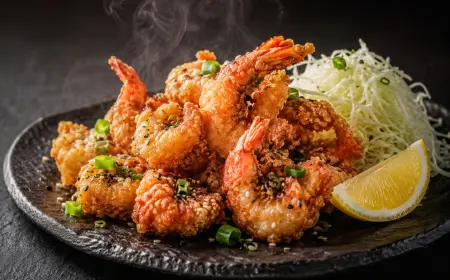
The presentation of tofu karaage follows exactly the same principles as chicken or shrimp karaage clean, minimal, and built around contrast. Serve on a wide, flat ceramic plate or a wooden board. Build a small, neat mound of very finely shredded green cabbage dressed with a few drops of rice vinegar and a pinch of salt in the centre of the plate. Arrange the tofu karaage pieces around the cabbage in a loose pile or fan pattern, with the most craggy and visually interesting torn surfaces facing upward so guests can see the texture of the coating and the irregular shapes that make these pieces look so much like the chicken version.
For garnish: a pinch of shichimi togarashi scattered over the karaage immediately before serving adds warmth and colour. A light scatter of toasted sesame seeds adds visual texture. A wedge of fresh lemon or yuzu on the side because a squeeze of citrus over tofu karaage immediately before eating is one of the small flavour moments that makes the whole dish feel complete. For a dinner party presentation, a few thin ribbons of fresh shiso leaf scattered over the karaage add the faintly citrusy, herby aroma of Japanese plating and immediately elevate the visual from home-cooked to restaurant-quality.
Plating and Serving Tips
Serve tofu karaage immediately within 3 minutes of the second fry, while the coating is audibly crispy when you pick a piece up. For individual plating at a dinner table, five to six pieces per person is the right starter portion. Arrange the pieces with their torn, craggy surfaces visible and the shredded cabbage accessible alongside. The visual effect of irregular, golden-brown pieces with visible texture is far more appetising than uniformly cut, identical squares tear confidently and without apology.
For a party sharing plate, arrange the tofu karaage in a generous, slightly heaped pile on a large, dark flat board. Shredded cabbage in the centre of the board, dipping sauce bowls at either end, lemon wedges scattered between the pieces. A final scatter of shichimi and sesame seeds just before bringing to the table refreshes the visual immediately. The golden karaage against the dark board with the green cabbage and white sauce bowls creates a genuinely beautiful plate that looks like it belongs in an izakaya menu which is, of course, exactly the spirit this dish is made in.
If you make this tofu karaage recipe, I genuinely want to hear every detail did you try the freeze-thaw texture method, did the torn chunks look like the real thing, how long did the plate last at the table, did you try the honey garlic glaze variation? Leave a star rating below and drop a comment. Every note helps other cooks get that shatter-crispy, umami-rich, genuinely impressive tofu karaage result and I read every single one. Save this to Pinterest now so it is always there for your next Japanese dinner night, vegan party spread, or the next time you want to make something that converts even the most sceptical tofu eaters at your table!
Ingredients
- 400g (14 oz) firm or extra-firm tofu
- 2 tablespoons soy sauce
- 1 tablespoon sake
- 1 tablespoon mirin
- 1 teaspoon fresh ginger, finely grated
- ½ teaspoon garlic powder
- ½ cup (60g) potato starch
- A very small pinch of fine salt
- 1 teaspoon kombu powder or konbu tea granules
- 1 teaspoon white sugar
- ¼ teaspoon nutmeg powder
- ¼ teaspoon white pepper powder
Nutritional Information
- Calories: 210 kcal
- Protein: 11g
- Carbohydrates: 16g
- Fat: 11g
- Fiber: 1g
- Sodium: 480mg
- Sugar: 3g
Directions
1. PRESS THE TOFU
Remove the tofu from its packaging and drain the water. Place the block on
a flat plate lined with three sheets of kitchen paper. Place another three
sheets of kitchen paper on top of the tofu, then a cutting board or second
flat plate, then a heavy object — a cast-iron pan, a stack of heavy books,
or several large food tins. Leave to press at room temperature for 20 to 30
minutes, replacing the kitchen paper if it becomes completely saturated.
For the deepest pressing, refrigerate overnight with the weight on — the
combination of cold temperature and sustained pressure removes significantly
more moisture than a room-temperature 30-minute press.
2. FREEZE AND THAW FOR MEATY TEXTURE
After pressing, if time allows, wrap the pressed tofu block in cling film,
place in a sealed container, and freeze for a minimum of four hours.
Overnight is better. The tofu will emerge from the freezer yellowish and
slightly shrunken — this is completely normal and will not affect the flavour
or colour of the finished dish. Transfer from the freezer to the refrigerator
and leave to thaw completely — approximately 6 to 8 hours, or overnight.
Once thawed, remove the cling film, place the tofu on a clean kitchen towel,
and gently squeeze the block to expel the water that has been released during
the freeze-thaw cycle. The tofu should now feel noticeably firmer, spongier,
and more fibrous than before freezing. This spongy, open structure will absorb
the marinade much more deeply than unpressed, unfrozen tofu.
3. TEAR THE TOFU INTO IRREGULAR CHUNKS
Hold the pressed (and optionally thawed) tofu in both hands over a clean bowl.
Using your thumbs, tear the block into irregular pieces approximately 3 to 4 cm
across. The exact size and shape of each piece does not matter — irregular is
the goal. No two pieces should look the same. Each piece should have craggy,
torn edges rather than the flat, smooth surfaces that a knife would produce.
These irregular torn surfaces are the visual identity of karaage and also
create more surface area for the potato starch coating to adhere to.
4. BUILD THE MARINADE AND MARINATE
In a medium bowl, combine the soy sauce, sake, mirin, grated ginger, garlic
powder, white pepper, nutmeg, sugar, and kombu powder (if using). Stir briefly
to combine. Add the torn tofu pieces to the bowl and toss gently, turning each
piece to ensure all surfaces are coated in the marinade. Set a timer for
exactly 20 minutes. The tofu will absorb the marinade visibly — the pieces
will deepen in colour as the soy sauce soaks in. Do not marinate beyond 20 to
25 minutes — over-marination makes the tofu surface too soft to hold a crispy
coating during frying.
5. SET UP FOR FRYING
While the tofu marinates, heat neutral oil in a deep, wide saucepan to 160°C.
Place the potato starch in a wide, shallow bowl or plate for dusting. Set up
a wire rack over a clean tray beside the stove. Cut the shredded cabbage and
dress it lightly with rice vinegar and salt. Prepare the dipping sauce bowls.
6. DUST IN POTATO STARCH AND FRY FIRST FRY (160°C)
Working in small batches of 4 to 5 pieces, remove each tofu piece from the
marinade and allow any excess marinade to drip off for 2 seconds. Lay the piece
in the potato starch and turn gently to coat all surfaces including the craggy
sides. Lift and tap gently to shake off all excess starch — the piece should
look lightly dusted and matte, not heavily coated with visible white powder.
Dust only one batch at a time and fry each batch immediately — do not dust all
pieces in advance.
Using a mesh skimmer or large spoon to gently lower the pieces into the oil —
do not use tongs, which can tear the soft tofu at this stage. Add 4 to 5 pieces
to the oil with space between them. Fry at 160°C for 2 to 3 minutes, turning
very gently once with a mesh skimmer at the halfway point, until the pieces
are very lightly golden and the coating has set. The inside of the tofu is now
cooked through. Lift from the oil and set on the wire rack. Repeat with all
remaining pieces.
7. SECOND FRY (185°C THE CRUST)
Increase the oil temperature to 185°C. Once the oil has reached temperature,
return all first-fried tofu pieces to the oil simultaneously. Fry for 45 to
60 seconds, stirring very gently once, until the coating turns a deep golden
amber and the surface looks lacquered and crackling. Lift immediately with a
mesh skimmer and drain on the wire rack for 15 seconds only.
8. PLATE AND SERVE IMMEDIATELY
Arrange the shredded cabbage on the serving plate. Add the tofu karaage pieces
around the cabbage with the most craggy, textured surfaces facing upward.
Scatter shichimi togarashi and sesame seeds over the karaage. Add a lemon
or yuzu wedge. Place the dipping sauce bowl alongside. Add shiso ribbons
if using. Serve within 3 minutes of the second fry.
Rate this Recipe
User Reviews
No reviews yet. Be the first to share your thoughts!