Spirit Airlines Faces Controversial Lawsuit Over Mass Job Cuts
Spirit Airlines lawsuit alleges WARN Act violation after 17,000 workers lost jobs without notice, seeking two months compensation.
 Jishan Khan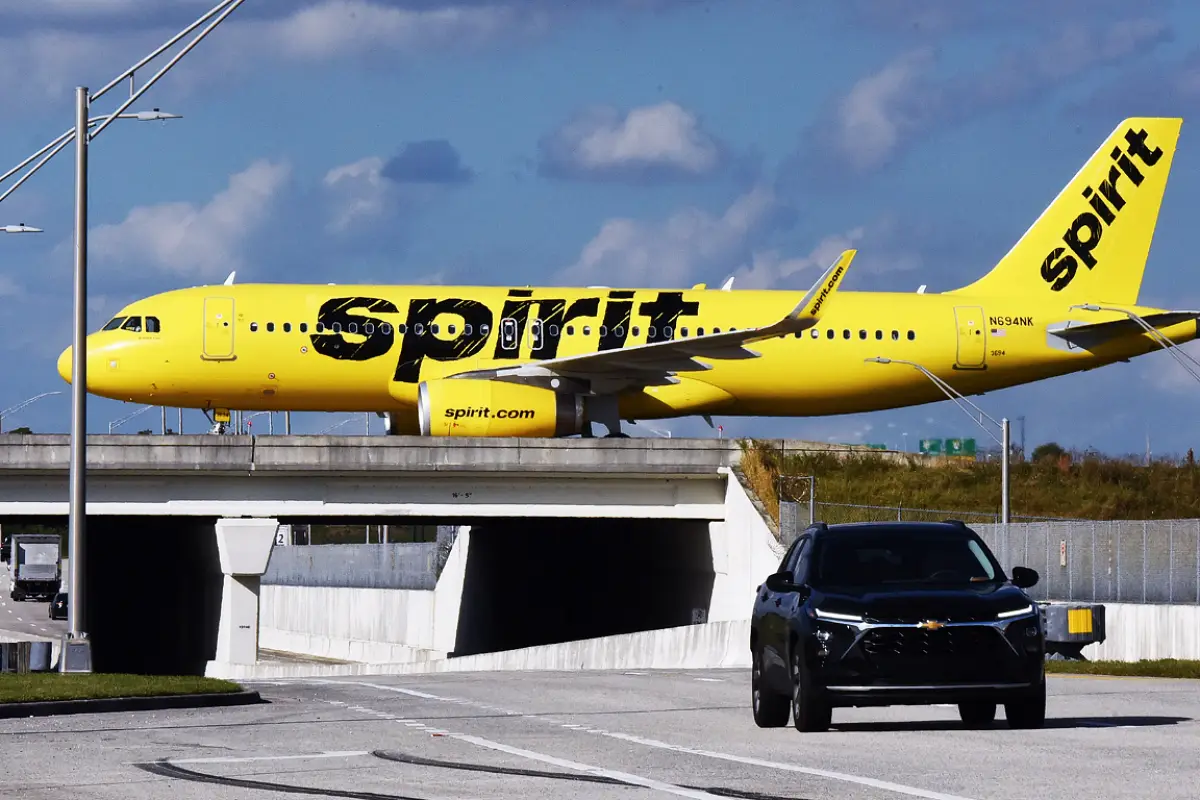
Spirit Airlines Gave Its Executives $10 Million in Bonuses While 17,000 Workers Got No Warning, No Pay, and No Healthcare
The airline is bankrupt and gone. The people who ran it into the ground are being retained with millions. The people who flew the planes and checked the bags are suing just to get two months of wages. This is the Spirit Airlines collapse in full.
There are corporate collapses that are unfortunate. And then there are ones that are obscene.
Spirit Airlines shutting down and leaving nearly 17,000 employees without jobs, without wages, and without health benefits while simultaneously seeking more than $10 million in executive retention bonuses is the second kind. It is the kind of story that makes people angry not because it is surprising but because it is so predictable, and because the system that allows it to happen keeps producing the same outcome every single time a major airline goes under.
Former Spirit employees have now filed a class-action lawsuit claiming the airline violated the federal WARN Act, which requires companies to give workers 60 days notice before mass layoffs or plant closures. Spirit allegedly gave them nothing. No notice. No transition period. No time to find alternative income, arrange childcare around a new schedule, or maintain health insurance through one of the most vulnerable moments of their professional lives.
They are asking for two months of lost pay and benefits. That is not a windfall. That is what the law says they were owed.
What the WARN Act Is and Why Spirit Allegedly Ignored It
The Worker Adjustment and Retraining Notification Act exists specifically because Congress recognised decades ago that sudden mass layoffs cause a specific and serious kind of harm, not just financial, but practical and personal in ways that ripple far beyond a single missed paycheck.
Sixty days notice gives a worker time to update a resume, attend job fairs, line up childcare for new hours, make COBRA healthcare decisions before coverage lapses, and psychologically prepare a household for a major income disruption. It is not a generous provision. It is a minimum standard that reflects what human beings actually need when their employer of years disappears overnight.
Spirit's alleged failure to provide that notice did not happen because the company did not know it was closing. Bankruptcies at this scale involve months of legal proceedings, financial advisors, restructuring consultants, and courtroom appearances. The people making decisions inside Spirit's collapse knew what was coming long before the flight crews and gate agents did.
Choosing not to give workers the required notice while that process was underway is not an oversight. It is a choice.
The Executive Bonus Request Is the Detail That Makes This Unforgivable
If Spirit had simply failed and laid off its workers without notice, the story would be bad enough. What transforms it into something genuinely outrageous is the simultaneous request for more than $10 million in executive retention bonuses for the people managing the shutdown.
Think about what that means in practice. The same bankruptcy proceedings that are being used to argue there is not enough money to pay 17,000 workers their legally required 60 days of wages and benefits found room to propose eight-figure payouts to the executives overseeing the liquidation.
The justification for retention bonuses during bankruptcies is usually that you need to keep key decision-makers in place to manage the process efficiently and maximise recovery for creditors. That argument has a logic to it in restructurings where the company might survive. In a straight liquidation where the airline has already stopped flying and the only task remaining is winding down the estate, it is a much harder case to make with a straight face.
What it actually reflects is the priority structure of bankruptcy law in the United States, a structure where secured creditors and retained executives sit at the top of the payment queue, and workers who showed up every day, flew the planes, and served the passengers sit somewhere near the bottom.
17,000 People and What Their Sudden Unemployment Actually Looks Like
The number 17,000 is large enough that it can feel abstract. It should not.
These are flight attendants who built careers around a specific aircraft type and seniority system that no longer exists. Pilots who now face months of recertification, background checks, and type rating transitions before they can fly for another carrier. Gate agents, ramp workers, and customer service staff in cities where Spirit was sometimes the primary employer at that airport, workers for whom the local job market does not automatically absorb 500 aviation employees overnight.
Many of them lost healthcare coverage simultaneously with their income. In the United States, where employer-sponsored health insurance is the primary coverage mechanism for working families, losing your job and your health insurance on the same day is not just a financial problem. It is a medical risk that falls hardest on workers with chronic conditions, dependents, or ongoing treatments that cannot simply be paused while they navigate a benefits gap.
The class-action lawsuit is asking for what the WARN Act already promised these workers. It is not asking for sympathy. It is asking for the law to mean something.
This Is Not the First Time and It Will Not Be the Last
What makes analysts describe this as potentially one of the biggest labor-rights flashpoints in recent US aviation history is not that it is unprecedented. It is that it is a pattern.
When airlines collapse in the United States, and several have in the last decade, the sequence of events follows a remarkably consistent script. Workers lose jobs with minimal notice. Healthcare evaporates.
Executives seek retention packages. Creditors negotiate recovery percentages. The legal proceedings last years. Workers who file WARN Act claims eventually receive settlements that represent a fraction of what they were owed, paid out long after the immediate crisis has passed and the financial damage to their households has already compounded.
Spirit's collapse is following that script with a precision that should embarrass everyone involved in writing it.
The question the aviation industry has never adequately answered is why the people who bear the least responsibility for an airline's strategic failures, the workers who showed up, did their jobs, and had no say in the financial decisions that led to bankruptcy, consistently end up bearing the most immediate and severe consequences when those failures finally arrive.
What Needs to Change
The WARN Act exists. The problem is that violating it is often cheaper than complying with it, especially inside a bankruptcy where the penalty for non-compliance becomes just another unsecured creditor claim competing against dozens of others.
If the Spirit case produces a serious legal outcome, one where WARN Act violations in bankruptcy carry genuine financial consequences that cannot be restructured away, it could shift the calculus for how future airline collapses handle worker notification and compensation.
If it produces another multi-year legal process that ends in a partial settlement paid out to workers who have long since moved on and absorbed the damage, it will confirm what the aviation labor community already suspects, that the system is designed to protect the people at the top of the bankruptcy waterfall and leave the workers at the bottom to fight for whatever is left.
Seventeen thousand people filed for unemployment the same week Spirit's executives filed paperwork for $10 million in bonuses.
That is not a coincidence. It is a choice. And it is the choice that the class-action lawsuit is now asking a court to examine.