Taj Mahal and The Connaught Move Delhi High Court Over ₹46 Crore Licence Fee Dispute
Taj Mahal and The Connaught hotels approach the Delhi High Court challenging a ₹46 crore licence fee demand, citing significant revenue losses during the Covid-19 pandemic period.
 nishathapa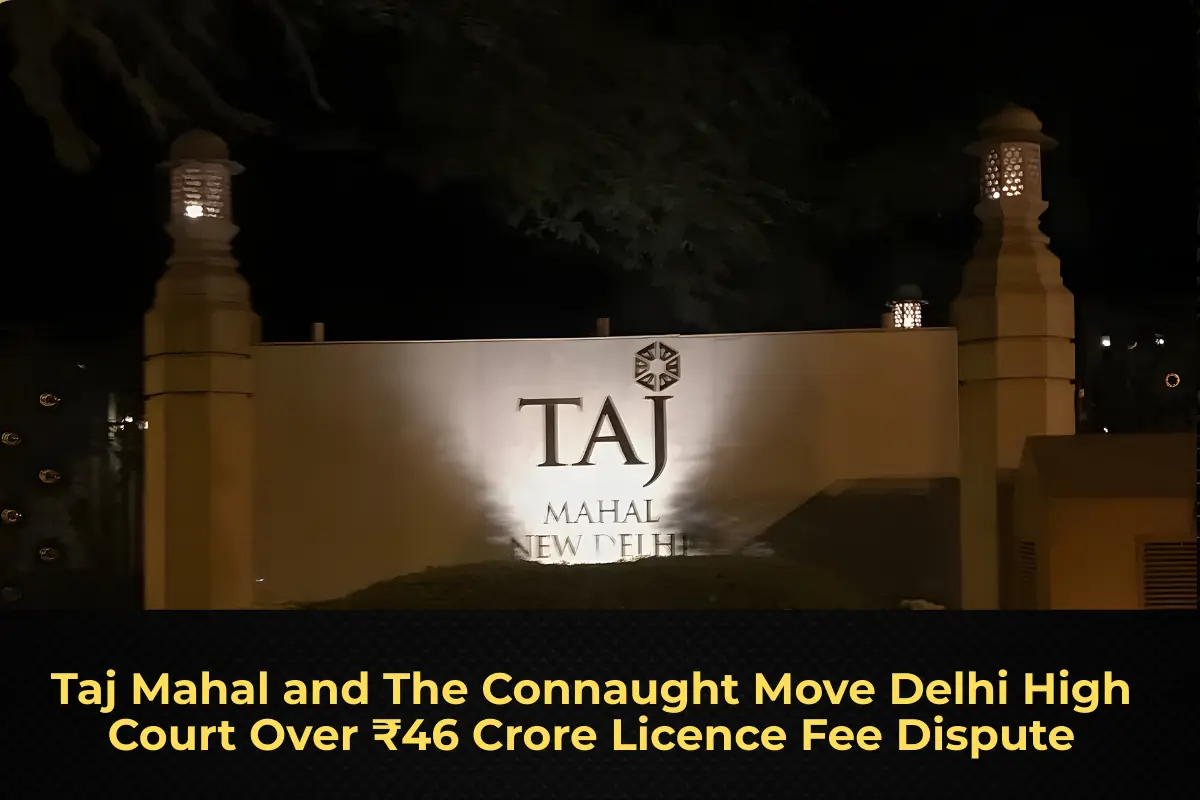

Delhi Hotels Challenge Licence Fee Demand in High Court
Taj Mahal and The Connaught, two prominent hotels in the national capital, have approached the Delhi High Court challenging a demand of approximately ₹46 crore towards licence fees. The hotels have cited severe revenue losses during the Covid-19 pandemic as the primary reason for contesting the levy.
The legal move highlights the continuing aftereffects of the pandemic on India’s hospitality sector, particularly in metro cities where prolonged lockdowns and travel restrictions significantly disrupted operations.
Background of the Dispute
The dispute revolves around licence fees payable to the concerned land-owning authority under long-standing agreements governing hotel operations on leased public land. According to the petitioners, the unprecedented business disruption during the pandemic period made it financially unviable to meet the full licence fee demand.
The hotels have reportedly argued that the extraordinary circumstances of the Covid-19 crisis warrant relief, waiver, or reassessment of dues calculated for the affected period.
Impact of Covid-19 on Revenue Streams
Between 2020 and 2022, Delhi’s hospitality industry faced extended shutdowns, restrictions on events and banquets, limited international travel, and reduced corporate mobility. Luxury and upscale hotels in particular witnessed steep declines in occupancy and average room rates.
Banquet operations, conferences, and large social gatherings—key revenue drivers for city hotels—were suspended for long stretches. Even after reopening, capacity limitations and cautious travel behavior slowed recovery.
Legal Grounds and Industry Context
In their plea before the Delhi High Court, the hotels have emphasized that the pandemic constituted a force majeure-like situation that severely impacted contractual performance. The petition reportedly seeks judicial intervention to reconsider or restructure the licence fee obligation for the affected timeframe.
The case underscores broader tensions between hospitality operators and land-owning authorities across India, particularly where fixed or minimum guaranteed payments were contractually mandated regardless of business conditions.
Financial Pressures on Urban Hotels
Hotels operating in prime urban locations typically bear high fixed costs, including lease rentals, statutory payments, utilities, and staffing. During the pandemic, while revenues dropped sharply, many fixed liabilities continued to accrue.
Although the sector has largely rebounded in terms of occupancy and room rates since 2023, legacy dues and accumulated liabilities from the pandemic period remain a point of contention in some cases.
Recovery Trends in Delhi’s Hospitality Sector
Delhi has since witnessed a strong recovery, driven by domestic travel, weddings, diplomatic events, and international conferences. Major global summits and business events have further strengthened the city’s hospitality performance in recent years.
However, the recovery has not entirely offset financial strain experienced during the peak pandemic years, particularly for properties carrying significant lease or licence commitments.
Precedent and Policy Implications
The outcome of this case may carry implications beyond the two petitioning hotels. A favourable ruling could influence similar disputes where hospitality operators seek relief for pandemic-period obligations.
Legal clarity on how extraordinary events impact long-term licence agreements may shape future contract structuring between hotel operators and government or quasi-government land authorities.
Balancing Public Revenue and Industry Stability
Authorities responsible for land leasing and licence fee collection rely on such payments as part of public revenue streams. At the same time, policymakers have acknowledged the hospitality sector’s vulnerability during global crises.
The legal proceedings may therefore involve balancing contractual enforcement with equitable considerations arising from an unprecedented public health emergency.
Sector-Wide Lessons
The dispute highlights the importance of flexible contractual frameworks capable of addressing black swan events. Industry experts have increasingly advocated for adaptive clauses in lease agreements that allow temporary relief during force majeure situations.
As the hospitality sector continues to expand and attract investment, risk-sharing mechanisms between operators and landlords may become more structured and transparent.
Conclusion
The petition filed by Taj Mahal and The Connaught before the Delhi High Court marks another chapter in the hospitality industry’s post-pandemic recalibration. While operational performance in Delhi has largely stabilized, financial obligations from the Covid-19 era continue to surface in legal and contractual disputes.
The High Court’s consideration of the ₹46 crore licence fee matter will be closely watched by industry stakeholders, as it may shape the contours of future negotiations between hotel operators and land-owning authorities across the country.