Hotels Turn to AI to Optimize Pricing, Marketing and Guest Experience
Hotels are adopting artificial intelligence to improve pricing, marketing and guest services while balancing technology with human-centered hospitality.
 Munni Khatun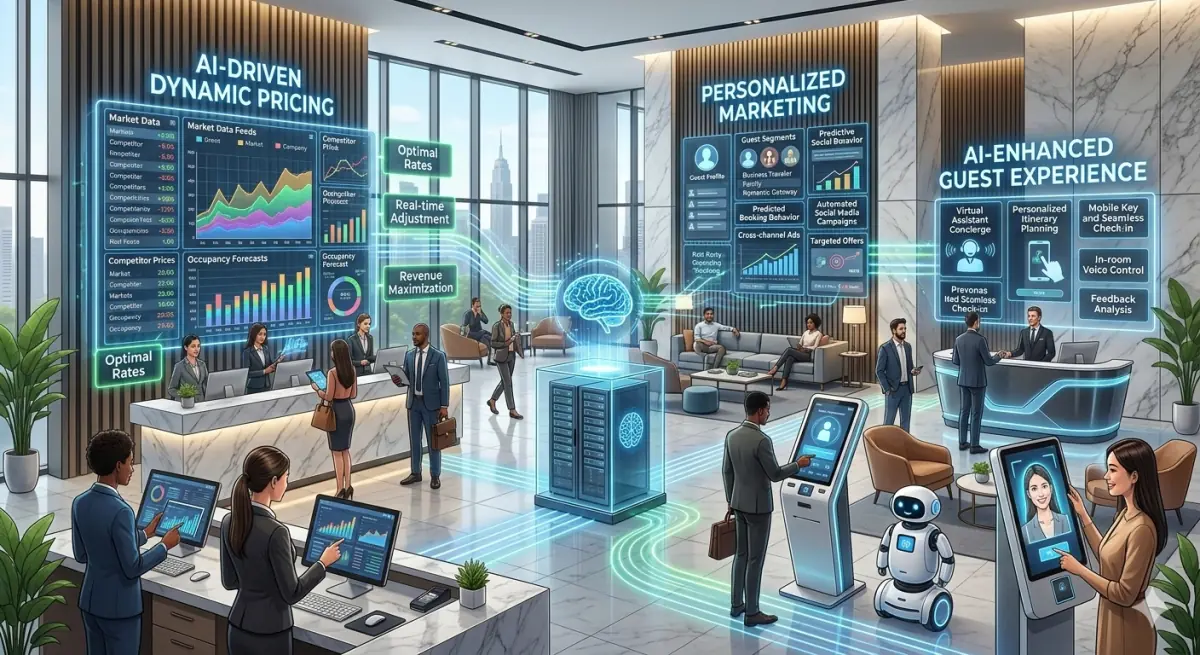

Hotels Increasingly Turn to Artificial Intelligence to Improve Operations and Guest Experience
Artificial intelligence is becoming a central component of hotel operations as hospitality companies look for ways to improve efficiency, sharpen marketing decisions and enhance the guest experience. Industry reports indicate that hotels across multiple segments—from luxury properties to large international chains—are gradually integrating AI-powered tools into their daily operations. Rather than replacing hospitality professionals, these technologies are designed to assist teams in making faster decisions, automating routine tasks and understanding guest behaviour more clearly. As travel demand grows and competition intensifies, hotels are exploring how data-driven systems can improve both operational performance and service delivery.
AI Is Transforming Hotel Revenue and Pricing Strategies
One of the most immediate uses of artificial intelligence in hospitality lies in revenue management. Hotels operate in a dynamic pricing environment where room rates fluctuate based on demand patterns, booking windows, seasonal trends and market conditions. AI-powered pricing systems can analyse vast volumes of historical and real-time data to recommend optimal pricing decisions. Traditional revenue management often relies on manual analysis or static forecasting models. AI systems, however, continuously monitor booking trends, competitor pricing, local events and traveller demand signals. This allows hotels to adjust room rates in real time, helping maximize revenue during peak demand while maintaining competitive pricing during slower periods.
Data-Driven Pricing Improves Revenue Accuracy
AI-based pricing tools use machine learning algorithms to detect patterns that may not be visible through manual analysis. For example, a system can identify demand spikes linked to conferences, festivals or seasonal travel patterns and automatically recommend rate adjustments. By responding quickly to these signals, hotels can reduce revenue leakage and capture higher value bookings. This capability is particularly valuable in urban markets where demand fluctuations occur frequently. Automated pricing decisions help ensure that revenue strategies remain aligned with current market conditions.
AI Is Enhancing Hotel Marketing and Customer Insights
Beyond pricing, artificial intelligence is also reshaping how hotels approach marketing strategy. Marketing teams now rely on AI tools to analyse guest behaviour, measure campaign performance and refine digital outreach. By studying booking patterns, browsing behaviour and guest demographics, AI systems can identify which marketing channels generate the highest conversion rates. Hotels can then allocate marketing budgets more efficiently, focusing on campaigns that drive measurable returns.
Smarter Targeting Through Guest Data
Personalisation has become a key competitive factor in hospitality marketing. AI helps hotels segment their audiences based on travel preferences, past stays, loyalty membership and booking behaviour. These insights allow marketing teams to tailor promotions and communications more precisely. For example, guests who frequently book spa packages may receive targeted wellness offers, while corporate travellers might receive early access to business travel promotions. This personalised approach increases the likelihood of repeat bookings and strengthens brand loyalty.
Automated Customer Service Is Reducing Response Time
Customer service is another area where AI is gaining traction. Hotels are increasingly deploying AI-driven chatbots and virtual assistants to manage routine guest inquiries. These systems can respond instantly to questions about room availability, booking modifications, property amenities or local attractions. Automated customer service tools are particularly useful during peak booking periods when reservation teams face high inquiry volumes. By handling repetitive questions, AI systems free up hotel staff to focus on more complex guest needs.
24-Hour Support Without Increasing Staffing Costs
Unlike traditional service desks that operate within fixed hours, AI-powered chat systems provide round-the-clock assistance. This ensures that guests can receive support at any time, regardless of time zones or staffing schedules. Importantly, these tools are not designed to replace human interaction. Instead, they act as a first-response layer that resolves simple queries while escalating more complex requests to human staff.
Personalized Guest Experiences Are Becoming Data-Driven
AI is also helping hotels personalise guest experiences more effectively. By analysing guest history and preferences, hotels can anticipate individual needs before arrival. For instance, returning guests might automatically receive their preferred room type, pillow selection or dining recommendations. Personalisation extends beyond rooms. AI systems can recommend local activities, dining experiences or hotel services based on guest profiles. These suggestions can be delivered through mobile apps, digital concierges or pre-arrival emails.
Technology Supporting, Not Replacing, Hospitality
While AI tools can analyse data and suggest recommendations, the human element remains central to hospitality. The most successful implementations use technology to enhance service rather than substitute for it. Staff members can use AI-generated insights to anticipate guest expectations and deliver more attentive, personalised interactions. This hybrid model—where technology supports human service—reflects the broader philosophy that hospitality should remain fundamentally people-driven.
Operational Automation Is Improving Efficiency
Hotels also use artificial intelligence to automate routine operational tasks. These may include housekeeping scheduling, maintenance monitoring, energy management and demand forecasting. Automation helps reduce manual workload and ensures that operational processes run smoothly. For example, predictive maintenance systems can monitor equipment performance and alert engineers before mechanical failures occur. Similarly, AI-powered housekeeping systems can allocate cleaning schedules based on occupancy patterns and guest checkout times.
Efficiency Gains Allow Staff to Focus on Service
By automating repetitive tasks, hotels enable staff members to dedicate more time to guest interaction and service quality. Instead of spending hours on administrative work or data analysis, employees can focus on delivering memorable experiences to guests. This shift is especially important in a labour-intensive industry like hospitality, where service quality remains the defining factor of guest satisfaction.
Challenges and Considerations in AI Adoption
Despite its potential, implementing artificial intelligence in hotels requires careful planning. Technology must integrate seamlessly with existing property management systems, booking engines and operational platforms. Poor integration can lead to inefficiencies rather than improvements. Data protection is another critical consideration. Hotels manage large volumes of guest information, including personal details and travel preferences. AI systems must operate within strict data security frameworks to ensure compliance with privacy regulations.
Staff Training Is Essential for Successful Adoption
Experts emphasize that successful AI implementation depends heavily on staff training. Employees must understand how to interpret data insights, manage automated systems and maintain service standards while using new technology tools. Hotels that invest in training programs often see stronger adoption rates and better operational outcomes. When employees understand how AI supports their work, they are more likely to embrace the technology rather than view it as a disruption.
The Future of AI in Hospitality
Artificial intelligence is expected to play an increasingly important role in hospitality operations in the coming years. As machine learning systems become more sophisticated, hotels will gain deeper insights into guest behaviour, operational performance and market trends. However, industry leaders consistently emphasise that technology should complement—not replace—the core values of hospitality. The ultimate goal is not to automate the guest experience but to enhance it by freeing staff to deliver more personalised service.
A Balance Between Technology and Human Service
Hotels that successfully integrate AI will likely be those that maintain a balanced approach: leveraging technology for efficiency while preserving the human touch that defines hospitality. As the industry continues its digital transformation, artificial intelligence will become another tool in the hospitality toolkit—one that helps hotels operate smarter while still placing the guest at the centre of every experience.