IFCI Limited Announces One-Year Reappointment of Jagdish Garwal as Chief Risk Officer
IFCI Limited re-appoints Jagdish Garwal as Chief Risk Officer, reinforcing its risk governance framework and strengthening financial oversight and regulatory compliance.
 Punita Thakur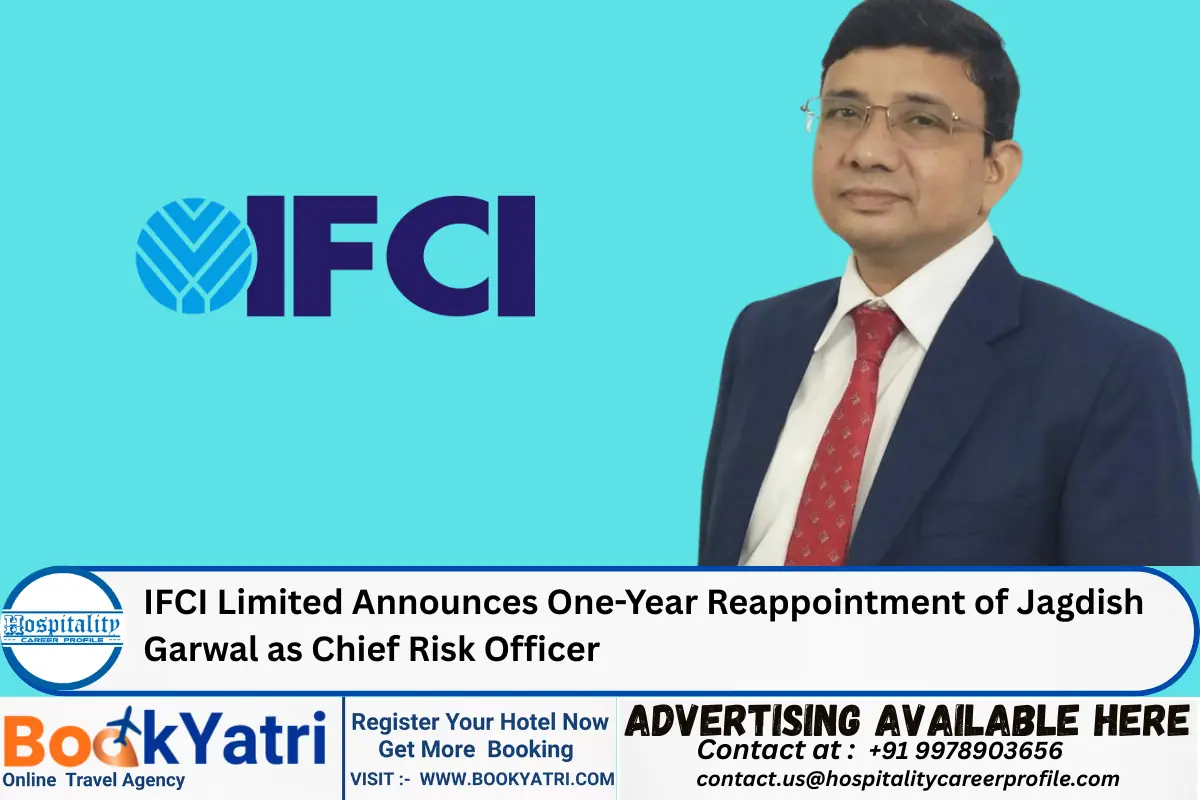

IFCI Limited Reinforces Risk Governance with Key Re-Appointment
IFCI Limited has announced the re-appointment of Jagdish Garwal as Chief Risk Officer (CRO), reaffirming the institution’s commitment to robust risk management practices and strong regulatory compliance. The decision reflects the company’s confidence in established leadership and highlights the growing importance of risk governance in India’s evolving financial ecosystem.
In today’s dynamic financial environment, institutions must continuously adapt to regulatory developments, market volatility, and operational challenges. Re-appointing an experienced professional to oversee risk functions ensures continuity, stability, and strategic alignment with long-term corporate objectives.
The Strategic Importance of the Chief Risk Officer Role
The Chief Risk Officer plays a critical role in safeguarding the financial integrity and operational resilience of an organization. This position oversees enterprise-wide risk management, including credit risk, market risk, operational risk, liquidity management, and regulatory compliance.
For financial institutions such as IFCI Limited, structured risk oversight is fundamental to maintaining stakeholder trust and ensuring sustainable growth. The CRO is responsible for identifying emerging risks, implementing mitigation frameworks, and ensuring adherence to regulatory standards set by financial authorities.
Ensuring Enterprise-Wide Risk Alignment
Enterprise Risk Management (ERM) requires coordinated planning across departments. The CRO works closely with senior leadership, audit committees, and compliance teams to ensure that risk considerations are integrated into strategic decision-making processes.
By maintaining consistent risk evaluation mechanisms, IFCI Limited strengthens its ability to respond proactively to financial uncertainties and market shifts.
Continuity and Stability Through Re-Appointment
Re-appointing Jagdish Garwal underscores IFCI Limited’s emphasis on continuity in leadership. Institutional memory and experience are valuable assets in risk management roles, where familiarity with internal systems and regulatory frameworks enhances decision-making efficiency.
Leadership continuity ensures that ongoing risk mitigation strategies remain uninterrupted and that long-term projects maintain strategic momentum. Stability at the executive level also supports consistent communication with regulators, investors, and internal stakeholders.
Maintaining Regulatory Compliance Standards
Financial institutions operate within stringent regulatory environments. The Chief Risk Officer ensures compliance with statutory guidelines, reporting requirements, and governance norms. Consistent oversight reduces exposure to penalties, reputational risks, and operational disruptions.
Through structured compliance monitoring and internal controls, IFCI Limited reinforces its commitment to responsible financial management.
Strengthening Credit and Market Risk Oversight
Credit risk remains one of the primary concerns for lending institutions. Effective risk assessment mechanisms help evaluate borrower profiles, monitor portfolio performance, and minimize exposure to non-performing assets.
Market risk, influenced by interest rate fluctuations, economic cycles, and geopolitical developments, requires constant monitoring. The CRO’s role involves developing predictive models and contingency frameworks that protect institutional capital during volatile periods.
Enhancing Risk Monitoring Systems
Modern risk management relies heavily on technology-driven analytics and real-time data monitoring. Implementing advanced risk assessment tools allows organizations to detect early warning signals and adjust strategies accordingly.
By strengthening digital risk monitoring systems, IFCI Limited enhances its ability to respond swiftly to changing market conditions.
Operational Risk and Internal Control Mechanisms
Operational risk arises from internal processes, system failures, and human errors. Effective internal control frameworks help minimize such risks and maintain operational stability.
The Chief Risk Officer collaborates with internal audit teams to evaluate process efficiency, identify control gaps, and recommend corrective measures. Structured oversight ensures that risk exposure remains within acceptable thresholds.
Promoting a Risk-Aware Organizational Culture
Risk governance is not limited to executive leadership; it must be embedded across all levels of the organization. A risk-aware culture encourages employees to proactively identify potential challenges and adhere to compliance standards.
Training programs, structured reporting channels, and transparent communication foster accountability and strengthen institutional resilience.
Supporting Sustainable Growth Objectives
Effective risk management directly contributes to long-term business sustainability. Balanced risk-taking enables financial institutions to pursue growth opportunities while protecting capital and stakeholder interests.
The re-appointment of Jagdish Garwal ensures that IFCI Limited continues to maintain disciplined risk evaluation processes while supporting strategic expansion initiatives.
Aligning Risk Strategy with Corporate Vision
Corporate growth strategies must be supported by structured risk frameworks. The CRO plays a central role in aligning risk appetite with business objectives, ensuring that expansion initiatives remain financially prudent and operationally viable.
Such alignment enhances investor confidence and supports long-term organizational stability.
Building Stakeholder Confidence
Strong risk governance reassures investors, regulators, and business partners about the institution’s stability and reliability. Transparent reporting mechanisms and disciplined risk oversight contribute to improved market perception.
By reinforcing leadership within the risk function, IFCI Limited strengthens its governance credibility and commitment to responsible financial management.
Conclusion
IFCI Limited’s decision to re-appoint Jagdish Garwal as Chief Risk Officer highlights the organization’s focus on continuity, regulatory alignment, and disciplined risk governance. In an increasingly complex financial landscape, experienced leadership within the risk management function remains critical to sustaining operational resilience and protecting stakeholder interests.
With structured oversight and proactive risk mitigation strategies, IFCI Limited is well-positioned to navigate evolving market conditions while maintaining financial stability and long-term growth objectives.