Spirit Airlines Secures $275M Financing Through Aircraft Sale Deal
Spirit Airlines has secured court approval for a $275 million financing package linked to the sale of 20 Airbus A320 and A321 aircraft as part of its restructuring process.
 Jishan Khan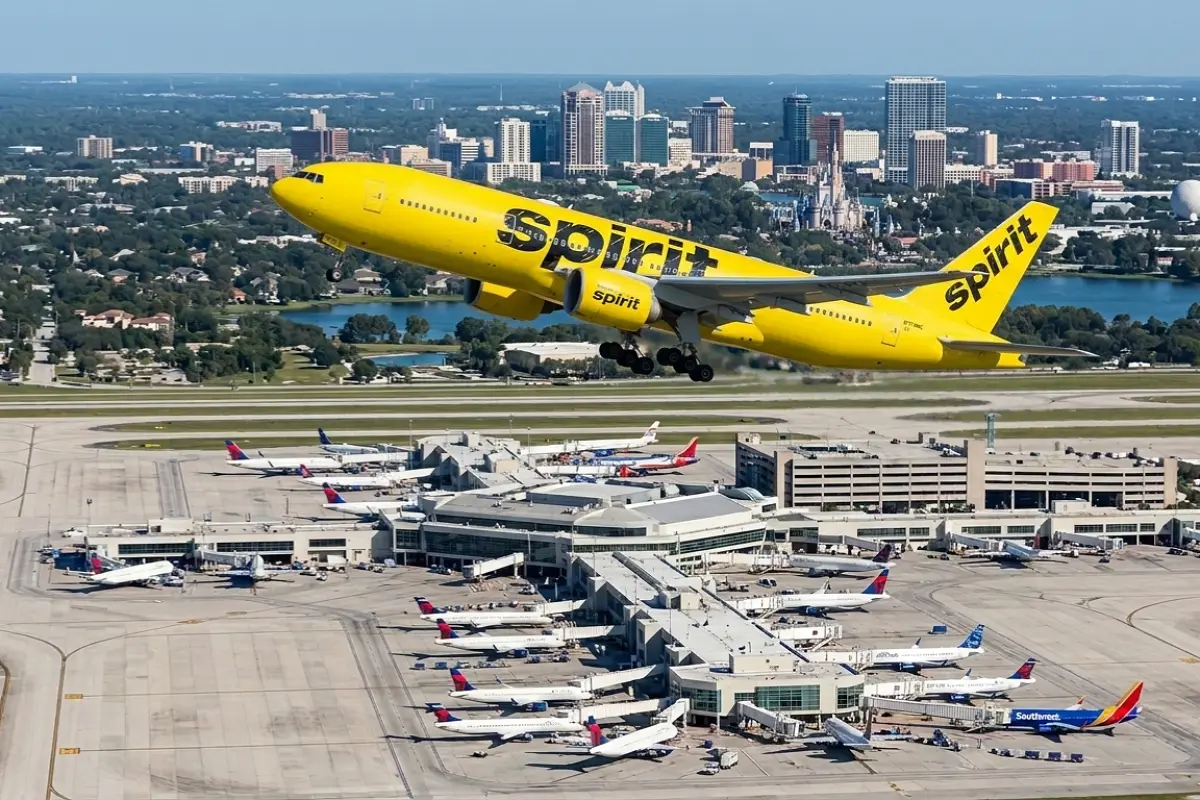
Spirit Airlines Is Selling Its Aircraft to Survive, And That Tells You Everything About What Kind of Future It Actually Has
$275 million in bankruptcy financing. 20 Airbus jets being sold for $553.5 million. An airline whose planes are now worth more than its operations. Spirit is not restructuring toward a comeback. It is liquidating toward a conclusion.
There is a specific moment in every airline bankruptcy where the nature of the outcome becomes clear, not from what management says publicly, not from the restructuring plan language, but from what the airline is actually doing with its assets. For Spirit Airlines, that moment has arrived with the bankruptcy court approval of a $275 million debtor-in-possession financing package tied to the sale of 20 Airbus A320 and A321 aircraft.
Read that structure carefully. Spirit is not borrowing $275 million to fund operations, rebuild its network, or invest in the commercial infrastructure of a recovering airline. It is borrowing against the planned sale of 20 of its own jets, using the aircraft themselves as the collateral and the source of repayment in a deal valued at approximately $553.5 million with aviation asset manager CSDS Asset Management.
In plain terms, Spirit's most valuable remaining assets are not its routes, its brand, its slots, or its customer relationships. They are the physical aircraft. And the bankruptcy process is now organised around extracting that value for creditors rather than preserving it for an operational future.
What Debtor-in-Possession Financing Actually Means in This Context
DIP financing is standard in Chapter 11 bankruptcies, it is the mechanism through which companies in restructuring access the liquidity they need to keep operating while the legal process plays out. Most DIP facilities are designed to fund ongoing operations: payroll, vendor payments, fuel purchases, the working capital requirements of an airline that is still flying.
Spirit's DIP structure is different in a way that matters enormously for understanding what comes next. It is specifically tied to an aircraft sale. The $275 million is not operational funding in the conventional sense — it is bridge financing against a specific asset monetisation transaction, structured to give Spirit liquidity now in exchange for the proceeds of the jet sales when they close.
That structure tells you that Spirit's path to satisfying its creditors runs through its fleet, not through its revenue. The airline's lawyers and financial advisors looked at the balance sheet and concluded that the most reliable source of value available to the bankruptcy estate is the Airbus aircraft, assets that have a clear market value, willing buyers in CSDS Asset Management, and a transaction structure that the court has now approved.
It is the financial equivalent of selling the furniture to pay the rent. Necessary, defensible, and deeply clarifying about the direction of travel.
The $553.5 Million Aircraft Deal and What It Says About Market Conditions
- The $553.5 million sale of 20 Airbus A320 and A321 aircraft highlights the strong market demand for modern, fuel-efficient narrowbody jets.
- Unlike previous airline bankruptcies, today's aircraft market is supported by a global shortage of new aircraft caused by ongoing Boeing and Airbus production constraints.
- Limited availability of new aircraft has significantly increased the value of existing narrowbody fleets, making aircraft sales a viable strategy for creditor recovery.
- Spirit Airlines' aircraft are not being sold at heavily discounted distress-sale prices; instead, they are attracting valuations supported by genuine market demand.
- Buyers cannot easily replace similar aircraft through new orders, increasing the attractiveness of available used A320 and A321 jets.
- CSDS Asset Management is acquiring the aircraft as long-term aviation assets that can be leased, remarketed, or placed with other airlines.
- The transaction demonstrates that Spirit's financial troubles have not reduced the underlying value of its fleet.
- Strong aircraft valuations improve the outlook for creditors by generating substantial proceeds through the bankruptcy process.
- Higher fleet liquidation values provide a more favorable recovery scenario than would be possible in a weak aircraft market.
- The deal underscores how supply shortages are reshaping airline bankruptcies, turning aircraft fleets into some of the most valuable assets available to creditors.
The 17,000 Workers Lawsuit and the Executive Bonus Request, Again
It is impossible to write about Spirit's aircraft monetisation without returning to the story that sits directly alongside it in the bankruptcy proceedings, the class-action lawsuit filed by former employees alleging WARN Act violations, and the reported request for more than $10 million in executive retention bonuses.
The juxtaposition is stark. The same bankruptcy estate that is generating $553.5 million from aircraft sales, that secured $275 million in DIP financing, and that is navigating a restructuring process with teams of expensive lawyers and financial advisors, is simultaneously the entity that allegedly failed to give 17,000 workers the 60 days notice the law requires, and is seeking eight-figure bonuses for the executives managing the wind-down.
The aircraft sale proceeds flow through the bankruptcy waterfall in a specific order. Secured creditors, DIP lenders, and administrative claims, which include the restructuring professionals and potentially the executive retention arrangements, sit near the top of that waterfall. The WARN Act claims filed by former employees are unsecured obligations that compete for whatever remains after higher-priority claims are satisfied.
The aircraft are generating real money. The distribution of that money through the bankruptcy process will determine whether the workers who lost their jobs without notice see any of it, and history suggests the answer will be disappointing relative to what the top of the waterfall receives.
What Spirit's Operational Future Actually Looks Like
The question that the aircraft sale most directly answers is what Spirit's operational footprint will look like on the other side of this bankruptcy, if there is an operational other side at all.
An airline that exits bankruptcy with 20 fewer aircraft has proportionally less capacity, fewer routes, and a smaller revenue base than the airline that entered. If Spirit is attempting a genuine operational restructuring rather than a liquidation, the fleet reduction needs to be matched by a cost structure reduction and network rationalisation that makes the smaller airline economically viable.
The evidence for that operational restructuring is not particularly visible in the current proceedings. The DIP financing tied to aircraft sales is the dominant financial narrative. The network has already contracted significantly. The brand has suffered the reputational damage that comes from a high-profile collapse, and the low-cost passenger market it served has competitors, Frontier, Allegiant, and othersm, that have been capturing Spirit's former passengers throughout the bankruptcy period.
Analysts suggesting that Spirit's future increasingly depends on selling aircraft rather than rebuilding operations are reading the available evidence accurately. An airline whose most significant financial transaction in bankruptcy is a $553.5 million fleet sale is an airline that is generating more value through liquidation than through operation, and that reality has a logical conclusion that restructuring language cannot indefinitely defer.
The Broader Pattern This Establishes
Spirit's aircraft monetisation strategy is not unique. It is the most visible current example of a trend that is reshaping how distressed airline bankruptcies play out in an environment where narrowbody aircraft values are elevated and where aviation asset managers have the capital and appetite to acquire quality jets from distressed sellers.
The pattern, airline enters bankruptcy, fleet value remains high due to market conditions, aircraft are sold to asset managers who lease them to healthier carriers, proceeds fund creditor recovery, is a more orderly outcome than previous bankruptcy cycles produced when aircraft values collapsed along with the airline's operational performance.
It is better for creditors. It is better for the aviation system, which gets to keep the aircraft in productive use rather than storing them in the desert. It is arguably better for the passengers who were flying Spirit, who can now fly the same jets on carriers with more stable operational foundations.
It is not better for the 17,000 workers whose livelihoods were tied to Spirit's existence as an operating airline, and who will watch the bankruptcy estate generate hundreds of millions of dollars from the assets their labour helped maintain, while their WARN Act claims sit near the bottom of the waterfall waiting for whatever the process leaves behind.
Spirit Airlines is not dead yet in the legal sense. The bankruptcy proceedings continue and the possibility of some operational future has not been formally extinguished. But an airline that is financing its survival by selling its aircraft is telling you something about the nature of that survival that no restructuring plan language can meaningfully contradict.
The planes are leaving. The question is what, if anything, stays.