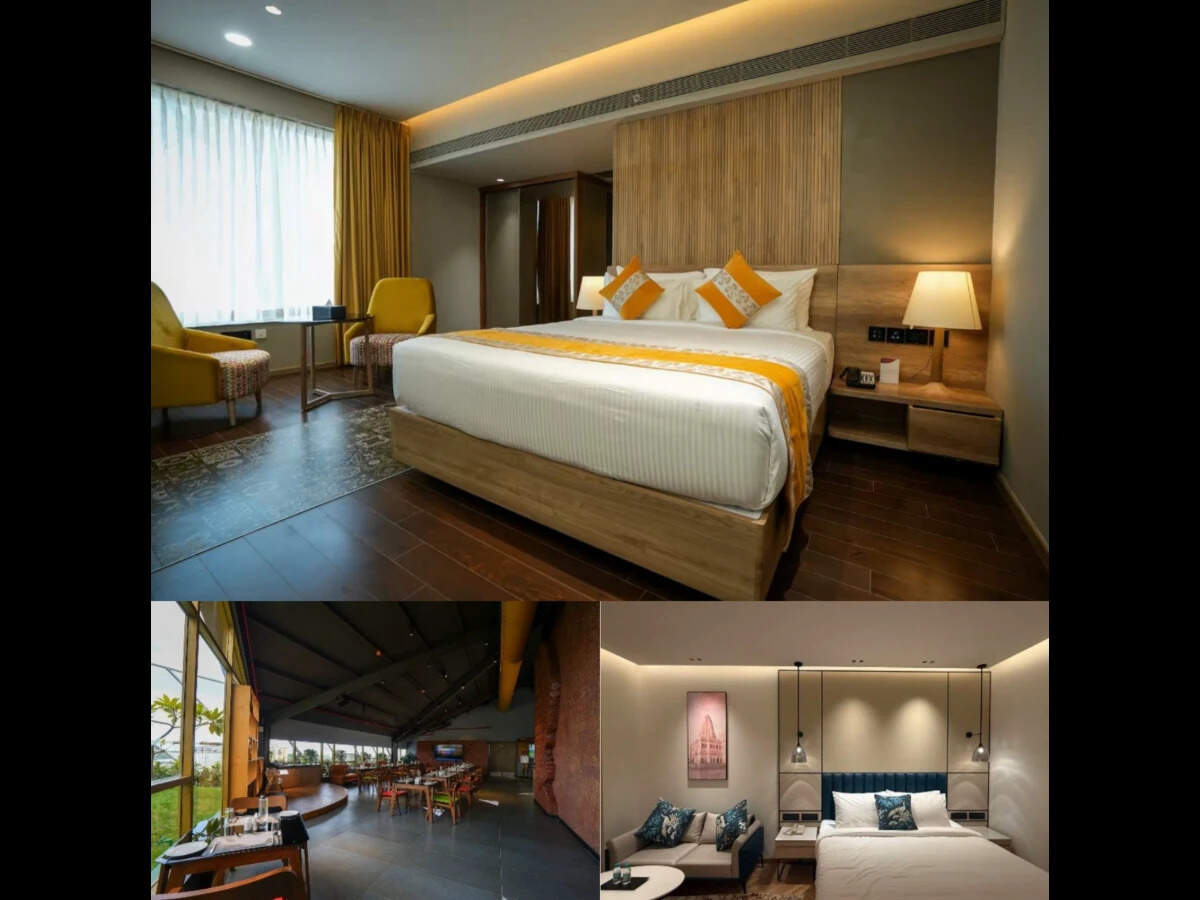
Braemar Hotel & Resorts Form 8K: A Luxury Portfolio Reshapes Itself
Braemar Hotel & Resorts Form 8K arrives as the luxury REIT sells hotels, sharpens its resort focus and prepares to run itself. Here is what it means.
 RUKAIYA KADIWAL
Before the first guests arrive, a luxury resort has its own kind of quiet. Coffee machines hiss in a back corridor, a housekeeper carries folded linen along a hallway that smells faintly of cut lemon, and someone at the front desk rehearses a greeting under her breath. Nothing about the hour suggests a balance sheet. Yet every one of these small rituals is priced, measured and reported somewhere far from the lobby, in documents most guests will never read.
The Filing Behind the Front Desk
One of those documents is the Braemar Hotel & Resorts Form 8K dated 23 September, posted this week to the public record. Braemar Hotels & Resorts is a Dallas based real estate investment trust that owns luxury hotels and resorts, and trades on the New York Stock Exchange as BHR. Its shares slipped about 3.3 percent on the day the filing surfaced, a small movement that says less than the paperwork does. An 8K is the form a listed company files when something material has happened, and it is where the hospitality business admits, in plain legal language, that it is changing.
A Portfolio Being Redrawn
The change has been building for months. On 12 June, Braemar announced the conclusion of a strategic review and a plan to become a self managed REIT while remaining publicly traded. Around the same time, filings showed its subsidiaries would sell The Ritz Carlton Sarasota, the Hotel Yountville and Bardessono Hotel and Spa, the last two in California. The Park Hyatt Beaver Creek Resort and Spa sale had already closed on 1 June, and a separate pro forma filing addressed the disposition of the Pier House in Key West.
The company said its portfolio would keep its centre of gravity in high end, full service hotels and resorts, with a strategy built on asset management, capital investment and market positioning. Selling some of the most admired rooms in the portfolio while promising to stay luxury is a delicate act, and it invites a fair question about whether a smaller collection is a stronger one.
What the Numbers Say About the Rooms
The first quarter offers the best evidence. For comparable hotels, the average daily rate rose to $745 and revenue per available room to $480.80, each up 5.7 percent from a year earlier. Total hotel revenue grew 5.4 percent to $211.6 million, and comparable hotel EBITDA rose 13.7 percent to $75.5 million, lifting margins to 35.7 percent from 33.1 percent. Resorts outperformed urban hotels, and Ritz Carlton branded properties drove much of the profit. Net debt stood at 43.4 percent of gross assets, with maturities staggered out to 2030.
Read together, the figures suggest guests are still paying for places that feel remote, considered and hard to replicate. It is the same instinct that sends travellers to astro tourism hotels and dark sky desert resorts, where the product is not a bigger suite but a rarer experience.
Two Ways to Read the Same Page
Supporters of the plan see discipline. Selling assets can reduce debt, fund improvements at the hotels that earn the most, and remove a layer of external management. Sceptics point out that a REIT without a large, diverse portfolio can be more exposed when travel slows, and that the market has not always rewarded smaller hotel owners. Both views are reasonable, and the filing itself settles neither. Investors will get the next real answer when Braemar reports third quarter results after the market closes on 4 November, with the release due in the investor section of the official Braemar website.
The Human Cost of a Line Item
For the people who work in these hotels, restructuring is rarely abstract. A change of owner or manager can alter schedules, standards and the small habits that make a place feel like itself. Hospitality runs on continuity: the bartender who remembers a name, the concierge who knows which trail is closed. Whatever the balance sheet gains, the rooms only keep their value if that continuity survives the paperwork.
Later in the day, the lobby will fill and the quiet will end. A guest will ask for a table by the window, and a waiter will find one. Somewhere else, an analyst will scroll through the same filing and reduce it to a percentage. Both are looking at the same hotel, and only one of them will remember how it felt to arrive.