Hawaiʻi Island Hotel Wastewater Charges Set to Triple
Hawaiʻi Island hotel wastewater charges could rise over 300% by 2031 under a proposed county bill, drawing pushback from the local hotel industry.
 RUKAIYA KADIWAL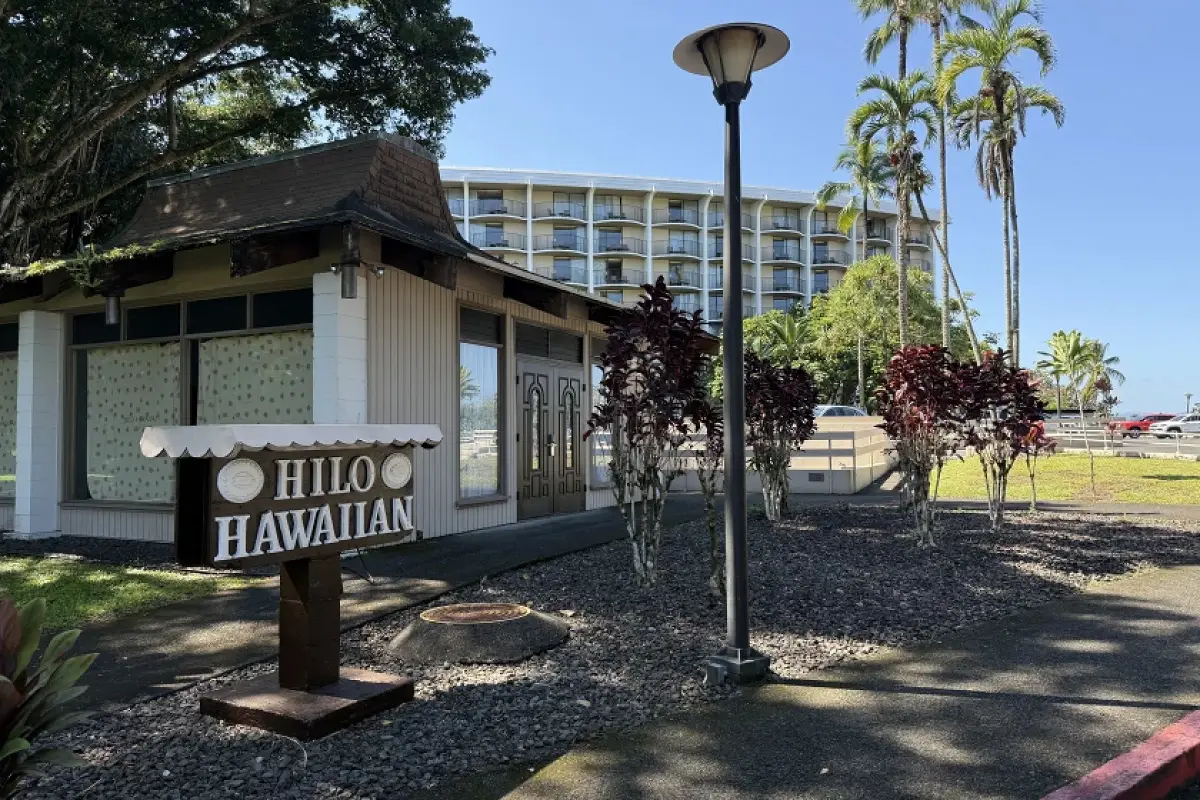
Palm trees sway beside the sign for the Hilo Hawaiian Hotel on Banyan Drive, its balconies stacked in neat rows against the Hawaiʻi Island coastline, a property that has hosted decades of travelers largely unaware of what happens to the water once it leaves their rooms. That water is now at the center of a contentious county proposal, one that would introduce steep new Hawaiʻi Island Hotel Wastewater Charges targeting hotels specifically, separate from other commercial users.
What the Proposed Bill Actually Does
Introduced in a Hawaiʻi County Council bill, the measure would phase in small annual increases over five years starting in January, with charges for all users climbing to two to three times their current rates by 2031. The revenue is intended to fund maintenance and upgrades to the County of Hawaiʻi's wastewater infrastructure, a system officials say has long been undercharging for the volume it processes.
Why Hotels Are Being Separated Out
Much of the council discussion centered on the bill's new category specifically for hotels, distinct from other commercial users. Daniel Girvan, director of the county Department of Environmental Management, explained the reasoning directly. "Hotels sometimes have restaurants, they have high density of population, they have industrial grade laundries to keep all of their linen clean," he said during the council meeting. "By the time you receive all that wastewater, it is an unusually large volume and concentration of materials that we have to treat." His explanation frames the hotel category not as a punitive measure but as an attempt to align charges with the actual burden hotels place on the county's treatment system.
What the New Rates Would Look Like
Current non residential users pay a base rate of 54 dollars per month per unit, plus up to 9.50 dollars per 1,000 gallons of water used. Under the proposal, that base rate would rise to 155 dollars by 2031, with usage charges climbing to 18.75 dollars per 1,000 gallons for standard commercial users. Hotels, under their new dedicated category, would face a monthly base rate of 189 dollars and usage charges as high as 21.40 dollars per 1,000 gallons, a noticeably steeper structure than what other commercial properties would pay.
The Industry's Response
Kekoa McClellan, representing the Hawaiʻi Hotel Alliance, pushed back sharply against the new classification, calling it a targeted super tax that unfairly burdens hotels. "Isolating our brick and mortar hotels with rate increases of more than 300 percent disproportionately burdens local properties that already contribute tens of millions of dollars through real property taxes and the county TAT," McClellan said, referring to the Transient Accommodations Tax. He also pointed to a perceived inconsistency in how the county treats different types of visitor accommodations. "Meanwhile, short term rentals escape this classification under residential rates. There are more short term rentals throughout the County of Hawaiʻi than hotel units." His comparison raises a genuine question about whether the county's fee structure fully accounts for the broader visitor accommodation landscape, not just its traditional hotel stock.
The County's Defense of the Numbers
Girvan acknowledged the steepness of the proposed hotel rate but defended it as the result of a formal rate study. "I am sensitive to the idea that the price is higher," he said. "What that really means is that for a very long time we have been undercharging for that grade of customer." That framing positions the increase less as a new burden and more as a long overdue correction to pricing that has failed to keep pace with hotels' actual infrastructure demands.
Residents Face Increases Too
The proposal doesn't spare residential users either. Single and multi unit residential customers, currently charged 52 dollars per month per unit, would see that rate climb to 63 dollars in January and eventually to 125 dollars by 2031, a substantial increase even before accounting for the steeper hotel specific rates layered on top.
What Happens Next
Opponents of the measure, including McClellan, have called on the council to defer the bill entirely rather than advance it as currently written. The council has scheduled discussion to resume on September 15, leaving the final shape of the fee structure, and its impact on Hawaiʻi Island's hospitality sector, still unresolved.
What a Wastewater Bill Reveals About Tourism's True Costs
Debates over infrastructure fees rarely draw public attention, yet they often expose exactly how a community weighs the economic benefits of tourism against the physical strain that industry places on shared systems. Whatever the council ultimately decides, this proposal makes visible a cost of hospitality rarely discussed openly, the water quietly flowing out of every hotel room, and who should genuinely be paying to treat it. For readers tracking how hotel operators are navigating rising operational costs across different markets, from Austin's management consolidation strategies to Hawaiʻi's infrastructure fees, the pressure on margins is playing out through very different mechanisms depending on the region.
More information is available on the official website at hawaiicounty.gov.