Kimpton La Peer Hotel Sale Fetches $63 Million in LA
Kimpton La Peer hotel sale sees KHP Capital Partners sell the WeHo property to APA Group for $63 million, deepening Japanese investment in US hotels.
 RUKAIYA KADIWAL
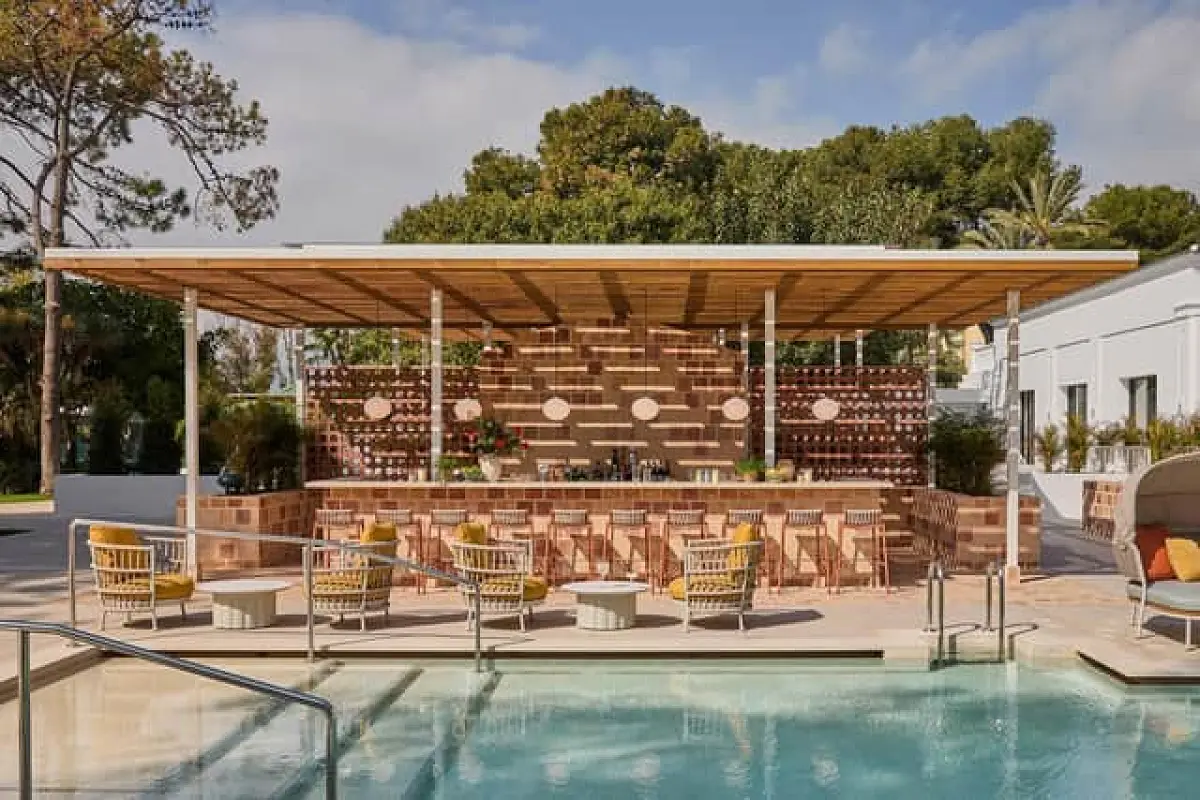
On a quiet block of West Hollywood's Design District, a five story hotel with a distinctive tiled facade has become the center of a transaction spanning two continents. The Kimpton La Peer hotel sale saw KHP Capital Partners part with the 105 key property, selling it to Japanese hotel company APA Group for $63 million, a price that works out to roughly $600,000 per room, according to the Los Angeles Business Journal.
Full details on the Kimpton brand's global portfolio are available on the official IHG Hotels & Resorts website.
KHP Capital Partners Trims Its Los Angeles Holdings
KHP Capital Partners is a San Francisco based firm that completed the Kimpton La Peer property in 2017 at 627 La Peer Drive, on a former industrial block that once housed more manufacturing tenants than it does today, with businesses like Anawalt Lumber among the few holdouts from that earlier era.
The hotel holds a specific place in the neighborhood's development history, having been the first hotel to open in the area surrounding West Hollywood's Pacific Design Center. That distinction matters because it positioned the property early, ahead of the district's later growth into a more established design and hospitality corridor.
APA Group Acquisition Signals Deeper US Push
This APA Group acquisition is part of a broader international strategy for the Japanese hotel company, which broke into the United States market in 2015, the same year KHP itself launched out of the Kimpton brand. The two companies share history beyond this single transaction, having partnered previously to develop hotels together.
Newmark's Tony Malk, Greg Morgan and Griffin Garbarini arranged the deal on behalf of KHP. Malk described the sale as evidence that buyers increasingly view entry into the Los Angeles hospitality market as "a strategic, long-term investment," a comment that frames the transaction less as an opportunistic flip and more as a considered bet on the city's staying power within the broader hospitality sector.
Kimpton La Peer West Hollywood in a Growing Portfolio
Kimpton La Peer West Hollywood now joins a Kimpton footprint that spans four hotels in Los Angeles and seven more across California, giving APA Group a foothold in one of the state's most closely watched hospitality markets.
The acquisition also fits into APA's larger ambitions across the Western United States and the Pacific Rim more broadly. The company aims to double its overseas hotel room count to 10,000 by the end of the decade, alongside a targeted revenue increase of more than 30 percent by fiscal year 2030, according to Daily Lodging Report. Hawaii and Australia are among the other Pacific markets the company has identified for continued growth.
West Hollywood Hotel Sale Reflects Wider Investment Trends
This West Hollywood hotel sale is not an isolated event within the broader pattern of Japanese capital moving into American real estate. In New York City alone, Japanese based companies have acquired at least $2.1 billion worth of real estate since January 2024, emerging as the dominant foreign buyers in that market, The Real Deal reported earlier this year.
The trend extends well beyond hospitality. Since 2020, Japanese homebuilders have announced or closed acquisitions of 23 U.S. single family builders, more than double the pace recorded between 2013 and 2019, positioning Japanese companies to control roughly 6 percent of U.S. home construction in the years ahead.
A $63 Million Hotel Acquisition in Context
Viewed against that backdrop, this $63 million hotel acquisition reads less like an isolated hospitality deal and more like one data point within a much larger current of Japanese capital flowing into American real estate across multiple sectors simultaneously. That pattern raises different reactions depending on perspective, some industry observers see it as validation of American markets' long term stability, drawing steady foreign capital even amid broader economic uncertainty, while others note that sustained foreign acquisition activity can gradually shift pricing dynamics in competitive submarkets like West Hollywood.
The strategy also mirrors moves by hospitality companies elsewhere expanding deliberately into markets where their core customer base already travels, a pattern visible in this report on Lemon Tree Hotels' international expansion, where geographic proximity and existing traveler patterns similarly guided growth decisions.
Japanese Hotel Investment in US Gains Momentum
The broader story of Japanese hotel investment in US markets is one of steady, deliberate accumulation rather than sudden, headline grabbing moves. APA Group's approach, building on an existing relationship with KHP and targeting specific high value submarkets, reflects a strategy built for the long term rather than quick turnover.
What This Sale Means for the Los Angeles Hospitality Market
For the Los Angeles hospitality market, the sale adds another data point to a narrative of continued investor confidence, even as the broader commercial real estate sector navigates a more cautious financing environment nationally. A boutique hotel changing hands at $600,000 per key suggests buyers still see meaningful upside in well positioned, design forward properties within established neighborhoods.
What the sale ultimately reflects is less about a single building on La Peer Drive and more about the quiet, compounding decisions being made in boardrooms thousands of miles apart, each one betting that a city's design district, its architecture, its foot traffic, its story, is worth owning for decades rather than years.