Otherwander Soho Pod Hotel Transforms London Hostel by SODA
Otherwander Soho Pod Hotel by SODA transforms a former hostel into a 566-pod capsule hotel with vibrant social spaces near Oxford Street, London.
 RUKAIYA KADIWAL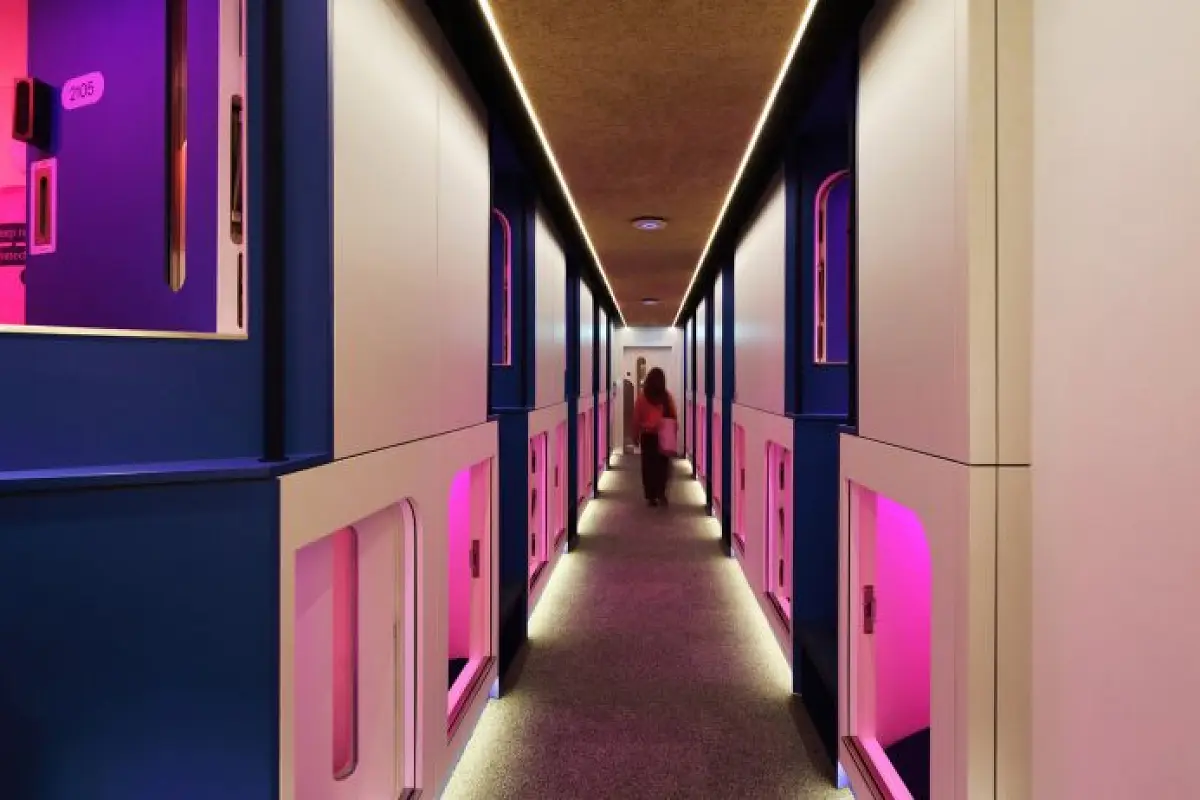
Down a corridor lit in shifting pink and blue, past rows of stacked sleeping pods glowing softly from within, a lone guest makes her way toward her room for the night. The scene feels closer to a film set than a hotel hallway, but it captures precisely the atmosphere London studio SODA set out to create with Otherwander Soho Pod Hotel, a high-density capsule hotel carved out of a former backpacker hostel in central London.
Otherwander combines 566 sleeping pods, or "nests," with shared social spaces, targeted at young travellers and those seeking budget-friendly city-centre accommodation. Full details on the property are available through Otherwander's official website. The hotel occupies a former hostel housed across a pair of early 20th-century buildings close to Oxford Street, transformed and expanded by SODA.
Designing for a New Generation of Travellers
Ryan Holland, director at SODA, explained the thinking behind the project's approach to space and guest experience. "The aim was to provide affordable, high-density accommodation without compromising the guest experience," Holland told Dezeen. "The original target demographic was primarily Gen Z and younger independent travellers who are design-conscious and prioritise location and experience," he continued. "However, our intention was always to create a design which felt inclusive to all demographics, and we're now finding that the hotel has a much broader appeal to all sorts of age groups who equally want well-designed, affordable accommodation in central London."
The Rise of the Pod Hotel
Pod hotels, also known as capsule hotels, are affordable, ultra-compact accommodation comprising rows of small stacked sleeping spaces alongside shared bathroom and social areas, rather than traditional ensuite rooms. They are often associated with Japan, where the first example opened in Osaka in 1979, though the format has since become increasingly common in cities around the world.
"Pods make central city locations more affordable in a city where space and hotel costs are exceptionally high," Holland said. "The model particularly suits short stays and travellers who intend to experience the city rather than spend significant time in their room."
Preserving Heritage While Building New
SODA oversaw both the architecture and interiors of the project, focusing on preserving, retaining and connecting the pair of heritage buildings on Dean Street while adding a rear extension that felt contemporary yet in keeping with the surrounding area. The extension replaces what the studio called a "low-quality post-war addition" to the site, and primarily houses the hotel's fully accessible accommodation and facilities, since complex stepped connections were unavoidable within the existing buildings. Its design draws visual cues from nearby brick buildings in Soho, incorporating hand-laid arched details and corbelled window reveals.
A Tech-First Arrival Experience
Inside, visitors are welcomed to a glossy, white-walled lobby area called the Gallery, featuring a giant digital screen and automated QR-code check-in and e-gates. The QR codes form part of a wider tech-first strategy for the hotel, which keeps staffing levels to a minimum. This approach was among the features SODA developed through workshops with young people, who offered feedback on how they like to travel and helped the studio "fine-tune the balance between privacy, sociability and automation."
Social Spaces With a Cocooning Feel
Beyond the Gallery sit the ground-floor social spaces, named the Huddle, which carry a cocooning feel thanks to a mix of warm colours and materials, including pink and green banquette seating and a horseshoe-shaped neon bar. From here, visitors can reach the pods either by lift or via a five-story staircase that changes colour as it ascends.
Inside the Pods
The pods occupy the four upper floors as well as the basement, with bathrooms and supporting facilities distributed across each level. "This layout developed from the challenge of connecting existing buildings with differing floor levels, while creating clear circulation and keeping guest, public and servicing routes separate," Holland said.
The nests are sized to the width of either a single or double bed held inside, arranged in double-stacked bays of four with integrated stairs. Also accessed by QR code, each pod is acoustically isolated and individually ventilated and illuminated, with the ability to be serviced and controlled independently. Shared bathrooms, split into male, female and unisex options, are each fitted with several rain showers and vanity areas, finished in terrazzo that SODA said "exceeds typical traveller expectations."
Colour as Wayfinding and Atmosphere
A bold use of colour throughout the hotel is designed to add a youthful feel to the interior while also assisting with wayfinding across the building's many levels. "Colour lighting effects also create a futuristic atmosphere that shifts in response to the time and mood of the space, from a quiet Tuesday morning to a dynamic Soho Friday night," Holland said.
Otherwander joins a growing global trend of design-forward capsule hotels reimagining what compact, affordable accommodation can look like within expensive city centres, a shift that echoes the wider hospitality industry's move toward creating destination-specific, experience-led stays across every price point, whether through London's stacked pods or the lakeside setting of Lemon Tree Resort Nashik. For a generation of travellers who value design and location over square footage, Otherwander Soho suggests that a well-considered pod might offer something a conventional hotel room cannot: a sense of place, built into every glowing corner.