Seattle Restaurants Face Mounting Pressure from Rising Costs and Complex Regulations
Restaurants in Seattle are grappling with rising operational costs and complex regulations in 2026, creating challenges for profitability and long-term sustainability.
 Prajakta Sanjay Warwadkar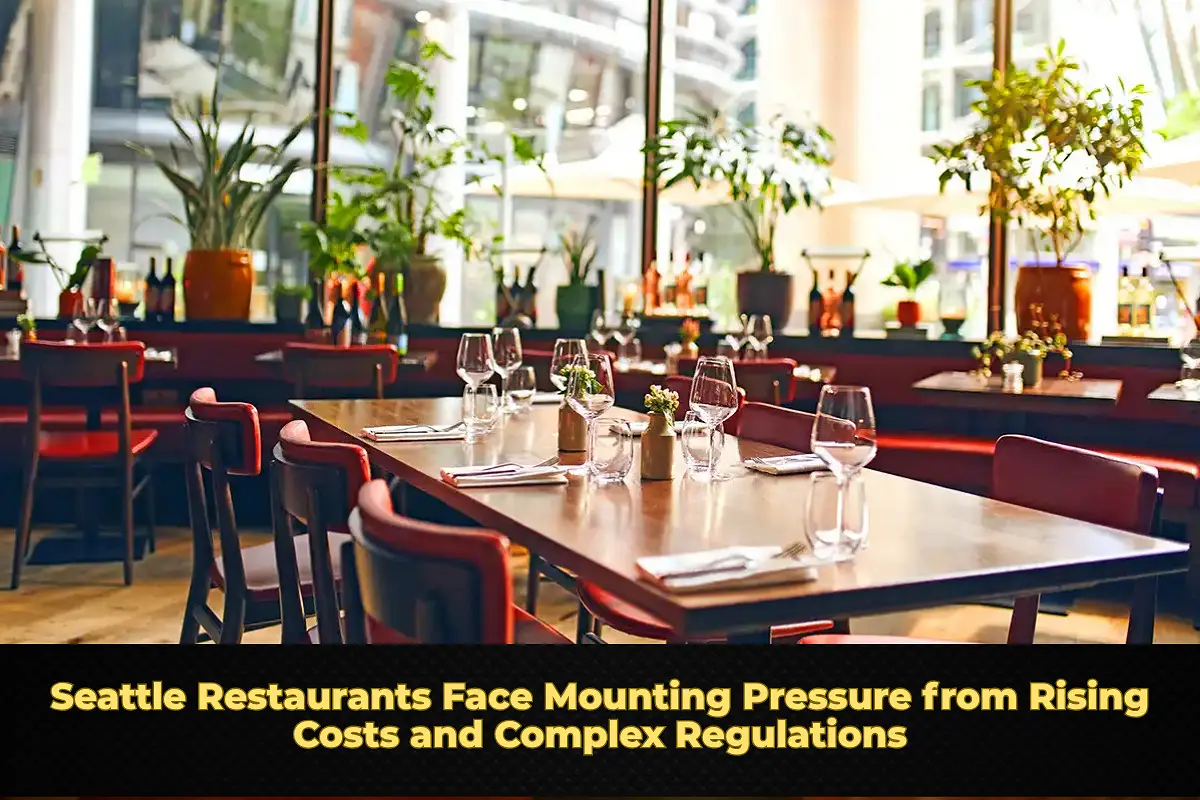
Seattle Restaurants Face Mounting Pressure from Rising Costs and Complex Regulations
Restaurants in Seattle are increasingly struggling in 2026 as rising operational costs and complex regulatory requirements create significant challenges for operators across the city. Industry stakeholders report that escalating expenses related to labor, rent, and compliance are affecting profitability and forcing businesses to rethink their strategies in one of the United States’ most competitive dining markets.
The situation has intensified over the past year, with restaurant owners highlighting a combination of economic pressures and evolving policies that are reshaping the local hospitality landscape. Many operators are finding it difficult to maintain margins while continuing to meet customer expectations for quality and service.
Rising Labor and Operating Costs
Labor costs remain one of the most significant challenges for Seattle’s restaurant industry. Minimum wage increases, along with additional employee benefits and compliance requirements, have substantially raised payroll expenses. For many operators, staffing costs now represent a larger share of overall expenditures than in previous years.
In addition to labor, rising food prices and supply chain disruptions have added further strain. Ingredients, utilities, and transportation costs have all increased, making it harder for restaurants to manage day-to-day operations without raising menu prices.
These cost pressures are forcing businesses to carefully evaluate pricing strategies, staffing levels, and operational efficiency in order to remain viable.
Complex Regulatory Environment
Seattle’s regulatory framework is another key factor contributing to the challenges faced by restaurant operators. Local policies covering wages, scheduling, health standards, and environmental compliance require significant administrative effort and financial investment.
While these regulations are designed to protect workers and promote sustainability, many restaurant owners argue that the cumulative impact is difficult to manage, particularly for small and independent businesses with limited resources.
Compliance often requires additional staff training, documentation, and adjustments to business practices, adding layers of complexity to daily operations.
Impact on Small and Independent Restaurants
Independent restaurants are among the most affected by the current environment, as they typically operate with tighter margins and fewer resources than large chains. Owners report that balancing rising costs with competitive pricing has become increasingly difficult.
Some businesses have been forced to reduce operating hours, limit menu offerings, or delay expansion plans in response to financial pressures. In more severe cases, closures have occurred as operators struggle to sustain long-term operations.
Industry observers note that the challenges facing independent restaurants could lead to a shift in the market, with larger, well-funded brands better positioned to absorb costs.
Menu Adjustments and Pricing Strategies
To cope with increasing expenses, many Seattle restaurants are adjusting their menus and pricing structures. This includes introducing higher-margin items, reducing portion sizes, and implementing dynamic pricing strategies.
Menu simplification has also become more common, allowing kitchens to operate more efficiently and reduce waste. By focusing on a smaller selection of dishes, restaurants can better control costs while maintaining quality.
However, these changes must be carefully managed to avoid negatively impacting customer perception and loyalty.
Customer Response and Dining Trends
Consumers are also feeling the effects of rising costs, with higher menu prices influencing dining behavior. Some customers are dining out less frequently or opting for more affordable options such as takeout and quick-service restaurants.
At the same time, there remains a demand for unique and high-quality dining experiences, particularly in a city known for its vibrant food culture. Restaurants that can deliver value while maintaining strong brand identity are more likely to retain customers.
This shift in consumer behavior is prompting operators to rethink how they position their offerings in a competitive market.
Role of Technology and Efficiency
Technology is playing an increasingly important role in helping restaurants manage rising costs. Digital ordering systems, inventory management tools, and data analytics are being used to improve efficiency and reduce waste.
Automation in certain areas, such as payment processing and kitchen operations, is also helping businesses streamline workflows. These innovations can offset some of the financial pressures, although they often require upfront investment.
Restaurants that successfully integrate technology into their operations are better positioned to adapt to changing market conditions.
Industry Advocacy and Policy Discussions
Restaurant owners and industry groups in Seattle are actively engaging with policymakers to address concerns about the regulatory environment. Discussions are focused on finding a balance between protecting workers and ensuring the sustainability of local businesses.
Some stakeholders are calling for more flexibility in regulations, as well as support measures such as tax relief or incentives to help offset rising costs. The outcome of these discussions could have a significant impact on the future of the industry in the region.
Collaboration between the public and private sectors is seen as essential to creating a more sustainable operating environment.
Long-Term Outlook
The challenges facing Seattle’s restaurant industry are likely to persist in the near term, as economic pressures and regulatory requirements continue to evolve. Operators will need to remain adaptable, focusing on efficiency, innovation, and customer engagement to navigate the changing landscape.
Despite the difficulties, Seattle’s reputation as a culinary destination remains strong, supported by a diverse range of dining concepts and a loyal customer base. Businesses that can successfully balance cost management with quality and experience are expected to endure.
The ability to adapt to ongoing challenges will determine the long-term sustainability of restaurants across the city.
Conclusion
Seattle restaurants are confronting a complex mix of rising costs and regulatory demands in 2026, forcing operators to adapt their business models while striving to maintain competitiveness in a challenging environment.