Aeromexico Expands Credit Facility to $250 Million
Aeromexico expanded its revolving credit facility to $250 million, building on its 2024 return to Mexico's banking market after its Chapter 11 restructuring.
 Jishan Khan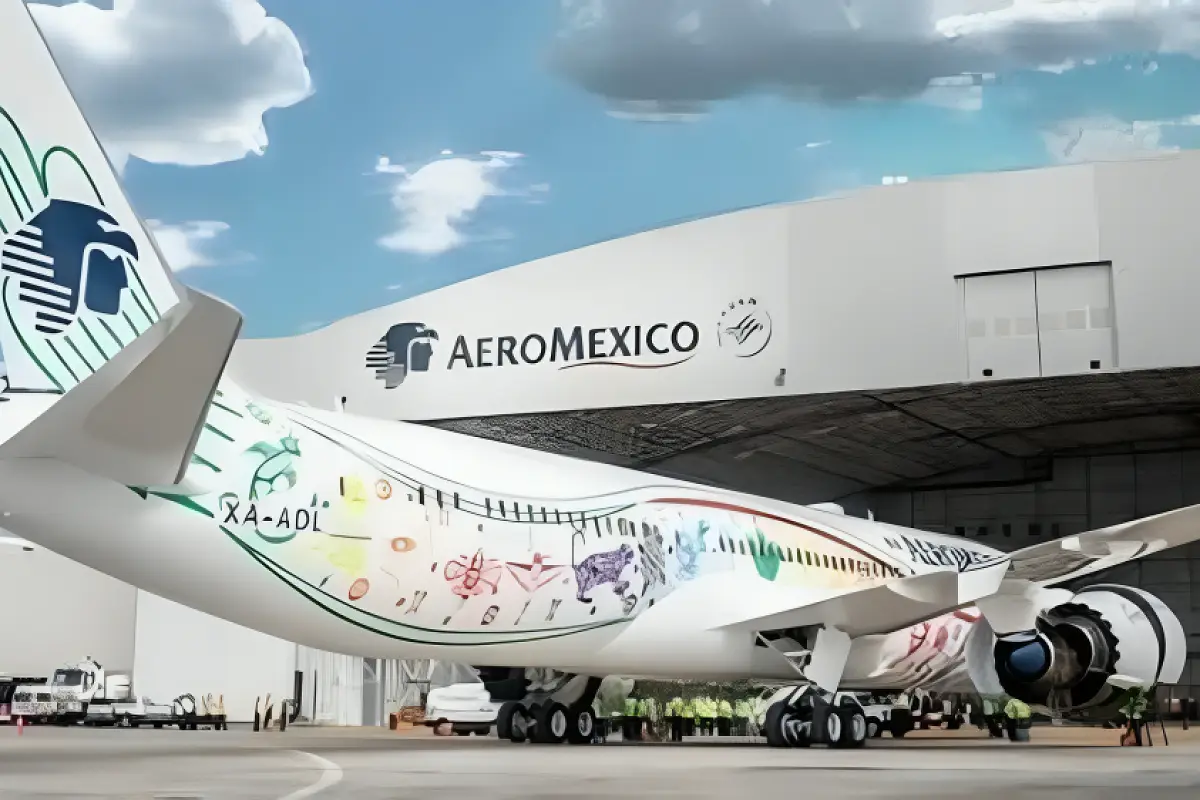
Aeroméxico's $250 Million Credit Line Is the Sequel to a Loan That Marked Its "Successful Return to the Mexican Banking Market" Worth Remembering What That Return Followed
Aerovías de México confirmed on September 30, 2026 that it has renewed and expanded its revolving syndicated credit facility from US$200 million to US$250 million, with BBVA Mexico again serving as sole global coordinator, sole bookrunner and administrative agent, alongside a syndicate of domestic and international lenders. The new three-year facility replaces the original US$200 million line secured in the third quarter of 2024, a loan BBVA's own announcement at the time explicitly described as marking Aeroméxico's "successful return to the Mexican banking market." That phrasing is the detail worth remembering here, because it quietly signals something about where Aeroméxico was two years ago that this week's headline figure, taken alone, does not convey.
Why "Return to the Banking Market" Was Never a Throwaway Phrase
Aeroméxico emerged from Chapter 11 bankruptcy protection in March 2022, following a restructuring triggered by the pandemic's near-total collapse of air travel demand. An airline exiting bankruptcy does not simply resume borrowing on ordinary commercial terms the moment reorganisation concludes, rebuilding credibility with banks, demonstrating sustained post-restructuring financial discipline, and proving a genuinely stable operating model typically takes years before lenders are willing to extend meaningful syndicated credit again. The original US$200 million facility, closed roughly two and a half years after emergence from bankruptcy, was BBVA's own way of marking that Aeroméxico had cleared precisely that credibility threshold. This week's expansion to US$250 million, on improved terms and with the same lead bank willing to upsize the commitment, is the clearest available evidence that the post-bankruptcy rebuilding phase BBVA flagged in 2024 has continued on a genuinely upward trajectory rather than stalling.
Why the Underlying Financial Metrics Actually Support That Reading
Aeroméxico's own disclosed first-quarter 2026 results give the expansion real financial grounding rather than treating it as a standalone announcement. Total revenue reached $1.3 billion, up 13.3% year-over-year, with adjusted EBITDAR margin at 25% and operating margin at 10.6% genuinely healthy profitability metrics for a commercial airline operating in a cost environment this feed has documented squeezing margins across nearly every carrier globally throughout 2026. More specifically relevant to a lender's own risk assessment: adjusted net debt to EBITDAR improved to 1.7x in Q1 2026, down from 1.8x the previous quarter, a leverage ratio moving in the right direction, the exact opposite trajectory to the debt-servicing concerns this feed covered driving private lender caution around Air India's own loan request the same week.
Aeroméxico generated $200.6 million in net cash from operating activities during the first quarter alone, explicitly funding what the company describes as its "investment and deleveraging programs" simultaneously genuinely rare for an airline to be expanding its fleet and paying down debt at the same time, rather than choosing one priority over the other. Cash and short-term investments stood at $1.0 billion as of March 31, 2026, up $178 million year-over-year, with total liquidity including the prior $200 million facility reaching $1.2 billion, a liquidity-to-last-twelve-month-revenue ratio of 22.6%, a comfortably healthy cushion by typical airline industry standards.
Why the Fleet Growth Numbers Reveal This Is Genuinely an Expanding Airline, Not a Defensive One
Aeroméxico's operating fleet grew steadily and measurably across every quarter disclosed in its own regulatory filings, from 158 aircraft in Q2 2025 to 162 in Q3, 165 in Q4, 132 mainline aircraft specifically by Q1 2026, reaching 169 total group aircraft (135 mainline Aeroméxico plus 34 Aeroméxico Connect E-190s) by Q2 2026. That is consistent, quarter-on-quarter growth rather than a static or shrinking fleet, Boeing 737 MAX 8s climbed from 42 to 47 aircraft and 787-9 widebodies from 14 to 16 across the same four-quarter window, reflecting genuine capacity expansion across both narrowbody and long-haul widebody operations simultaneously. An average fleet age of 8.8 years, disclosed in the Q1 2026 filing, further confirms this is a comparatively young, actively modernising fleet rather than an airline nursing ageing aircraft through deferred replacement.
That steady fleet growth is precisely the kind of ongoing capital commitment a larger, longer-term revolving credit facility is designed to support, not emergency liquidity to cover an unexpected shortfall, but a standing financial instrument sized to match an airline that is visibly, continuously adding aircraft on a predictable multi-quarter cadence.
Why "Revolving" and "Undrawn" Matter More Than the Headline Number Alone
A revolving credit facility functions differently from a term loan an airline draws down immediately and begins repaying on a fixed schedule, it is a standing line of credit the borrower can draw on, repay, and draw on again as needed, up to the facility's ceiling, throughout its three-year term. Aeroméxico's own Q1 2026 filing explicitly counted the facility as part of total liquidity precisely because it remained undrawn meaning the $1.2 billion liquidity figure already included the full $200 million facility as available capacity, not capital the airline had actually spent. Expanding that undrawn facility to $250 million increases Aeroméxico's available financial headroom by $50 million without the airline necessarily drawing on any of it immediately, a materially different signal than a company issuing new term debt specifically to fund an identified, immediate capital need.
That structure is exactly what the airline's own stated purpose, supporting "ordinary operations" and providing "flexibility for strategic investments" actually describes in practice. It is insurance and optionality, not a financing instrument tied to any single disclosed project, aircraft order, or acquisition.
Why This Reads Differently Against Everything Else Covered This Week
Read in isolation, a US$50 million increase to an existing credit facility is a modest, almost routine treasury announcement. Read against this same week's Air India loan story, a carrier seeking fresh debt while private lenders scrutinise cash-flow visibility amid doubling losses, the contrast is genuinely instructive about where different airlines sit on the spectrum of post-crisis financial recovery in 2026. Air India is asking lenders to extend trust during a period of widening losses and declining revenue. Aeroméxico is asking BBVA and its syndicate to expand an already-granted trust, during a period of double-digit revenue growth, improving leverage ratios and steady fleet expansion and getting a larger facility, on an improved term, with the same bank willing to lead it again.
Both airlines are managing the same global cost environment, elevated fuel prices, currency volatility, intense post-pandemic competitive pressure. The difference in how each is currently being received by its own lending relationships says less about the broader industry conditions both face, and more about how differently each airline's own post-crisis operating discipline, Aeroméxico three and a half years removed from Chapter 11, Air India mid-way through a still-unfinished Tata-era transformation has translated into the kind of financial performance that actually earns a bank's continued confidence.