Powerful Active Listening Skills Training for Hotel Front Desk
Learn active listening skills for hotel front desk with SOP, guest handling techniques, and service standards to improve communication and guest satisfaction.
 Shah Vaibhavi
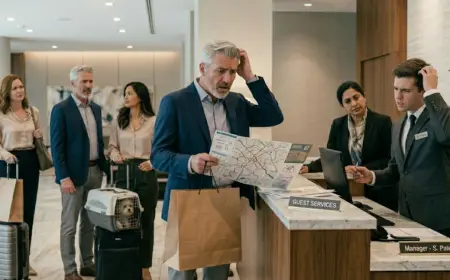
Active listening skills: The desk doesn’t get complaints because staff don’t talk, it gets complaints because staff don’t listen. That’s where most service failures start.
Overview of Active Listening Skills in Front Office
Active listening skills at the front desk is not just hearing words. It’s catching the full picture, what the guest says, what they mean, and how they feel.
At the desk, everything moves fast, check-ins, calls, complaints, requests. Miss one detail, and the whole flow slips. Wrong room. Missed request. Frustrated guest.
Good listening does three things:
-
Cuts repeat explanations
-
Prevents service mistakes
-
Builds instant trust
Bad habits kill service:
-
Interrupting
-
Assuming
-
Half-listening while typing
Pro-tip: If the guest has to repeat themselves, you already lost control of the interaction.
SOP Procedure for Active Listening at Front Desk
Follow this exactly. No shortcuts.
Step 1: Full Attention
Stop typing. Look at the guest. Focus.
Step 2: Acknowledge the Guest
Use simple cues: “Yes, sir,” “I understand,” nod.
Step 3: Avoid Interruptions
Let them finish. Always.
Step 4: Understand the Message
Pick the key points—what they need, what went wrong.
Step 5: Clarify Information
Ask if something is unclear. Don’t guess.
Step 6: Paraphrase
Repeat it back in your own words.
Step 7: Provide Response
Give a clear answer or solution.
Step 8: Take Action
Call housekeeping, update PMS, inform the team—whatever is needed.
Step 9: Confirm Resolution
Ask: “Is this okay for you?”
Step 10: Follow-Up
Check back if the request took time.
Pro-tip: Paraphrasing saves you from 90% of service errors.
Front Desk Workflow and Active Listening Skills
This isn’t theory. It runs through every task.
-
Check-in Process
Catch room preferences, special requests, tone of the guest. -
Telephone Handling
Write details correctly names, dates, requests. -
Reservation Handling
Confirm everything. Dates, rates, inclusions. -
During Stay Requests
Understand before you forward. Wrong info = wrong service. -
Complaint Handling
Listen fully before reacting. -
Check-out Interaction
Guests often share real feedback here. Don’t miss it. -
Interdepartmental Communication
Pass correct info. No assumptions.
Pro-tip: Most coordination errors start with bad listening at the desk.
Guest Interaction Process Using Active Listening
This is where skill shows.
Greeting Stage
No distractions. Face the guest fully.
Understanding Needs
Let them talk. Don’t rush them.
Clarification Techniques:
-
Open: “May I confirm your check-out date?”
-
Closed: “Do you need airport transfer?”
Paraphrasing Example:
“Sir, you’d like a quiet room on a higher floor with early check-in, correct?”
Handling Complaints:
-
Listen: No interruption
-
Acknowledge: Show you heard them
-
Empathize: “I understand your concern”
-
Resolve: Move fast with a solution
Non-Verbal Listening:
-
Eye contact – steady, not staring
-
Slight nod – shows you’re engaged
-
Posture – lean slightly forward
Closing Interaction
Confirm everything is understood and handled.
Pro-tip: Guests calm down faster when they feel heard, not when you talk more.
Tools and Systems Supporting Active Listening
Listening is useless if you don’t record it.
-
Property Management System (PMS): Log requests and preferences
-
Guest Profile Database: Store history
-
Call Logging Systems: Capture call details
-
Internal Communication Tools: Pass correct info
-
Task Management Systems: Track requests
-
Log Books: Record key interactions
No entry = no accountability.
Service Standards and Performance Metrics
Track it like any other skill.
-
Attention Time: Immediate focus
-
Clarification Accuracy: Zero confusion
-
Response Time: 5–10 minutes
-
Complaint Handling: 15–20 minutes
-
Guest Satisfaction: Positive feedback
-
Error Reduction: Minimal mistakes
-
First Contact Resolution: No repeat explanation
Pro-tip: If guests keep calling back, your listening failed the first time.
Evaluation and Training Assessment
You train this on the floor, not in theory.
-
Supervisor Monitoring: Watch live interactions
-
Role Play Training: Practice real scenarios
-
Guest Feedback Analysis: Spot gaps
-
Mystery Audits: Test real performance
-
Error Tracking: Find miscommunication issues
-
Performance Reviews: Measure listening quality
-
Continuous Training: Keep sharpening
Consistency is everything.
In conclusion
Active listening skills are your first tool at the desk before PMS, before SOP, before anything else.
Get it right, and the lobby flow stays smooth.
Get it wrong, and small issues turn into complaints fast.
Also read: advanced introduction to front office department with SOP