Tewolde Gebremariam’s Air India Town Hall on Revenue and Costs
Tewolde Gebremariam's second Air India town hall focuses on RASK, revenue growth and employee-led cost savings as passenger footfall fell 18% in FY26.
 Jishan Khan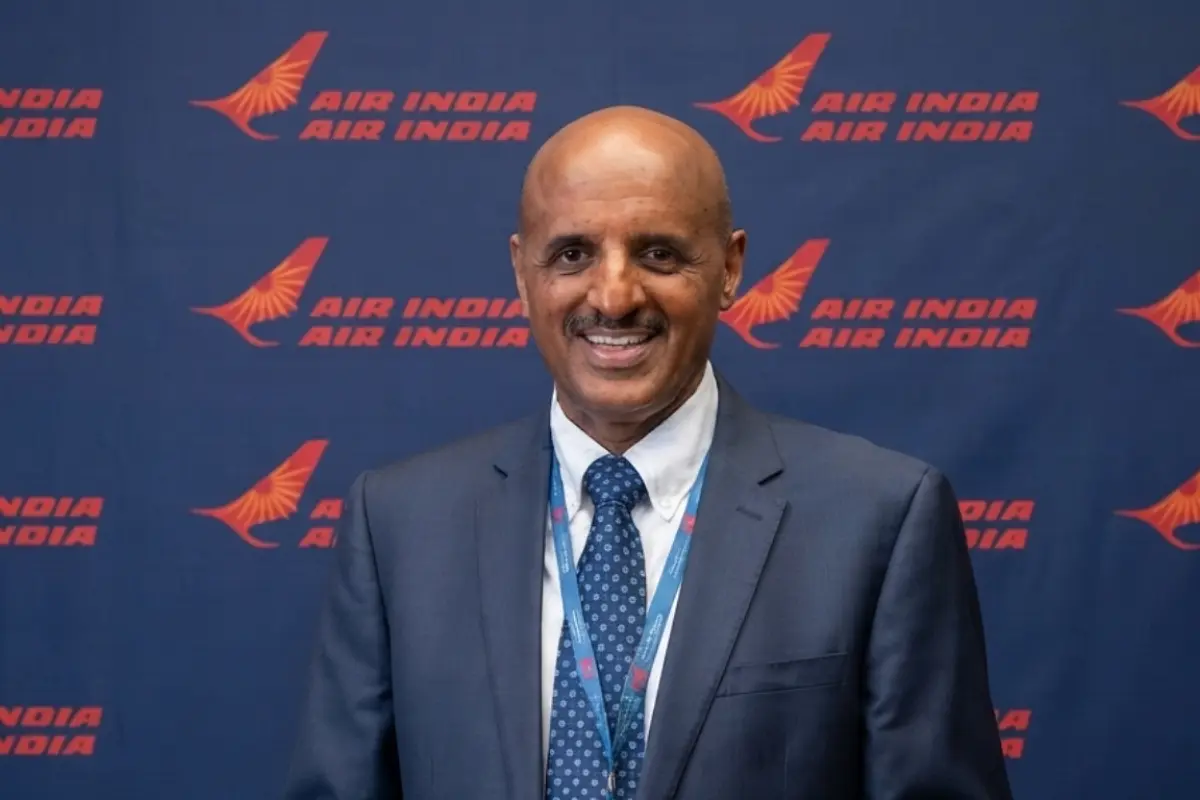
Six days after telling Air India staff that safety and basic operational reliability came before growth, the town hall this feed covered in detail, incoming CEO Tewolde Gebremariam returned to employees with a considerably more numbers-driven message: Air India needs to improve both revenue and cost performance simultaneously, with a specific focus on raising revenue per available seat kilometre (RASK) rather than simply adding capacity. The timing of that second message matters. It arrived alongside confirmation that Air India's passenger footfall declined roughly 18% in the financial year ended March 2026, with booking demand down 15% over the same period, figures that had not been publicly quantified at the scale this feed's earlier coverage discussed, and that recontextualise everything Gebremariam has said since taking the role.
Why RASK, Not Passenger Count, Is the Metric This Leadership Team Has Chosen to Lead With
Revenue per available seat kilometre is a deliberately different measure of airline health than passenger volume or load factor, and choosing to organise a turnaround strategy around it signals something specific about how Gebremariam is diagnosing Air India's problem. RASK captures how much revenue an airline generates for every seat it flies, regardless of whether that seat was actually filled, meaning an airline can grow RASK either by carrying more passengers at existing fares, or by carrying the same or fewer passengers at meaningfully higher fares and ancillary revenue per seat. Air India's own 18% footfall decline makes the first path, simply flying more people considerably harder to execute in the near term. Prioritising RASK over passenger growth is Gebremariam effectively telling the organisation that Air India's immediate turnaround has to come from extracting more value out of the capacity it already operates, not from winning back lost passenger volume first.
That is consistent with his own words at the second town hall, according to ThePrint's sourcing: "Revenue enhancement initiatives are already under discussion, including opportunities across our international network, commercial activities and cargo business." Notably absent from that framing is any mention of adding new routes, new destinations, or new aircraft, the growth-first language that dominated Air India's public messaging throughout the Campbell Wilson era this feed has covered extensively, from the 470-aircraft order to the aggressive Boeing 787-10 and A350-1000 commitments. Gebremariam's revenue plan is built around commercial activities and cargo optimisation on the existing network, not network expansion.
Why "Every Employee Can Contribute to Savings" Is a Genuinely Different Kind of Cost Message
Gebremariam's specific framing, "Cost management is not just the responsibility of leadership or the finance function. Every employee can contribute to savings, and those savings add up across an organisation of our scale" paired with plans to introduce reward programmes for staff whose ideas generate measurable cost savings, describes a materially different cost-discipline approach than the top-down capacity cuts and route suspensions this feed has documented at nearly every other financially pressured carrier throughout 2026, from AirAsia's returned aircraft to Cebu Pacific's executive pay reductions. Those measures work from the top, a board or CEO decides which routes to cut, which aircraft to return, which executives take pay cuts. Gebremariam's approach explicitly distributes the responsibility for finding savings down through the entire 30,000-plus-employee organisation, treating cost discipline as a cultural expectation applied at every level rather than a set of decisions made exclusively by leadership and finance.
That distinction genuinely matters for an airline mid-way through absorbing the Vistara and Air India Express integration this feed has tracked extensively, an organisation still merging separate corporate cultures, separate operational procedures and separate cost structures is precisely the kind of environment where genuinely useful cost-saving knowledge is likely to be scattered across frontline staff who understand specific, granular inefficiencies that leadership several layers removed from daily operations would never independently identify.
Why "One Air India Group" Is Doing Careful Diplomatic Work, Not Announcing a Merger
Gebremariam's emphasis on operating as "one Air India Group," streamlining operations and creating synergies across the Tata aviation portfolio, is worth reading precisely rather than loosely. RetailIntel's own analysis flags this exact phrase as signalling "potential scope to consolidate overlapping capabilities, suppliers and network assets across the Tata aviation portfolio" but stops well short of confirming any formal merger or structural reorganisation is actually being planned. That caution is appropriate. Air India Limited (the full-service carrier) and Air India Express Limited (the low-cost subsidiary) remain formally separate legal entities under Wikipedia's own current corporate structure data, each with distinct financials, distinct fleets and distinct operating certificates. "Synergies" language of this kind typically precedes genuine structural consolidation by months or years, if it happens at all more often, it describes softer coordination: shared procurement negotiating leverage, consolidated maintenance contracts, unified technology platforms, or common supplier relationships that reduce duplicated cost without requiring the far more complex legal and regulatory process of merging separate corporate entities outright.
Why the Honest Read of This Turnaround Requires Taking the Skeptical Case Seriously
RetailIntel's own analysis offers a genuinely useful counter-argument worth weighing directly rather than dismissing as pessimism: "revenue growth, cost control and reliability can conflict when a carrier facing weak demand must invest heavily in aircraft availability, staffing, technology and service recovery." That tension is real and specific to Air India's actual circumstances, not a generic caveat. This feed's own reporting has documented exactly the kind of investment Air India needs to make to fix the operational reliability problems damaging its reputation, the AI171 crash investigation, the Phuket-Delhi hydraulic and pilot substance incidents, the DGCA's move toward universal pilot drug testing, Pakistan's ongoing airspace ban forcing costlier rerouted schedules. Genuinely fixing punctuality, baggage handling and disruption recovery, the exact priorities Gebremariam named in his first town hall, typically requires more spending on maintenance, more redundant crew and aircraft capacity, and more investment in ground operations technology, the opposite direction from the cost discipline he is simultaneously asking every employee to embrace in his second.
That is not necessarily a contradiction Gebremariam cannot resolve, Ethiopian Airlines' own turnaround under his leadership, which this feed's earlier coverage noted transformed a struggling regional carrier into Africa's most profitable airline over more than a decade, suggests he has navigated comparable tensions successfully before. But it is a genuine structural challenge, not a messaging problem, and the RetailIntel critique is right to flag that an 18% passenger footfall decline "may reflect deeper" issues than a pure cost-and-revenue optimisation exercise can fully address on its own — issues of trust, safety perception and service reliability that took years to accumulate and are unlikely to reverse purely through RASK targets and an employee cost-savings reward scheme.
What the ₹22,238 Crore Number Actually Represents Against What Wikipedia's Own Data Shows
Business Standard's reported consolidated FY26 net loss of ₹22,238 crore sits considerably above the standalone Air India Limited figure Wikipedia's own infobox shows for FY2025, a net loss of ₹10,859 crore on revenue of ₹78,636 crore. That gap between the two figures is itself instructive: it likely reflects the difference between Air India Limited's standalone results and the full consolidated group figure spanning Air India Express, whose own disclosed financials show losses widening sharply — from ₹5,678 crore in FY2025 to ₹6,767 crore in FY2026 on the combined AIX Connect entity, even as revenue grew from ₹16,033 crore to ₹19,088 crore over the same period. An airline growing revenue while losses simultaneously widen at that scale is precisely the pattern this feed has documented repeatedly throughout 2026 across carriers absorbing elevated fuel costs faster than fare increases and cost discipline can offset them and it is exactly the pattern Gebremariam's RASK-and-cost-control strategy is now explicitly designed to reverse, group-wide, starting with a town hall message asking every one of Air India's employees to treat that reversal as their own individual responsibility, not simply a target set by leadership several floors removed from the ramp, the cabin, or the call centre.