Virgin Galactic Reports Q3 2025 Earnings as Company Advances Toward Commercial Space Tourism Launch in 2027
Virgin Galactic posts Q3 2025 results, strengthens cash position, advances SpaceShip fleet, and targets 2027 for full-scale commercial space tourism
 Munni Khatun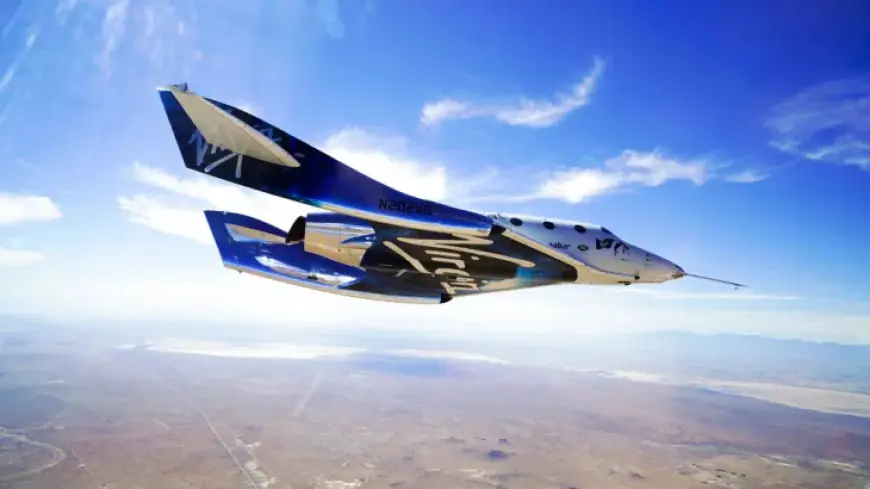

Virgin Galactic has released its financial and operational update for the third quarter of 2025, reflecting continued progress toward its long-term goal of launching full commercial space tourism operations by 2027. As one of the leading companies in commercial spaceflight, Virgin Galactic’s latest earnings report highlights key advancements in spacecraft development, financial stability, and customer-driven demand for space travel.
Growing Momentum for Commercial Spaceflights
Virgin Galactic’s SpaceShip program is entering a critical stage of development, with preparations intensifying ahead of the company’s first commercial flights. The business update confirms that several important milestones have been achieved, including advancements in the next-generation SpaceShip vehicles that will form the backbone of its flight operations.
These developments are expected to significantly increase flight frequency and passenger capacity. Virgin Galactic is projecting 2027 as the year when the majority of its early customers will begin their journeys into space, marking a major milestone for the global space tourism industry.
The company stated that its new spacecraft designs will allow quick turnaround times and streamlined flight operations, enabling Virgin Galactic to scale rapidly as demand for space tourism accelerates. With thousands of potential customers already expressing interest, the company is positioning itself at the forefront of a fast-growing sector.
Financial Update and Strong Cash Position
For Q3 2025, Virgin Galactic reported revenue of 0.4 million dollars, matching its revenue from the same quarter in 2024. This income continues to be driven largely by future astronaut access fees — an indicator that commercial interest remains strong even before flights have begun.
As of September 30, 2025, the company reported 424 million dollars in cash, cash equivalents, and marketable securities. This strong liquidity foundation is critical to funding spacecraft production and the operational development needed for commercial service.
Virgin Galactic’s operating expenses for the quarter totaled 67 million dollars, down from 82 million dollars in Q3 2024. This reduction was driven by lower research and development spending as certain systems approached completion, along with decreased administrative costs. Net loss also improved from 75 million dollars last year to 64 million dollars in Q3 2025.
These improvements reflect the company’s efforts to streamline operations as it transitions from research-heavy development to a more commercially focused phase.
Projected Timeline for Commercial Space Tourism
Virgin Galactic CEO Michael Colglazier reiterated that the company expects its first commercial spaceflights to begin in the fourth quarter of 2026. Large-scale commercial tourism, however, is projected to expand significantly in 2027 as the full SpaceShip fleet becomes operational.
Bookings for future space tourism flights are already underway, with increasing demand projected as spacecraft production accelerates. The company noted that flight rate capability and rapid vehicle refurbishment will be central to meeting this growing customer base.
Future Research and Strategic Partnerships
Virgin Galactic continues to invest in long-term research initiatives and industry partnerships. A major development is the company’s collaboration with Purdue University for a space mission scheduled in 2027. This mission will support scientific research, technological development, and the long-term viability of commercial space tourism.
These collaborations reinforce Virgin Galactic’s dual role as both a commercial operator and a contributor to broader aerospace research.
Long-Term Outlook and Industry Impact
Virgin Galactic’s strategic emphasis moving forward will be on scaling spacecraft production, increasing flight capacity, enhancing customer experiences, and achieving long-term profitability. Company leadership has expressed confidence that space tourism will evolve into a sustainable and highly profitable industry over the next decade.
Financial projections for Q4 2025 estimate free cash flow losses between 90 million and 100 million dollars, reflecting ongoing investment in fleet expansion and operational infrastructure. Despite these expected expenditures, Virgin Galactic maintains an optimistic outlook, citing strong customer demand and industry-defining technology.
Virgin Galactic and the Future of Commercial Space Tourism
Virgin Galactic’s recent expansion of space vehicle assembly capabilities signals significant strides toward the launch of a fully operational space tourism service. With its first commercial space base established and new spacecraft nearing production completion, the company is positioning itself for first-mover advantage in a rapidly emerging market.
With strong operational foundations, deep industry partnerships, and leadership in commercial spaceflight development, Virgin Galactic stands as the most established contender in the global space tourism industry. As commercial spaceflight transitions from concept to reality, Virgin Galactic is preparing to lead the next era of human exploration and travel.