Smoky Paneer Boti Kebab That Turns Every Gathering into a Feast
Paneer boti kebab with spiced yoghurt marinade, warm soak technique & smoky dhungar finish. Crispy outside, soft inside ready in 50 mins.
 Tripti Srivastava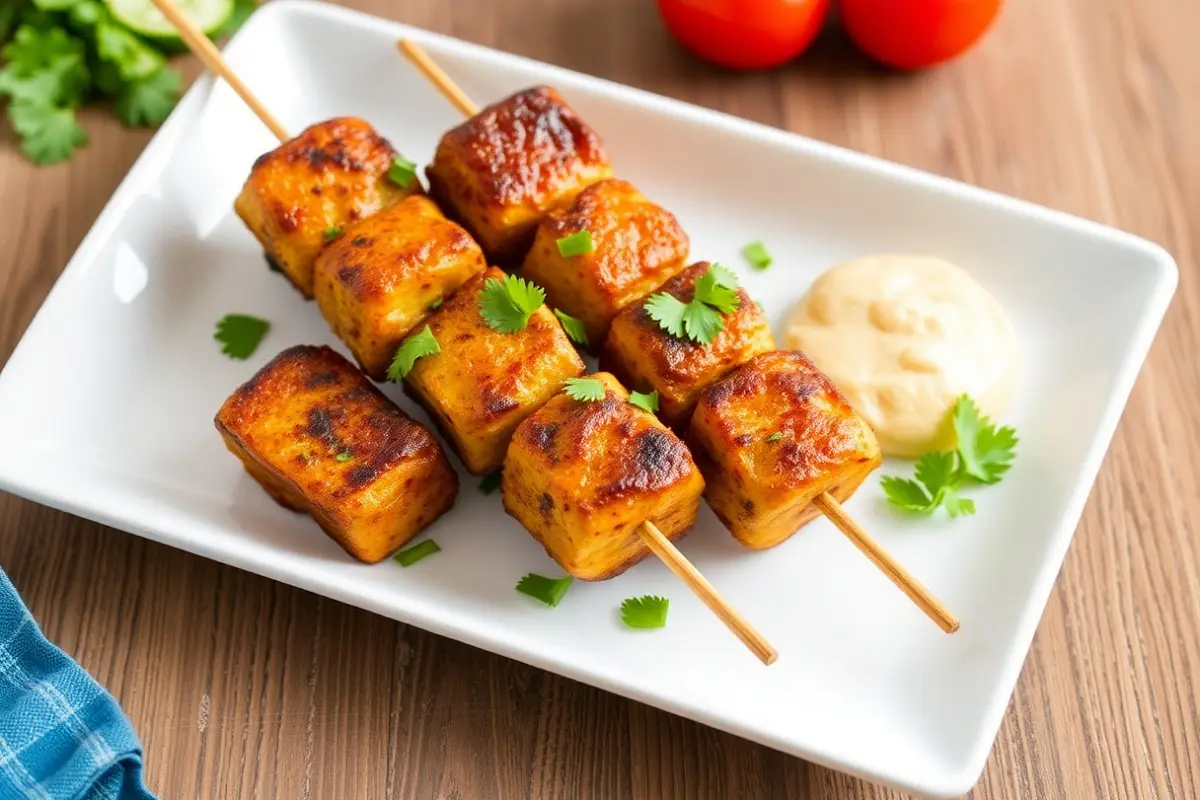
Walk into any North Indian restaurant worth its salt and somewhere on the starters menu, between the seekh kebab and the chicken tikka, you will find some version of grilled paneer on a skewer. It is always popular, always ordered, and very rarely done as well at home as it is in the restaurant. This paneer boti kebab recipe changes that. The boti format chunky, uniform cubes of paneer marinated in a bold spiced yoghurt coating, threaded onto skewers alternating with colourful vegetables, and cooked on a hot tawa until the marinade caramelises and the edges develop that slightly charred, smoky crust is one of the most satisfying things you can serve as a vegetarian starter. It looks spectacular on the plate, smells better than almost anything else you can make in under an hour, and tastes exactly like the kind of thing people ask you for the recipe for before the meal is even finished.
The distinction between a paneer boti kebab and a paneer tikka is worth understanding because it shapes how you approach this recipe. Paneer tikka is defined by the tandoori marinade and the tandoor cooking method it tends to be more aggressively spiced, drier on the outside, and the focus is on the char from the high heat of a clay oven. The boti format, by contrast, emphasises the piece itself "boti" means piece of meat in Urdu and Hindi and in the vegetarian interpretation, the focus is on getting the paneer itself to be as juicy, absorbent, and flavourful as possible before it ever touches heat. The marinade is richer and thicker, the paneer is prepared with a warm soak that opens its pores before marinating, and the cooking is slightly more gentle the goal is a deep, even caramelisation rather than a fierce char.
This recipe gives you the full boti treatment for paneer warm soak, bold marinade, careful threading, tawa cook with a ghee baste, and the optional but genuinely transformative dhungar charcoal smoking finish. Follow it once and these will become a permanent fixture on your party menu.
What Makes This Paneer Boti Kebab Recipe Special
Paneer can be a frustrating ingredient to grill. It does not absorb flavour the way meat does, it tends to stick to the pan, and it can go from soft and yielding to rubbery and dry in a very short window. This recipe is built around solving each of those problems specifically.
- The warm salted water soak changes everything. Soaking paneer cubes in warm salted water for 8 to 10 minutes before marinating does three important things. It softens the paneer so it absorbs the marinade more deeply. It seasons the interior of each cube, not just the surface. And it opens the slightly porous structure of the cheese so the spiced yoghurt can penetrate rather than just coating the outside. This step takes less than 10 minutes and makes a genuinely visible and tasteable difference to the finished kebab. Do not skip it.
- A thicker marinade built for clinging. The marinade in this recipe uses roasted besan (gram flour) as a binding agent, which gives it a slightly grainy, textured thickness that clings to the paneer surface and forms a proper crust during the tawa sear. Without the besan, the yoghurt marinade tends to slide off the paneer as it heats up, leaving the surface bare and pale. With it, you get an even, caramelised coating that stays exactly where you put it.
- Mustard oil for the authentic North Indian character. A tablespoon of smoked-and-cooled mustard oil in the marinade adds the pungent, deeply aromatic quality that defines dhaba-style grilled dishes. Paneer on its own is mild the mustard oil gives the marinade a boldness and depth that bridges the gap between the delicate cheese and the assertive spices around it.
- Alternating vegetables on the skewer. Threading cubes of green capsicum, red onion petals, and cherry tomatoes or thick capsicum alternately with the paneer does more than just look beautiful. The vegetables release moisture and aromatic steam during cooking that keeps the paneer pieces around them moist, adds a faint sweetness from the caramelising onion to the skewer, and creates the colour contrast that makes paneer boti kebab so visually striking on a serving plate.
- The dhungar charcoal smoke finish. After cooking on the tawa or in the oven, a two-minute charcoal smoking treatment using the dhungar method infuses the paneer with a deep, tandoor-like smokiness that no tawa can naturally produce. It is the finishing touch that makes home-cooked paneer boti kebab taste genuinely restaurant-quality rather than simply very good.
Ingredients Overview
Start with firm, good-quality paneer. Firmness matters here soft paneer that crumbles when you cut it will not hold on the skewer or develop a clean sear on the tawa. Fresh paneer from an Indian grocery store gives the best result. If using refrigerated packaged paneer, it is often slightly tight and dense the warm water soak addresses this directly. Cut into uniform 3 to 4 cm (1.5 inch) cubes and try to keep all pieces as consistent as possible so they cook in the same time. Keep a firm hand when cutting a clean, confident cut produces a neat cube that holds together on the skewer. A hesitant cut produces a crumbly edge that breaks at the skewer hole.
The marinade base is thick hung curd or full-fat Greek yoghurt. Full-fat is non-negotiable low-fat yoghurt has too much whey, which makes the marinade watery and causes it to run off the paneer before it can caramelise during cooking. If using regular whole-milk yoghurt, drain it through a muslin cloth for 20 minutes to remove the whey before using. The hung curd should be thick enough to hold its shape on a spoon without running.
Kashmiri red chilli powder provides the deep, vivid orange-red colour that makes paneer boti kebab look so dramatic and it does this without delivering excessive heat, which would overpower the gentle flavour of the paneer. Do not substitute with regular red chilli powder, which is significantly hotter and will tilt the balance of the dish. The rest of the spice blend coriander powder, cumin powder, garam masala, a pinch of black pepper, chaat masala, kasuri methi, and a small amount of turmeric is applied in proportions that build warmth without masking the paneer itself. The kasuri methi, added off the heat at the very end of the marinade-making process, provides the faintly bitter, herby note that gives North Indian grilled dishes their characteristic restaurant aroma.
For the skewer vegetables, green capsicum, red capsicum, and thick-cut red onion petals are the classic combination they provide a red-green-white colour scheme on the skewer that is visually stunning and cook at roughly the same rate as the paneer cubes. Cherry tomatoes are a great addition if you enjoy a burst of sweetness between bites. Cut all vegetables into pieces roughly the same size as the paneer cubes so the entire skewer cooks evenly. For substitutions: yellow capsicum can replace red. Large button mushrooms cut into thick slices can replace capsicum for a more earthy, meaty skewer. Replace paneer with firm tofu for a vegan version press the tofu to remove excess water before soaking and marinating.
Also Read: Fish Boti Kebab
How to Make It
The sequence for paneer boti kebab is: warm soak the paneer cubes for 8 to 10 minutes, drain and dry, build the marinade, coat the paneer and vegetables separately (always separately vegetables need less marinade and their moisture will dilute the paneer coating if mixed together), marinate for at least 1 hour, thread onto skewers alternating paneer and vegetables, cook on a medium-high tawa with a ghee baste at the end, and finish with the dhungar smoking step and chaat masala at the table. The active cooking time is 12 to 15 minutes. Everything else is marination that works while you prepare the rest of the meal.
The cooking technique for paneer boti kebab rewards patience in one specific moment do not try to turn the skewers until the paneer has developed a proper crust on the first side. If you try to turn too early, the marinade coating will tear and stick to the pan rather than staying on the paneer. Wait until the first side releases naturally you will feel the resistance drop when you gently nudge a skewer. That is the signal that the crust has formed and the kebab is ready to rotate. The full directions are below.
Tips for Best Results
- Always soak the paneer in warm salted water before marinating. Eight to ten minutes in warm (not hot) water with a teaspoon of salt softens the exterior, opens the pores, and seasons the interior. After soaking, drain and pat dry very gently do not squeeze or press the cubes. A firm pat with kitchen paper on each side is all you need. The surface should feel slightly tacky and matte rather than wet and shiny this is the ideal surface for marinade to cling to.
- Marinate the paneer and vegetables separately. Vegetables release moisture as they marinate, which can dilute the marinade around the paneer and prevent it from building a thick, clinging coat. Use the same marinade for both, but in two separate bowls. This takes an extra thirty seconds and makes a meaningful difference to how well the paneer coating performs on the tawa.
- Marinate for as long as you can. One hour gives you good flavour. Two hours gives noticeably deeper flavour. Overnight is the best result you can achieve at home unlike fish, paneer is a dairy product that does not break down under prolonged marination. It can safely sit in the yoghurt marinade for up to 12 hours in the refrigerator. The flavour compounds from the spices penetrate slowly and build in layers with time.
- Bring marinated paneer to room temperature before cooking. Cold paneer straight from the refrigerator on a hot tawa creates a temperature shock that causes the outside to char rapidly while the inside remains cold and dense. Take the marinated skewers out 15 minutes before cooking and let them come to room temperature. The paneer will cook more evenly and stay softer inside.
- Do not rush the first side. Place the skewers on a hot, oiled tawa and do not touch them for 2 to 3 minutes. The marinade needs time to caramelise and form a crust before the skewer can be safely rotated. Trying to turn too early tears the coating. Wait until the skewer releases cleanly from the pan surface with gentle pressure before rotating.
- Add kasuri methi off the heat, not into the cooking marinade. If kasuri methi cooks at high heat for a long time, its delicate herby aroma breaks down and becomes slightly bitter. Add it to the finished marinade just before applying to the paneer, not during the marinade-building stage.
Serving Suggestions
Paneer boti kebab is rich, warmly spiced, and deeply satisfying and it needs a few bright, fresh elements alongside it to balance the plate. A bowl of green coriander-mint chutney is the essential pairing the sharp, herby freshness cuts through the richness of the marinade coating and lifts every bite. A small bowl of mint raita thick yoghurt stirred with chopped fresh mint, roasted cumin, and salt offers a cool, creamy contrast that works beautifully alongside the warm, smoky kebab.
For a more substantial meal, tuck two paneer boti pieces with their grilled vegetables into a warm roomali roti with a drizzle of green chutney and a squeeze of lemon for a vegetarian paneer boti roll that is genuinely outstanding. You can also serve alongside a kachumber salad and warm buttered naan for a complete dinner that works as effortlessly for a weeknight as it does for a dinner party. Pair the whole spread with a freshly brewed cup of masala chai for the definitive North Indian tea-time starter experience.
Storage and Reheating
Fridge: Store cooked paneer boti kebabs in an airtight container in the refrigerator for up to 3 days. The flavour deepens slightly by day two as the spices continue to settle into the paneer. To reheat while retaining the texture, place on a hot tawa with a tiny drop of oil for 1 to 2 minutes per side to re-sear the coating, or use an air fryer at 180°C for 4 to 5 minutes. Avoid the microwave it turns paneer rubbery and makes the marinade coating wet and uneven.
Make Ahead: The marinade can be prepared up to 48 hours in advance and kept refrigerated. Marinated paneer on the skewer can be refrigerated for up to 24 hours before cooking this is the ideal make-ahead approach for parties. The longer marination only improves the flavour. Remove the tray from the fridge 15 minutes before cooking to allow the paneer to come to room temperature, then cook fresh to order.
Variations and Substitutions
- Afghani Paneer Boti Kebab: Replace the Kashmiri red chilli powder with white pepper powder, substitute mustard oil with neutral oil, and add 3 tablespoons of fresh cream and a tablespoon of cashew paste to the marinade. The result is a pale, luxurious, gently spiced white paneer kebab with the characteristic Afghani creaminess different in every way from the red boti style but equally spectacular on the plate.
- Achari Paneer Boti Kebab: Add a teaspoon of smoked mustard oil, ¼ teaspoon each of kalonji, fennel seeds, ajwain, and a pinch of fenugreek seeds bloomed in hot oil and cooled, to the standard marinade. The pickle spice flavour transforms the paneer boti into the achari style tangy, pungent, and assertive in a completely different way from the red boti version.
- Paneer and Mushroom Boti Skewer: Replace half the paneer cubes with large button mushrooms or portobello mushroom pieces cut to the same size as the paneer. Marinate together in the same marinade. The mushrooms absorb the marinade differently from the paneer and develop a deeper, earthier char that makes the mixed skewer more complex and interesting than an all-paneer version.
- Charcoal Grill Version: Thread the marinated paneer and vegetables onto flat metal skewers and grill over a medium charcoal fire, rotating every 90 seconds, for 10 to 12 minutes. Brush with ghee in the final 2 minutes. The charcoal provides the smokiness naturally the dhungar step is unnecessary when cooking over live coals.
- Vegan Version: Replace paneer with firm tofu pressed dry, cut into cubes, soaked in warm salted water for 5 minutes, drained, and dried. Replace hung curd with thick coconut yoghurt. Replace ghee baste with neutral oil. The marinade builds exactly the same way and the result is a flavourful, beautifully charred vegan skewer kebab.
- Air Fryer Version: Place threaded skewers in the air fryer basket in a single layer. Lightly spray with oil. Air fry at 200°C (390°F) for 12 to 14 minutes, turning once at the halfway point. Brush with ghee immediately after removing. The air fryer gives a very consistent, even colour and is particularly useful for larger batches.
Preparation Method
Begin by soaking the paneer cubes in a bowl of warm water with a teaspoon of salt for 8 to 10 minutes. Drain and pat each cube dry with kitchen paper on all sides. Set aside. While the paneer soaks, prepare the marinade: in a large bowl, whisk together the hung curd, smoked-and-cooled mustard oil, ginger-garlic paste, Kashmiri red chilli powder, coriander powder, cumin powder, garam masala, black pepper, roasted besan, chaat masala, lemon juice, and salt until completely smooth and thick. Taste and adjust seasoning. Stir in the crushed kasuri methi last.
Divide the marinade into two portions a larger portion for the paneer and a smaller one for the vegetables. Add the dried paneer cubes to the larger portion and fold gently to coat every surface. In the second bowl, toss the capsicum, onion petals, and any other vegetables. Cover both bowls and refrigerate for a minimum of 1 hour (ideally 2 hours or overnight). Before cooking, remove from the refrigerator and rest for 15 minutes. Thread the paneer and vegetables alternately onto pre-soaked bamboo or flat metal skewers 3 paneer cubes and 2 to 3 vegetable pieces per skewer, arranged in a repeating pattern.
Standard Operating Procedure (SOP)
For consistent, restaurant-quality results every single time, follow this sequence without shortcuts: cut paneer into uniform cubes → warm salted water soak 8–10 minutes → drain and dry gently → build marinade with roasted besan and cooled smoked mustard oil → stir in kasuri methi last → marinate paneer and vegetables separately in same marinade → refrigerate minimum 1 hour (2 hours preferred, overnight for best result) → rest at room temperature 15 minutes before cooking → thread alternately onto flat metal or double bamboo skewers → cook on medium-high oiled tawa, do not turn until first side releases naturally → rotate every 2 minutes → baste with ghee in final 60 seconds → dhungar smoky finish if desired → finish with chaat masala and lemon → garnish and serve immediately. The four steps that make the biggest difference are the warm soak (absorption), separate marination of paneer and vegetables (coating integrity), patience on the first side (crust formation), and the kasuri methi off the heat (aroma preservation). Every other step is flexible but those four are what separate a good paneer boti kebab from a great one.
For catering and party batches, thread the marinated paneer onto skewers up to 24 hours before the event and keep refrigerated on a lined tray covered with cling film. Bring to room temperature 15 minutes before cooking. Cook in batches on the tawa, keeping finished skewers warm on a wire rack in a 100°C oven. Always perform the ghee baste, chaat masala, and lemon juice steps fresh on each batch just before plating these finishing elements lose their character within minutes and should never be done in advance. For a dramatic tableside presentation, perform the dhungar smoking step at the table so guests experience the full sensory reveal of the smoke lifting from the platter.
Garnish and Presentation
Paneer boti kebab already looks spectacular before any garnish is added the vivid orange-red of the Kashmiri chilli coating on the white paneer cubes, interspersed with the char-edged green and red capsicum and the faintly golden onion, creates a natural colour palette that photographs beautifully and draws every eye on the table. Serve on a dark slate, a black ceramic plate, or a deep wooden board for maximum colour contrast. Arrange the skewers at a slight angle with the tips pointing upward or outward for visual height and drama.
Finish with a drizzle of melted ghee over all the skewers just before serving it adds a warm, golden sheen and a buttery aroma that makes the entire platter smell irresistible from across the room. Scatter a small pinch of chaat masala directly over the paneer and vegetables, add a few rings of thinly sliced raw red onion tossed with lemon juice, a wedge of fresh lemon, two slit green chillies, and a sprig of fresh coriander. For a restaurant-style finishing touch, add a few fine ginger juliennes across the top they look intentional and elegant, and the sharp fresh ginger eaten alongside the warm spiced paneer is a classic North Indian flavour pairing that elevates every bite.
Plating and Serving Tips
Serve paneer boti kebab hot within 3 to 4 minutes of coming off the tawa while the ghee baste is still warm and the caramelised marinade edges are still slightly crisp. For individual plating, one to two skewers per person for a starter portion, alongside a small bowl of green chutney or mint raita, a lemon wedge, and a simple dressed salad. Keep the plate uncluttered the kebab itself is the visual centrepiece and does not need competition from too many supporting elements.
For a party board, arrange four to six skewers in a fan across a long wooden board with the tips slightly overhanging the edge. Place the green chutney and mint raita bowls at either end of the board. Scatter dressed onion rings and fresh coriander leaves across the paneer, and tuck lemon wedges and green chillies into the gaps between the skewers. If performing the dhungar smoking step, do it on the board itself at the table the column of smoke as you lift the foil cover is theatrical, fragrant, and makes the arrival of the kebab feel genuinely special to everyone watching.
If you make this paneer boti kebab recipe, I genuinely want to hear every detail. Leave a star rating and drop a comment below which method did you cook by, did you try the warm soak, how did the dhungar finish go over with your guests? Every note you leave helps other readers cook with confidence and makes my day to read. Save this to Pinterest now so it is always there for your next dinner party, Diwali spread, or any occasion that deserves a starter worth talking about!
Ingredients
- 400g (14 oz) firm paneer
- 8–10 cherry tomatoes
- 1 large green capsicum (bell pepper)
- 1 large red capsicum (bell pepper)
- ¼ teaspoon turmeric powder
- ½ cup hung curd or full-fat thick Greek yoghurt
- 1 large red onion, cut into thick petals
- 1 tablespoon mustard oil
- 1 tablespoon ginger-garlic paste
- 1 teaspoon coriander powder
- 1½ teaspoons Kashmiri red chilli powder
- ½ teaspoon cumin powder
- ½ teaspoon garam masala
- ¼ teaspoon black pepper powder
- 1 tablespoon roasted besan
- 1 teaspoon chaat masala
- 1 tablespoon fresh lemon juice
- 1 teaspoon salt (adjust to taste)
Nutritional Information
- Calories: 295 kcal
- Protein: 15g
- Carbohydrates: 13g
- Fat: 21g
- Fiber: 2g
- Sodium: 440mg
- Sugar: 5g
Directions
1. WARM SOAK THE PANEER
Place the paneer cubes in a wide bowl. Pour over enough warm (not hot) water
to fully submerge all the pieces. Add 1 teaspoon of salt and stir briefly.
Leave for exactly 8 to 10 minutes. You will notice the paneer soften very
slightly and take on a gentler, more yielding texture. This is exactly what
you want. After the soak, drain the water completely. Gently pat each cube
dry on all sides with kitchen paper — two firm pats per side. The surface
should feel slightly tacky and matte, not wet and slippery. Set aside.
Do not press, squeeze, or apply force to the cubes.
2. SMOKE THE MUSTARD OIL
Heat 1 tablespoon of mustard oil in a very small pan over high heat for
1 to 2 minutes until a thin wisp of white smoke rises from the surface.
Remove from heat immediately. Set aside to cool completely to room temperature
before using in the marinade. Adding warm mustard oil to yoghurt will make
the marinade split and look unappetising. Cool completely — approximately
8 to 10 minutes.
3. DRY-ROAST THE BESAN
Place the gram flour in a small dry pan over medium-low heat. Stir constantly
for 3 to 4 minutes until it turns one shade darker and smells faintly nutty —
like roasted chickpeas. Remove from heat immediately and spread on a plate to
cool. Do not walk away from this step — besan goes from nutty to bitter in
under a minute if left unattended.
4. BUILD THE MARINADE
In a large mixing bowl, combine the hung curd, cooled smoked mustard oil,
ginger-garlic paste, Kashmiri red chilli powder, coriander powder, cumin
powder, garam masala, black pepper, turmeric, cooled roasted besan, chaat
masala, fresh cream (if using), lemon juice, and salt. Whisk everything
together firmly until the marinade is completely smooth, thick, and deeply
orange-red in colour. Taste the marinade — it should be bold, tangy, warmly
spiced, and well-seasoned. Adjust salt and lemon to preference.
Add the crushed kasuri methi last and fold through gently.
5. MARINATE PANEER AND VEGETABLES SEPARATELY
Divide the marinade into two portions — approximately two-thirds for the
paneer and one-third for the vegetables.
Add the soaked and dried paneer cubes to the larger marinade portion. Fold
very gently with a spoon or clean hands to coat every surface of every cube
without breaking them. In a second bowl, toss the capsicum pieces, onion
petals, and cherry tomatoes (if using) in the remaining marinade portion until
every piece is well coated. Cover both bowls tightly with cling film.
Refrigerate for a minimum of 1 hour — 2 hours for noticeably better results,
and overnight (up to 12 hours) for the deepest possible flavour.
6. PREPARE THE SKEWERS AND THREAD
Remove both bowls from the refrigerator 15 minutes before cooking.
If using bamboo skewers, remove from water and pat dry. If using flat metal
skewers, wipe clean. Thread the paneer and vegetables alternately onto each
skewer in this repeating pattern: paneer cube → capsicum → onion petal →
paneer cube → cherry tomato (optional) → paneer cube. Leave a small 5mm gap
between each item. This spacing allows heat to circulate properly around each
piece. Aim for 3 paneer cubes per skewer with 2 to 3 vegetable pieces. Do not
pack the skewer too tightly.
7. COOK ON TAWA (STOVETOP METHOD)
Heat a heavy-bottomed non-stick pan or cast-iron tawa over medium-high heat
for 2 full minutes until very hot. Add 2 tablespoons of oil and swirl to coat
the surface evenly. Place 2 to 3 skewers on the tawa with enough space between
them. Do not crowd. Cook undisturbed for 2 to 3 minutes. Do not try to move or
rotate the skewers during this time. The marinade needs these first minutes to
set into a crust on the tawa surface. After 2 to 3 minutes, gently nudge a
skewer — if it moves without resistance, the first side is ready to rotate.
If it sticks with any force, give it another 30 seconds and check again.
Rotate a half turn and cook the second side for another 2 to 3 minutes.
For even colour on all four sides of the paneer cubes, rotate two more times
at 90-degree intervals, cooking for 90 seconds per face.
Total cooking time: 10 to 12 minutes per batch.
In the final 60 seconds, add a knob of ghee or butter to the pan and tilt
to baste the melted fat over the paneer and vegetables. This ghee baste adds
a warm golden sheen and a buttery aroma that finishes the kebab exactly
as it should be finished.
8. FINISH AND SERVE
Drizzle the melted ghee over all the cooked skewers. Scatter a pinch of chaat
masala over the paneer and vegetables. Squeeze fresh lemon juice over the top.
Lay down the ginger juliennes across the skewers. Arrange on the serving plate
alongside dressed raw onion rings, a lemon wedge, slit green chillies, and a
generous sprig of fresh coriander. Serve immediately with green coriander-mint
chutney and mint raita on the side while the paneer is hot, soft, and at its
most fragrant.
Rate this Recipe
User Reviews
No reviews yet. Be the first to share your thoughts!