Smoky Fish Boti Kebab That Makes Seafood the Star of Every Gathering
Fish boti kebab with bold Indian spice marinade, turmeric-lemon prep & smoky tawa finish. Juicy grilled fish skewers ready in 45 mins. Get the full recipe now.
 Tripti Srivastava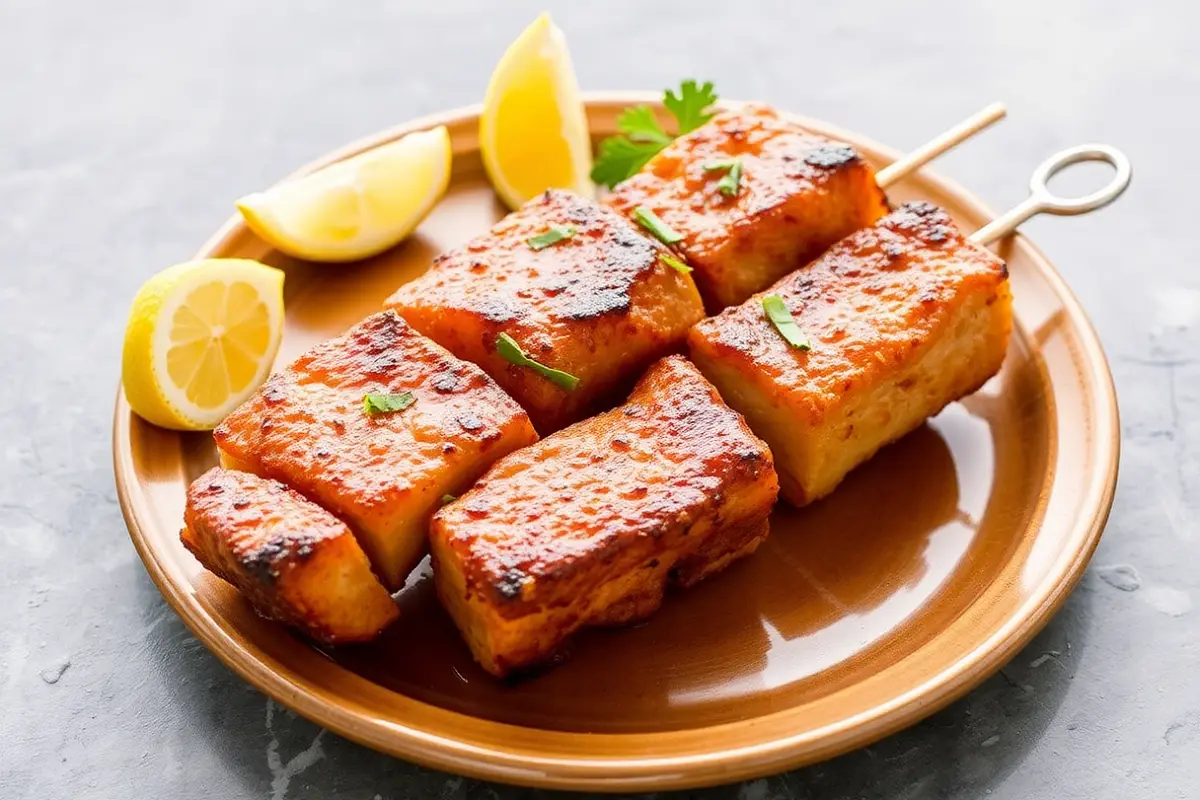
Fish gets overlooked in the kebab conversation. Everyone reaches for the chicken boti, the seekh kebab, the paneer tikka and the fish quietly sits there being underestimated. This fish boti kebab recipe is here to change that. When you get it right firm cubes of fresh fish, marinated just long enough in a bold Indian spice coating, cooked on a screaming-hot tawa until the edges char and the interior stays soft and moist fish boti kebab is not second to anything on the table. It is the dish that makes everyone reach for a second skewer before the first is finished.
The word "boti" means pieces of meat in Urdu and Hindi and while fish is not technically meat, the boti format translates beautifully to seafood. Bite-sized cubes of firm fish, threaded onto skewers, marinated in yoghurt and spices, and grilled until slightly charred on the outside and just-cooked through in the centre. The technique is almost identical to chicken boti kebab, but fish has its own set of rules that make all the difference between a kebab that is spectacular and one that is dry and overcooked. The most important rule is the one most people break: do not marinate fish for too long. The acidic elements in the marinade yoghurt, lemon juice begin to chemically denature the fish protein after about 45 minutes, which means the fish arrives at the pan already partially "cooked" from the inside and turns dry and mealy during the actual heat cooking. Twenty to forty-five minutes is your window. This recipe is built around that window.
Whether you are cooking for an Eid spread, a summer barbecue, a dinner party starter, or a weeknight meal that feels a little special this recipe gives you everything you need to make fish boti kebab that stands on its own as the centrepiece of the plate.
What Makes This Fish Boti Kebab Recipe Special
Fish kebabs are deceptively simple to get right once you understand the rules that are different from meat kebabs. Here is what makes this version reliable, juicy, and genuinely impressive every time.
- The turmeric-lemon first prep not a marinade. Before the main spiced marinade goes on, the fish cubes are tossed briefly with turmeric, salt, and lemon juice for just 5 to 8 minutes. This is not a marinade it is a prep step. The turmeric begins to neutralise any residual fish smell, the salt draws out a small amount of surface moisture that would otherwise prevent the main marinade from adhering, and the lemon adds a first layer of brightness. Wiping this off before the main marinade goes on gives you a clean, dry surface that the spiced yoghurt coating can bond to properly.
- Short marination 20 to 45 minutes maximum. This is not negotiable for fish. The hung curd and lemon in the main marinade are mildly acidic, and fish protein is far more delicate than chicken or mutton. Beyond 45 minutes, the marinade begins to break down the outer layer of the fish, which makes it crumble and dry out during cooking. Twenty minutes gives you well-flavoured fish with a perfect texture. Forty-five minutes gives you the deepest flavour the fish can safely absorb. Never go beyond that.
- Choosing the right fish is everything. Firm-fleshed fish is non-negotiable for boti-style skewer kebabs. Soft or flaky fish like pomfret, rohu, or tilapia will fall apart on the skewer before they reach the pan. Kingfish (surmai), salmon, swordfish, tuna, bhetki (barramundi), or firm catfish steaks all work beautifully. They hold their shape, absorb the marinade without disintegrating, and develop a clean char on the tawa without falling through.
- Mustard oil in the marinade for the authentic North Indian aroma. A small amount of smoked-and-cooled mustard oil in the fish marinade adds the same pungent, deeply fragrant character it brings to the chicken boti version. Fish and mustard oil is one of the great flavour pairings in Indian cooking particularly in Bengali cuisine where the combination is celebrated. Use it here and you will immediately understand why.
- Two-skewer threading for stability. Fish is more fragile on the skewer than meat. Threading each kebab onto two parallel skewers rather than one gives the fish cubes a second anchor point and prevents them from spinning freely when you rotate. The result is much easier to turn on the tawa and the fish holds together cleanly throughout cooking.
Ingredients Overview
The most important decision in this recipe is the fish you choose. Firm-fleshed, boneless fish fillets are essential anything that flakes too easily at room temperature will fall off the skewer during cooking. Kingfish (surmai) is the classic Indian choice for grilled fish preparations it is firm, mildly flavoured, and takes spice beautifully. Salmon brings richness and natural oil that keeps the kebabs moist even if they spend an extra minute on the tawa. Bhetki (barramundi) has a clean, neutral flavour that lets the spice marinade come forward. Swordfish and tuna steaks work well for those who want a meatier, denser bite. Whatever fish you choose, buy it as fresh as possible, cut it into uniform 3 to 4 cm cubes yourself rather than using pre-cut pieces, and pat every surface dry before any marinade touches it.
The main marinade is built on thick hung curd or Greek yoghurt. Full-fat is essential low-fat yoghurt contains more whey, which makes the marinade watery and causes it to slide off the fish during cooking. The yoghurt provides the creamy body, the mild tang, and the coating that caramelises on the tawa. Ginger-garlic paste adds aromatics. Kashmiri red chilli powder provides the deep, vivid orange-red colour with moderate rather than fierce heat do not substitute with regular red chilli powder, which is much hotter and will overpower the delicate fish flavour. Roasted besan (gram flour) stirs into the marinade to add binding power and a subtle nuttiness that keeps the coating on the fish surface during the tawa sear.
The spice blend coriander powder, cumin powder, garam masala, a pinch of carom seeds (ajwain), and chaat masala is deliberately lighter than a chicken or mutton kebab marinade. Fish needs seasoning that complements rather than dominates. Ajwain is particularly valuable here it has a digestive quality and a faintly thymey warmth that pairs exceptionally well with seafood and is used in Indian fish preparations across every coastal region. Fresh lemon juice, a small amount of smoked-and-cooled mustard oil, and a pinch of turmeric round out the marinade. For substitutions: replace mustard oil with neutral oil if unavailable. Use lime juice instead of lemon. Skip the ajwain if it is not in your pantry the kebabs will still be excellent without it.
Also Read: Chicken Boti Kebab Recipe
How to Make It
The sequence for fish boti kebab is slightly different from the meat version and the differences matter. First, a brief 5 to 8 minute turmeric-lemon prep on the fish cubes, then a quick wipe-down before the main marinade goes on. The main marinade stays on for 20 to 45 minutes set a timer because timing actually matters here in a way it does not with chicken. Thread onto double parallel skewers, leave a small gap between each piece, and cook on a medium-high tawa not raging high heat, because fish cooks faster than chicken and the exterior can char before the interior is warmed through if the heat is too fierce. Total cooking time on the tawa is about 8 to 10 minutes. The full step-by-step directions are below.
The finishing touches a light baste of ghee or butter in the final minute, a squeeze of fresh lemon, a pinch of chaat masala, and the optional dhungar smoky step take these kebabs from simply well-cooked fish to something that feels genuinely special on the plate.
Tips for Best Results
- Buy the freshest fish you can find. This is the single most important factor in the success of any fish kebab. Fresh fish smells clean and faintly of the sea not strongly fishy. The flesh should feel firm when pressed, not soft or yielding. If you are at a fish market, ask for fish that arrived that morning. A fresh fish marinade needs no tricks to taste good. A stale fish cannot be rescued by the best marinade in the world.
- Dry the fish thoroughly before marinating. Surface moisture on the fish dilutes the marinade and prevents it from bonding to the surface. After the turmeric-lemon prep step, wipe the fish pieces dry with kitchen paper before applying the main marinade. This single step makes a visible difference to how well the coating clings during cooking.
- Never marinate fish longer than 45 minutes. Set a timer. The lemon and yoghurt in the marinade begin breaking down fish protein at a cellular level after 45 minutes. The fish will look fine in the bowl but will turn crumbly and dry the moment it hits the heat. Twenty minutes is ideal. Forty-five is the absolute maximum.
- Use double skewers for stability. Thread each kebab onto two parallel bamboo or metal skewers placed about 1.5 cm apart. This prevents the fish cubes from spinning when you try to rotate them on the tawa and makes the whole cooking process much easier and cleaner.
- Medium-high heat, not maximum heat. Fish cooks in half the time of chicken. A medium-high tawa gives you a proper sear and a slightly charred exterior while leaving the interior moist and just-cooked. Maximum heat chars the outside aggressively before the inside has time to warm through.
- Rest for one minute before serving. Just like meat kebabs, a brief rest after cooking allows the juices inside the fish to redistribute. One minute on the plate before serving makes the kebabs noticeably juicier and more cohesive when you bite into them.
Serving Suggestions
Fish boti kebab is naturally lighter and cleaner-tasting than its chicken or mutton counterparts, and the accompaniments should reflect that. A bowl of fresh green coriander-mint chutney is the essential pairing the bright, herby freshness cuts through the spice of the marinade and complements the delicate fish beautifully. A small bowl of dahi wali hari chutney green chutney stirred into thick yoghurt adds a cool, creamy dimension that works particularly well with the smokiness of the dhungar finish.
For a more complete plate, serve alongside a fresh kachumber salad finely diced cucumber, tomato, raw red onion, and fresh coriander dressed with lemon juice, chaat masala, and a pinch of salt. The crunch and freshness of the salad against the warm, charred fish makes every bite more interesting. For a heartier meal, tuck two fish boti pieces into a warm roomali roti with shredded cabbage, a smear of green chutney, and a squeeze of lemon for an outstanding fish kebab roll. Pair the full spread with a pot of masala chai for a tea-time experience that is genuinely hard to beat.
Storage and Reheating
Fridge: Store cooked fish boti kebabs in an airtight container in the refrigerator for up to 2 days. Fish is more delicate than chicken and does not keep as long once cooked. To reheat without drying the fish, place in a non-stick pan over medium-low heat with a tiny splash of water, cover with a lid for 1 to 2 minutes to steam gently, then uncover for 30 seconds to restore the exterior texture. An air fryer at 170°C for 4 to 5 minutes is equally effective. Avoid the microwave entirely it makes fish rubbery and causes the marinade coating to separate.
Make Ahead: The main spiced marinade can be prepared up to 24 hours in advance and kept refrigerated. Do not marinate the fish in advance only apply the marinade 20 to 45 minutes before you plan to cook. If you need a true make-ahead option for a party, do the turmeric-lemon prep on the fish and refrigerate the fish uncovered on a plate (this actually helps dry the surface further, which improves the coating). Apply the main marinade 30 minutes before guests arrive and cook fresh to order.
Variations and Substitutions
- Amritsari Fish Boti Kebab: Replace the hung curd in the marinade with a thick batter of besan (gram flour), ajwain, red chilli, and water. The Amritsari style produces a crisper, more textured exterior than the yoghurt version the fish cubes develop a light, crunchy coating with a warm, slightly spiced crust that is completely different in character. Deep fry or shallow fry rather than tawa-grill for the most authentic result.
- Malai Fish Boti Kebab: Replace Kashmiri red chilli powder with white pepper powder in the main marinade, add 3 tablespoons of fresh cream and a tablespoon of cashew paste, and use neutral oil instead of mustard oil. The result is a pale, creamy, gently spiced white fish kebab that is luxurious and delicate closer in flavour profile to the Afghani style but applied to fish. Finish with ginger juliennes and cardamom for a proper Mughlai presentation.
- Bengali Mustard Fish Boti Kebab: Add a tablespoon of kasundi (Bengali mustard sauce) to the main marinade alongside the mustard oil. The sharp, pungent character of kasundi and mustard oil together with the fish creates a deeply flavoured, specifically Bengali-style kebab that is unlike anything else on a kebab platter. Serve with a wedge of raw lemon and a side of mustard-dressed onion salad.
- Charcoal Grill Version: After the full marinade, thread onto double metal skewers and grill over a medium-hot charcoal fire, rotating every 90 seconds, for 8 to 10 minutes total. Baste with ghee in the final 90 seconds. The charcoal itself provides the smokiness the dhungar step is not needed if you are cooking over live coals.
- Air Fryer Version: Lightly brush marinated fish pieces with oil. Place in the air fryer basket in a single layer. Air fry at 190°C (375°F) for 10 to 12 minutes, turning once gently at the halfway point. Do not flip too early the fish needs to form a crust on the underside before it will release from the basket without tearing. Brush with ghee immediately after removing.
- Prawn Boti Kebab Variation: Replace fish cubes with large king prawns, deveined and shelled with tails left on for presentation. Reduce the marination time to 15 to 20 minutes maximum prawns are even more delicate than fish in an acidic marinade. Cook on a hot tawa for 2 to 3 minutes per side they cook very quickly and should be removed the moment they turn pink and opaque throughout.
Preparation Method
Begin by preparing the fish: cut boneless fillets into uniform 3 to 4 cm cubes and pat every surface completely dry with kitchen paper. Place in a bowl and add the turmeric, salt, and lemon juice for the first prep step. Toss gently to coat and leave for exactly 5 to 8 minutes no longer. Drain any liquid that has collected in the bowl and wipe the fish pieces dry again with fresh kitchen paper. While the fish sits in the first prep, prepare the main marinade: in a mixing bowl, combine the hung curd, smoked-and-cooled mustard oil, ginger-garlic paste, Kashmiri red chilli powder, coriander powder, cumin powder, garam masala, ajwain, roasted besan, chaat masala, lemon juice, and salt. Stir into a smooth, thick, fragrant marinade and taste it it should be bold and well-seasoned.
Add the dried fish pieces to the main marinade, folding gently to coat every surface without breaking the cubes. Cover and refrigerate for 20 to 45 minutes set a timer and do not exceed 45 minutes. While the fish marinates, prepare your double skewers, set up your serving accompaniments, and heat your tawa. Thread the marinated fish cubes onto double parallel skewers, leaving a small gap between each piece, and rest the threaded skewers on the counter for 5 minutes before cooking.
Standard Operating Procedure (SOP)
For consistent, restaurant-quality results every single time, follow this sequence: choose firm-fleshed fish → cut into uniform cubes → pat dry thoroughly → turmeric-lemon first prep 5–8 minutes → wipe dry again → build main marinade → coat fish gently → refrigerate 20–45 minutes maximum (set a timer) → thread onto double parallel skewers with gaps → rest 5 minutes at room temperature → cook on medium-high tawa or oven or air fryer → rotate every 90 seconds → baste with ghee in final 60 seconds → rest 1 minute before serving → dhungar smoky finish if desired → finish with lemon, chaat masala, and coriander → serve immediately. The three rules most home cooks ignore for fish kebabs are drying the fish properly before marinating, keeping the marination strictly under 45 minutes, and using medium-high rather than maximum heat during cooking. Break any one of these and the kebabs will still be edible but following all three is what makes them exceptional.
For party and catering batches, prepare the marinade and the turmeric-lemon prepped fish separately up to 4 hours ahead. Keep the fish refrigerated dry on a plate and the marinade covered in a bowl. Combine them 30 minutes before cooking time. Thread onto skewers 20 minutes before guests arrive. Cook in batches on the tawa as orders come through, keeping finished skewers warm on a wire rack in a 100°C oven. Never stack cooked fish kebabs they will steam and lose their texture within minutes. Always perform the ghee baste and the finishing elements (lemon, chaat masala) fresh on each batch just before plating.
Garnish and Presentation
Fish boti kebab has a naturally beautiful appearance the vivid Kashmiri chilli orange-red coating against the pale fish interior when you cut into a piece is visually dramatic and appetising. Serve on a dark slate board or a deep-toned ceramic plate for maximum colour contrast. Arrange the double skewers in a neat fan pattern across the plate, tips pointing outward, so guests can lift each skewer cleanly without disturbing the others. The gap between each fish cube on the skewer should be visible it signals that the kebabs were made with care and cooked properly.
For garnish, keep it fresh and complementary to the fish: a small mound of thinly sliced red onion rings tossed with chaat masala and lemon juice, a wedge of fresh lemon, two slit green chillies, and a generous sprig of fresh coriander. A light drizzle of melted ghee over the kebabs just before serving adds a golden sheen and a warm, buttery aroma. For a restaurant-style finishing touch, scatter a pinch of ajwain seeds and a few dried rose petals over the plate the pale pink of the petals against the orange-red of the marinade is visually striking and signals that this is not an ordinary fish dish.
Plating and Serving Tips
Serve fish boti kebabs hot and immediately fish holds its ideal texture for a shorter window than meat after cooking and should reach the guest within 3 to 4 minutes of coming off the tawa. For individual plating, two to three skewers per person is the right quantity for a starter. Keep the plate clean and uncluttered the fish kebab is delicate and elegant and benefits from space around it rather than a crowded plate. One chutney bowl, a small dressed salad, a lemon wedge, and a sprig of coriander is everything the plate needs.
For a sharing platter or party board, arrange the skewers in two rows on a long wooden board with the tips slightly overhanging the edge for visual drama and easy picking. Place the green chutney and dahi wali hari chutney bowls at opposite ends of the board. Scatter the dressed onion rings and kachumber salad in the space between the rows. Tuck lemon wedges into the corners and finish with fresh coriander leaves and slit green chillies along the sides. If performing the dhungar smoking step, do it at the table so guests experience the smoke lift with fish boti kebab, that theatrical moment is the signal that something genuinely special is about to be eaten.
If you make this fish boti kebab recipe, I genuinely want to hear how it went. Leave a star rating below and drop a comment which fish did you use, did you try the Bengali mustard variation, did the double skewer technique help? Your feedback helps other readers make better choices at the fish counter and in the kitchen, and I read every single note that comes in. Save this to Pinterest so it is always there for your next summer barbecue, Eid platter, or the next time you want to give fish the starring role it deserves!
Ingredients
- 500g (1.1 lb) firm-fleshed boneless fish fillets
- ¼ teaspoon turmeric powder
- ½ teaspoon salt
- 1 tablespoon fresh lemon juice
- ½ cup hung curd or full-fat thick Greek yoghurt
- ½ teaspoon cumin powder
- 1 teaspoon chaat masala
- lightly crushed between palms
- ¼ teaspoon ajwain (carom seeds)
- ½ teaspoon garam masala
- 1 teaspoon coriander powder
- 1½ teaspoons Kashmiri red chilli powder
- 1 tablespoon ginger-garlic paste
- 1 tablespoon mustard oil
- 1 tablespoon roasted besan (gram flour)
Nutritional Information
- Calories: 210 kcal
- Protein: 27g
- Carbohydrates: 2g
- Fat: 9g
- Fiber: 1g
- Sodium: 430mg
- Sugar: 2g
Directions
1. PREPARE AND DRY THE FISH
Cut the boneless fish fillets into uniform 3 to 4 cm (1.5 inch) cubes.
Uniformity matters for fish even more than it does for chicken — uneven
pieces mean thinner edges overcook and dry out before the thicker centre
is done. Pat every surface of every cube completely dry with kitchen paper.
Repeat this twice — first pat, then wait 30 seconds, then pat again.
The drier the fish surface, the better the marinade will cling during cooking.
2. FIRST PREP STEP (TURMERIC-LEMON)
Place the dried fish cubes in a bowl. Add the turmeric, salt, and lemon juice.
Toss gently to coat every piece — handle the fish carefully and do not press
or squeeze. Set a timer for exactly 5 to 8 minutes. During this time the
turmeric begins neutralising any residual fish aroma, the salt draws out a
small amount of surface moisture, and the lemon starts building the first
layer of brightness. When the timer sounds, drain any liquid that has
collected in the bowl. Wipe the fish pieces dry again with fresh kitchen
paper — remove as much of the turmeric paste and liquid as you can.
This clean, dry surface is what the main marinade needs to bond to.
3. SMOKE THE MUSTARD OIL
While the fish sits in the first prep, heat 1 tablespoon of mustard oil in
a very small pan over high heat until you see a thin wisp of white smoke rise
from the surface — about 1 to 2 minutes. Remove immediately from the heat.
Set aside to cool completely to room temperature. Do not add mustard oil to
the marinade while still warm — it will curdle the yoghurt.
4. DRY-ROAST THE BESAN
Place the gram flour in a small dry pan over medium-low heat.
Stir constantly for 3 to 4 minutes until it turns one shade darker and smells
faintly nutty. Remove from heat immediately and spread on a plate to cool.
This takes less than 5 minutes and makes a real difference to the texture
of the marinade coating.
5. BUILD THE MAIN MARINADE
In a large bowl, combine the hung curd, cooled smoked mustard oil,
ginger-garlic paste, Kashmiri red chilli powder, coriander powder, cumin
powder, garam masala, crushed ajwain, cooled roasted besan, chaat masala,
lemon juice, fresh cream (if using), and salt. Whisk everything together
until the marinade is completely smooth, thick, and evenly combined.
Taste it — it should be bold, tangy, warmly spiced, and well-seasoned.
Adjust salt and lemon to your preference at this stage.
6. COAT THE FISH AND MARINATE
Add the wiped-dry fish cubes to the main marinade. Using a spoon or very
gentle hands, fold the marinade around every piece of fish without pressing
or breaking the cubes. Every surface should be well coated. Set a timer for
20 minutes (for good results) or 45 minutes maximum (for the deepest result
the fish can safely absorb). Refrigerate during this marination time.
Do not leave the fish in the marinade beyond 45 minutes under any circumstances.
7. THREAD ONTO DOUBLE SKEWERS
Take the marinated fish out of the refrigerator.
If using bamboo skewers, remove two parallel skewers from their water soak
and pat dry. Place them side by side about 1.5 cm apart on your work surface.
Thread 3 to 4 fish cubes onto both skewers simultaneously, so each piece is
held by two skewer points. Leave a small 5mm gap between each cube to allow
heat to circulate. This double skewer technique prevents the fish from spinning
when you rotate and makes flipping much more controlled. If using metal skewers,
use two flat skewers in the same parallel configuration.
Rest the threaded skewers on the counter for 5 minutes before cooking.
8. COOK ON TAWA (STOVETOP METHOD)
Heat a heavy-bottomed non-stick pan or cast-iron tawa over medium-high heat
for 2 minutes. Add 2 tablespoons of neutral oil and swirl to coat.
The oil should shimmer and move easily when the pan is tilted.
Place 2 to 3 skewers on the tawa with space between them. Do not crowd.
Cook for 2 minutes without moving. The fish will release naturally from the
surface once a crust has formed — if it sticks when you try to rotate,
give it another 30 seconds. Rotate the skewers a half-turn and cook the
other side for another 2 minutes. For kebabs on double skewers, a half-turn
exposes the previously uncooked face — check both sides are evenly coloured.
Total cooking time: 8 to 10 minutes per batch for 3 to 4 cm cubes.
The fish is done when the coating is deep orange-red with slightly charred
edges and the flesh feels firm but not hard when pressed gently.
In the final 60 seconds, add a knob of ghee to the pan and tilt to baste
the melted ghee over the kebabs. Remove and rest for 1 minute before serving.
9. DHUNGAR SMOKY FINISH (OPTIONAL)
Heat a small piece of charcoal over a gas flame using tongs until glowing red.
Place a small steel bowl in the centre of your serving platter and set the
glowing coal inside. Arrange the cooked fish boti kebabs around the bowl
immediately. Drizzle ½ teaspoon of ghee over the coal — it will smoke at once.
Cover the entire platter tightly with a large bowl or foil within 3 seconds.
Leave covered for exactly 2 minutes — no longer for fish, as the smoke can
overpower the delicate fish flavour if left too long.
Uncover, discard the coal, and serve immediately.
10. FINISH AND SERVE
Drizzle melted ghee over all the cooked fish kebabs. Squeeze fresh lemon juice
over the top. Sprinkle a pinch of chaat masala and a small pinch of ajwain
seeds directly over the kebabs. Arrange on the serving plate with dressed onion
rings, a lemon wedge, slit green chillies, and fresh coriander sprigs.
Serve immediately alongside green chutney, dahi wali hari chutney, and
kachumber salad while the fish is still hot and fragrant.
Rate this Recipe
User Reviews
No reviews yet. Be the first to share your thoughts!