Tangdi Kabab Achari: Bold Pickle-Spiced That Hit Different
Tangdi kabab achari with pickle spices, smoked mustard oil, mango pickle marinade & dhungar finish. Tangy drumstick kebab ready in 55 mins.
 Tripti Srivastava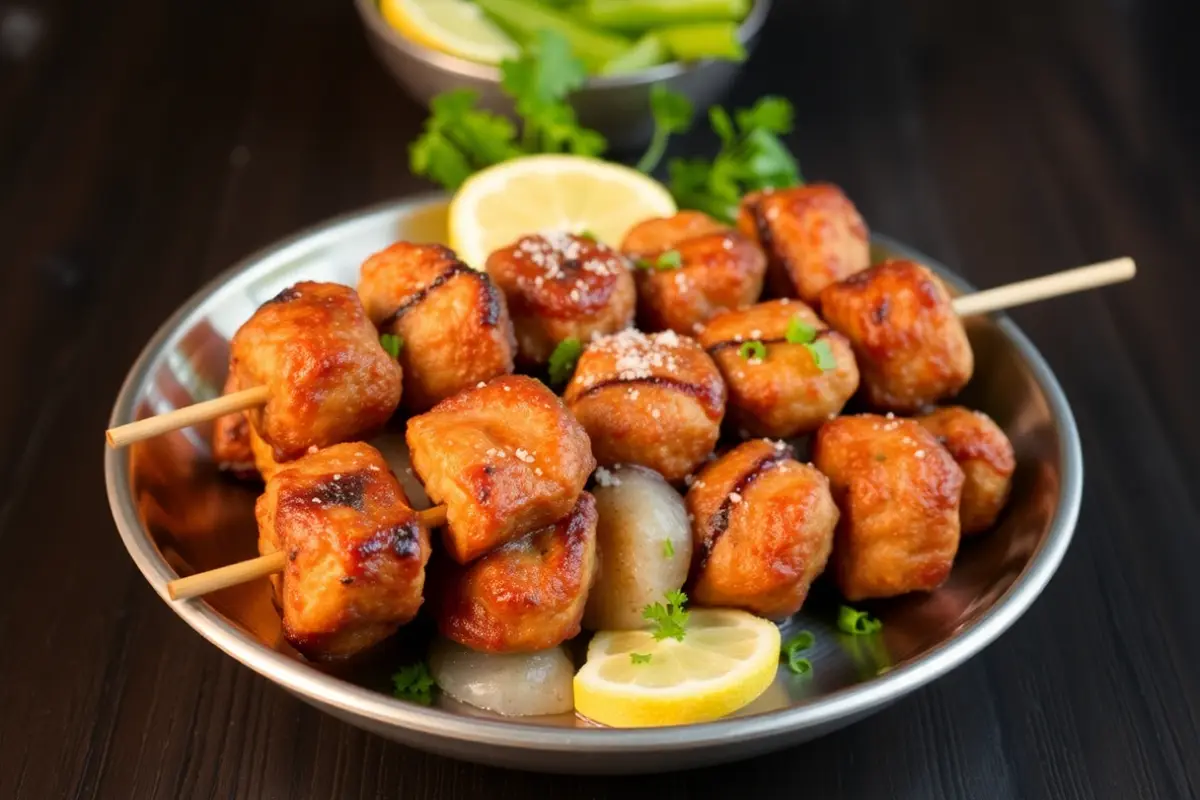
If you have already made the classic chicken tangdi kebab and loved it, and then wondered what it would taste like if someone turned up the flavour by about three settings this is that version. Tangdi kabab achari takes everything that makes bone-in drumstick kebab so deeply satisfying the juicy meat, the charred scored crust, the bone conducting heat from the inside and then layers the entire preparation with the sharp, pungent, aromatic world of Indian pickle spices. The result is a drumstick kebab that smells like a Punjabi roadside dhaba on a winter evening and tastes like nothing else you have made this year. Tangy from the amchur and mango pickle. Bold from the mustard oil. Warm from the bloomed fennel, kalonji, and ajwain. And underneath all of that, the deep, irresistible juiciness of properly marinated, bone-in chicken cooked over heat until the coating caramelises and the edges char.
The achari flavour profile takes its name and character directly from the world of Indian pickles "achar" simply means pickle in Hindi and Urdu. The five pickling spices at the heart of this recipe kalonji (nigella seeds), saunf (fennel seeds), methi dana (fenugreek seeds), ajwain (carom seeds), and rai (mustard seeds) are the same seeds used to make the mango, lime, and mixed vegetable pickles that sit in earthen jars on kitchen shelves across North India. When these seeds are bloomed in hot smoked mustard oil and woven into a hung curd marinade, they produce an aroma that is intensely distinctive simultaneously familiar and exciting, immediately recognisable to anyone who has grown up eating Indian food, and completely unlike any other marinade in the kebab canon.
This recipe gives you the full achari treatment for bone-in drumsticks the deep scoring, the double marinade built around the achari spice bloom, the mango pickle layer that takes the tanginess to another level, the tawa cook method adapted for bone-in chicken, and the dhungar smoky finish. Follow it once and this will become the version of tangdi kebab your guests always ask you to repeat.
What Makes This Tangdi Kabab Achari Recipe Special
Achari is one of the boldest, most distinctive flavour styles in North Indian cooking and applying it to a bone-in drumstick kebab creates something more layered and interesting than either the classic tangdi or a simple achari preparation alone. Here is what makes this version genuinely worth making.
- The panch phoran seed bloom as the marinade foundation. Rather than simply adding achari masala powder to the yoghurt marinade, this recipe starts by blooming the five whole pickling seeds kalonji, fennel, fenugreek, ajwain, and mustard in hot smoked mustard oil until they sizzle, crackle, and release their essential oils. This bloomed oil and seed mixture cools and then forms the aromatic backbone of the entire marinade. The difference between a marinade built on pre-ground achari powder and one built on freshly bloomed whole seeds is immediately noticeable in both the aroma and the depth of flavour in the finished kebab.
- Mango pickle in the marinade. A tablespoon of Punjabi-style raw mango pickle oil and spice paste only, seeds and hard skin removed stirred into the second marinade adds a layer of sour, oily, deeply spiced tanginess that no combination of powder and lemon juice can replicate. The pickle is already a concentrated flavour bomb from weeks or months of fermentation and spice infusion adding it to the marinade transfers all of that character directly into the chicken. If you can only make one modification to your usual tangdi marinade, this is the one.
- Smoked mustard oil as both marinade and cooking medium. Mustard oil that has been heated to smoking point and then cooled is used twice in this recipe once in the first marinade to begin tenderising and flavouring the scored flesh, and again as the foundation of the second marinade. The double use of smoked mustard oil gives the achari tangdi kabab a depth and pungency that builds gradually as you eat it rather than announcing itself in the first bite and fading immediately.
- Deep scoring to the bone carries the achari flavour inward. The whole point of pickling spices as a kebab marinade is that they need time and surface area to penetrate. Deep scoring on the drumstick three to four cuts per side all the way to the bone creates the channels that allow the pungent, tangy achari marinade to travel deep into the meat. Without scoring, the achari flavour stays only on the surface and the characteristic tingle of the pickle spices is lost in the interior of the meat next to the bone.
- Amchur as the finishing sharp note. Dry mango powder (amchur) is added to the second marinade rather than simply relying on lemon juice for tartness. Amchur is more concentrated, more fruity, and more persistent in flavour than lemon it adds a sharpness that stays present even after the high heat of the tawa cook, whereas lemon juice largely cooks away. Together with the mango pickle, the amchur gives this kebab a double-layered sour dimension that is the defining characteristic of any great achari preparation.
Ingredients Overview
Start with bone-in, skin-off chicken drumsticks of roughly uniform size. Skin-off drumsticks absorb the achari marinade more readily and allow the pickle spice flavours to penetrate without the fat layer of the skin acting as a partial barrier. Pat every piece completely dry with kitchen paper before scoring surface moisture on the chicken dilutes the first marinade and prevents it from sealing the scored flesh. Deep score each drumstick three to four cuts per side, all the way to the bone, before any marinade goes on.
The five pickling seeds are the most important ingredient in this recipe and they are worth sourcing specifically rather than substituting. Kalonji (nigella seeds) add a faint onion-like bitterness and a slight floral note. Saunf (fennel seeds) add sweetness and anise warmth that counterbalances the pungency of the mustard and fenugreek. Methi dana (fenugreek seeds) add a slight, distinctive bitterness that is the base note of almost every Indian pickle. Use them sparingly, as they become more bitter when overcooked. Ajwain (carom seeds) add digestive warmth and a faintly thymey quality that pairs particularly well with poultry. Rai (black mustard seeds) add the sharp heat that gives achari preparations their characteristic pop. Together these five seeds, bloomed in hot oil, are irreplaceable no single spice powder captures their combined character.
Thick hung curd or Greek yoghurt is the marinade base full-fat, never low-fat, to ensure the coating clings to the scored chicken surface and caramelises properly during cooking. Punjabi-style raw mango pickle the oil-heavy, spice-laden variety rather than a sweet mango chutney adds the deep, concentrated achari layer. Use the spiced oil and small pieces of mango from the jar, removing any large, hard skin pieces and seeds before adding to the marinade. Amchur powder adds the dry, fruity tartness that complements the pickle without making the marinade too wet. Kashmiri red chilli powder provides the vivid colour and warm background heat. Roasted besan binds and thickens the marinade so it stays on the chicken surface during the high-heat tawa cook.
For substitutions: if mango pickle is unavailable, replace with a teaspoon of lime pickle (different flavour but same acidic, oily character) or add an extra half teaspoon of amchur. Replace amchur with an extra squeeze of lemon juice and a pinch of tamarind powder. Use cornstarch instead of besan for a gluten-free version. If you cannot find all five pickling seeds, use as many as you can even three of the five bloomed in mustard oil will produce a recognisably achari result.
Also Read: Chicken Tangdi Kebab Recipe
How to Make It
The sequence begins with the scoring deep cuts all the way to the bone on both sides of every drumstick. Then the first marinade: a simple tenderising rub of ginger-garlic paste, red chilli, turmeric, smoked mustard oil, and lemon juice pressed firmly into the scored cuts and left for 30 minutes. Then the second achari marinade: the full preparation built on bloomed pickling seeds, hung curd, mango pickle, amchur, and the whole spice blend, applied over and pressed into the first marinade layer, left for at least 2 hours (overnight is genuinely better for bone-in chicken). Then cooking medium heat with a lid for the first phase to cook the meat through, then uncovered medium-high heat for the char and crust. Finished with a ghee baste and the optional dhungar smoky step.
The achari marinade behaves slightly differently from a standard yoghurt marinade during cooking because of the oils from the pickle and the mustard. It caramelises faster and develops a more deeply coloured, stickier crust than a plain yoghurt coating which means you need to watch the heat slightly more carefully and ensure the steam-cook phase is complete before you increase the heat for the char. The full directions are below.
Tips for Best Results
- Bloom the seeds do not skip this step. Heating the five pickling seeds in hot smoked mustard oil until they sizzle and pop takes less than 60 seconds but fundamentally transforms the aroma and depth of the entire marinade. Raw seeds added directly to cold yoghurt give you a fraction of the flavour that bloomed seeds produce. The heat releases the essential oils in each seed in a way that cold marination simply cannot achieve. Let the bloomed oil and seed mixture cool completely before combining with the hung curd.
- Remove seeds and skin from the mango pickle before adding. The oil, spiced paste, and small soft mango pieces from the pickle jar are what you want in the marinade. Hard mango skin pieces and seeds do not blend into the marinade evenly and can create an unpleasant texture on the finished kebab. Take 1 to 2 tablespoons of pickle from the jar, chop the mango pieces finely, and discard any hard skin or seeds before adding.
- Do not exceed the fenugreek seeds quantity. Methi dana is the most potent and potentially bitter of the five pickling seeds. The quantity in this recipe ¼ teaspoon is calibrated to add depth without bitterness. More than this, especially with the additional heat of cooking, can tip the marinade into unpleasantly bitter territory. Measure carefully and stick to the stated amount.
- The achari marinade caramelises faster watch your heat. The pickle oil and mustard oil in the second marinade have a higher fat content than a standard yoghurt marinade. This means the coating caramelises and develops colour faster during cooking. Cook the first phase on slightly lower medium heat than you would for a plain tangdi kebab, and increase to medium-high (not high) for the final char phase.
- Marinate overnight without hesitation. For bone-in chicken marinated in an achari preparation, overnight marination does something genuinely special the acids from the amchur and pickle slowly work into the meat through the scored cuts, the pickle spice aromas deepen, and the mustard oil settles into the flesh in a way that produces a flavour that is present all the way to the bone. Two hours gives you a very good result. Overnight gives you something memorable.
- French and foil the bone for presentation. Scraping the lower 3 to 4 cm of the drumstick bone clean and wrapping it in foil during cooking creates the exposed white bone handle that is the visual signature of a restaurant-presented tangdi kebab. The contrast between the dark, caramelised achari coating on the meat and the clean white bone is particularly dramatic for this style because the achari marinade produces a deeper, richer colour than a standard red tangdi marinade.
Serving Suggestions
Achari tangdi kabab has a bold, punchy character that calls for accompaniments which cool and balance rather than amplify. A bowl of dahi wali hari chutney green coriander-mint chutney stirred into thick cold yoghurt is the ideal pairing. The cool, creamy, herby yoghurt chutney sits against the warm, tangy, spiced drumstick in exactly the right way. A plain mint raita works equally well and is simpler to prepare. The one accompaniment that is genuinely non-negotiable is the laccha pyaz the traditional raw onion preparation for kebab service: thinly sliced red onion rings squeezed with lemon juice, a pinch of chaat masala, and a few fresh coriander leaves. The raw sharpness of the onion cuts through the achari richness like nothing else.
For a fuller meal, serve the achari tangdi kabab alongside a warm roomali roti or laccha paratha and a simple cucumber-tomato kachumber salad. The paratha's flaky layers are ideal for pulling meat off the bone and wrapping with the onion salad and chutney informal, tactile, and completely satisfying. For a dinner party setting, pair with dal makhani and garlic naan for a North Indian spread where the achari tangdi acts as the bold, spiced star of the table.
Storage and Reheating
Fridge: Store cooked achari tangdi kabab in an airtight container for up to 3 days. The achari flavour actually deepens and improves on day two as the pickle spices continue to work into the meat. To reheat, place in a pan over medium-low heat with a tiny splash of water, cover with a lid for 3 to 4 minutes to steam and warm through, then uncover and cook for 1 to 2 minutes per side to re-crisp the achari crust. An oven at 180°C for 10 minutes works equally well. Avoid the microwave it makes bone-in chicken heat unevenly and turns the achari coating watery and dull.
Freezer: Freeze the second-marinade-applied drumsticks (uncooked) in a zip-lock bag for up to 4 weeks. Thaw completely in the refrigerator overnight before cooking do not cook bone-in chicken from frozen. Cooked achari tangdi kabab can also be frozen for up to 2 weeks and reheated in the oven at 180°C for 15 minutes, covered with foil for the first 10 minutes and uncovered for the final 5 minutes to restore the crust.
Variations and Substitutions
- Lime Achari Tangdi Kabab: Replace the mango pickle with a tablespoon of lime pickle (nimbu achaar) remove any seeds and use the oily, spiced paste. Lime pickle is sharper and more citrusy than mango pickle and produces a slightly brighter, more intensely sour achari result. The colour of the finished drumstick will be a little paler but the flavour is arguably bolder. Particularly good served with a tamarind-laced chutney on the side.
- Achari Malai Tangdi (Creamy Achari Version): Add 3 tablespoons of fresh cream and reduce the Kashmiri red chilli powder by half in the second marinade. The cream softens the sharpness of the achari spices and mustard oil, producing a pale, creamy-but-still-tangy drumstick that sits somewhere between the Malai tangdi and the full achari style. This version is excellent for guests who love the achari aroma but prefer less heat.
- Oven and Grill Method: Place scored, double-marinated drumsticks on a wire rack over a foil-lined baking tray. Bake at 200°C (390°F) for 25 to 30 minutes, turning once at the halfway point. Switch to the grill or broiler setting for the final 4 to 5 minutes. Watch carefully the achari marinade's higher fat content from the pickle oil means it colours faster than a plain yoghurt marinade under a grill. Brush with ghee immediately after removing from the oven.
- Air Fryer Method: Place marinated drumsticks in the air fryer basket with space between each piece. Air fry at 185°C (365°F) for 22 to 25 minutes, turning once at the halfway point. Use a slightly lower temperature than standard tangdi to account for the faster caramelisation of the achari coating. Brush with ghee after removing.
- Charcoal Grill Method: Grill over medium charcoal heat, rotating every 3 to 4 minutes, for 25 to 30 minutes total. Baste with ghee every 5 minutes. The charcoal provides smokiness naturally the dhungar step is not needed when cooking over live coals. The combination of charcoal smoke and achari spices creates one of the most aromatic kebab experiences possible.
- Achari Boti Variation: Apply the same achari second marinade to boneless chicken thigh cubes instead of drumsticks for a quicker-cooking, skewered achari boti kebab. Reduce the total cook time to 12 to 15 minutes on the tawa. This variation is ideal when you need the achari flavour in a faster, party-friendly boneless format.
Preparation Method
Begin with the drumsticks: skin them, pat completely dry with kitchen paper, and score three to four deep cuts per side all the way to the bone. French the lower bone section and wrap in foil. Squeeze lemon juice over the scored flesh and pat dry again. Mix the first marinade ingredients ginger-garlic paste, red chilli, turmeric, smoked-and-cooled mustard oil, amchur, and salt and rub firmly into every cut and across the whole surface. Cover and rest for 30 minutes.
While the first marinade rests, build the achari preparation: heat a teaspoon of smoked mustard oil in a small pan and bloom all five pickling seeds together for 30 to 40 seconds until fragrant and sizzling. Transfer to a bowl and cool completely. Add the hung curd, remaining smoked mustard oil, ginger-garlic paste, Kashmiri red chilli powder, coriander powder, amchur, mango pickle (finely chopped), roasted besan, chaat masala, lemon juice, and salt to the cooled seed mixture. Whisk until smooth and thick. Stir in crushed kasuri methi last. Coat the rested drumsticks generously with this second marinade, pressing firmly into the scored cuts. Cover and refrigerate for a minimum of 2 hours overnight for the deepest achari flavour.
Standard Operating Procedure (SOP)
For consistent, restaurant-quality achari tangdi kabab every single time, follow this sequence: skin drumsticks → pat completely dry → deep score 3–4 cuts per side to the bone → French and foil lower bone → apply first marinade firmly → rest 30 minutes → smoke mustard oil and cool → bloom five pickling seeds in smoked oil → cool completely → build full achari marinade → stir kasuri methi in last → coat drumsticks thoroughly pressing into scored cuts → refrigerate minimum 2 hours (overnight strongly preferred) → rest at room temperature 20 minutes before cooking → cook medium heat with lid 12–15 minutes → remove lid, medium-high 10–12 minutes rotating every 3–4 minutes → baste with ghee in final 3 minutes → check internal temperature 75°C → rest 3–5 minutes → remove foil from bones → dhungar smoky finish → chaat masala and lemon finish → serve immediately. The five critical points specific to achari tangdi are: bloom the seeds in hot oil (not raw into yoghurt), use mango pickle not mango powder as the primary achari layer, cook the steam phase before the char phase, watch heat more carefully than standard tangdi because the pickle oil caramelises faster, and always taste the marinade before applying achari masala varies in saltiness between brands of pickle.
For party and catering batches, the full achari marinade can be prepared 48 hours ahead and refrigerated. Apply to scored drumsticks 24 hours before the event for overnight marination. Remove from the refrigerator 20 minutes before cooking. For large batches, the oven method allows cooking 6 to 8 drumsticks simultaneously on two racks essential for serving crowds efficiently. Keep finished pieces warm on a wire rack in a 100°C oven. Perform the ghee baste, chaat masala, and lemon fresh on each batch just before serving. For the most theatrical table moment, perform the dhungar step in the dining room the smoke rising from a platter of achari tangdi kabab carries a specific, intensely appetising aroma that announces the dish before anyone even looks at the plate.
Garnish and Presentation
The visual character of achari tangdi kabab is distinct from every other tangdi variation the coating develops a deeper, more richly coloured crust than a standard red marinade because of the caramelised pickle oil, and the char marks on the scored flesh are more pronounced and irregular, giving the drumstick a beautifully rustic, intensely flavoured appearance. Present on a dark slate, a black ceramic plate, or a heavy wooden board. Remove the foil from the Frenched bones just before plating. Stand the drumsticks upright at a slight angle against a small mound of laccha pyaz the pale onion rings against the deeply coloured achari drumstick is one of the most appetising colour combinations in Indian food presentation.
For garnish, keep it precisely calibrated to the achari style: a small mound of laccha pyaz (raw onion rings squeezed with lemon and a pinch of chaat masala), a wedge of fresh lemon, two slit green chillies, and a sprig of fresh coriander. A drizzle of melted ghee over the meat gives a warm, golden sheen. For a distinctive achari-specific finishing touch, scatter a pinch of whole kalonji seeds directly over the cooked drumstick they tie the garnish back to the achari spice theme visually and add a faint crunchy, slightly bitter note that is completely in keeping with the flavour of the dish. A thin drizzle of the flavoured oil from the mango pickle jar over the platter adds a glossy, aromatic finish that very few people will identify specifically but everyone will respond to.
Plating and Serving Tips
Serve achari tangdi kabab hot within 4 to 5 minutes of resting, while the ghee baste is still fragrant and the achari crust still has that slight sticky crackle at the deepest scored edges. For individual plating, two drumsticks per person with the Frenched bones pointing upward creates the restaurant-style visual immediately. Keep the plate clean and intentional the colour and char of the achari drumstick carries the visual story without additional clutter.
For a party sharing board, arrange the drumsticks in a cluster with bones pointing skyward. Place the dahi wali chutney bowl at one end of the board and the mint raita bowl at the other. Lay the laccha pyaz along both sides of the drumstick cluster. Tuck in lemon wedges, scatter coriander leaves and whole kalonji seeds across the top, and drizzle a thin line of mango pickle oil over the entire platter. Perform the dhungar smoking step on the board at the table the smoke rising from between the upright, deeply spiced achari drumsticks is one of the most dramatic, aromatic moments possible at a home dinner table and requires nothing more than a small piece of charcoal and three minutes of attention.
If you make this tangdi kabab achari, I genuinely want to hear every detail did you use mango pickle or lime pickle, did you bloom all five seeds, how did the overnight marination compare, did the dhungar smoking step get a reaction? Leave a star rating below and drop a comment. Your notes help other readers cook with real confidence and I read every single one. Save this to Pinterest so it is always there for your next Eid platter, winter barbecue, or the next time you want to make a bone-in chicken kebab that the whole table remembers long after the meal is finished!
Ingredients
- 8 chicken drumsticks, bone-in, skin removed
- ¾ teaspoon salt
- 1 tablespoon ginger-garlic paste
- 1 tablespoon fresh lemon juice
- 1 teaspoon Kashmiri red chilli powder
- ¼ teaspoon turmeric powder
- 1 teaspoon smoked-and-cooled mustard oil
- ½ teaspoon amchur ¼ teaspoon rai (black mustard seeds)
- 1 tablespoon mustard oil
- ¼ teaspoon ajwain (carom seeds), lightly crushed between palms
- ½ cup hung curd or full-fat thick Greek yoghurt
- 1 tablespoon ginger-garlic paste
- ¼ teaspoon methi dana (fenugreek seeds)
- ½ teaspoon saunf (fennel seeds)
- ½ teaspoon kalonji (nigella seeds)
Nutritional Information
- Calories: 320 kcal
- Protein: 31g
- Carbohydrates: 10g
- Fat: 18g
- Fiber: 1g
- Sodium: 540mg
- Sugar: 3g
Directions
1. PREPARE AND SCORE THE DRUMSTICKS
Remove the skin from each drumstick — grip firmly at the thick end and pull
toward the bone end, using kitchen paper for grip. Pat every drumstick completely
dry with kitchen paper on all sides. Squeeze fresh lemon juice over all the pieces,
let sit 2 minutes, then pat dry again. Using a sharp knife, make 3 to 4 deep cuts
per side of each drumstick, each going clearly all the way through the flesh down
to the bone — feel the knife stop on the bone when deep enough. Space the cuts
evenly down the length of the drumstick. French the lower 3 to 4 cm of each bone
by scraping the meat away cleanly with a small knife. Wrap each exposed bone section
in a small piece of foil.
2. APPLY FIRST MARINADE
In a small bowl, combine ginger-garlic paste, lemon juice, Kashmiri red chilli
powder, turmeric, smoked-and-cooled mustard oil, amchur, and salt. Rub this first
marinade firmly and thoroughly into every scored cut and across the entire surface
of each drumstick. Press firmly into the cuts with your fingertips to ensure the
tenderising marinade reaches as deep as possible. Place in a bowl, cover, and
refrigerate for 30 minutes.
3. SMOKE BOTH PORTIONS OF MUSTARD OIL
Heat 1 tablespoon of mustard oil in a very small pan over high heat until thin
white smoke appears — 1 to 2 minutes. Remove immediately. Cool to room temperature.
Repeat with a second tablespoon of mustard oil for the seed bloom — smoke it in
the same small pan, remove, and cool completely. You need two separately smoked-and-
cooled portions: one for the achari seed bloom, one to go directly into the
second marinade. Keep them in two separate small dishes.
4. DRY-ROAST THE BESAN
In a small dry pan over medium-low heat, stir the gram flour for 3 to 4 minutes
until one shade darker and nutty-smelling. Remove immediately. Cool on a plate.
5. BLOOM THE FIVE ACHARI SEEDS
Take one of the cooled smoked mustard oil portions and heat it in a small pan over
medium heat until it shimmers. Add the kalonji, fennel seeds, fenugreek seeds,
crushed ajwain, and black mustard seeds all at once. Stir immediately — they will
sizzle, crackle, and pop rapidly. Cook for 30 to 40 seconds only, stirring
constantly, until fragrant and the mustard seeds begin to pop. Remove from heat
the moment you smell the seeds becoming strongly aromatic — fenugreek seeds turn
bitter if even slightly overcooked. Transfer the entire contents of the pan —
seeds and oil — to a large mixing bowl. Allow to cool completely, at least
10 minutes. Do not add yoghurt to warm seed oil — it will curdle.
6. BUILD THE ACHARI SECOND MARINADE
Once the seed bloom has cooled completely, add to the mixing bowl: the hung curd,
the second portion of cooled smoked mustard oil, ginger-garlic paste, Kashmiri red
chilli powder, coriander powder, amchur, mango pickle (finely chopped, seeds and
hard skin removed), cooled roasted besan, chaat masala, black pepper, lemon juice,
and salt. Whisk everything together until the marinade is smooth, thick, and evenly
combined. Taste carefully — the mango pickle adds salt, so adjust the additional
salt gradually. The marinade should taste tangy, pungent, warmly spiced, and
slightly sour. Stir in the crushed kasuri methi last and fold through gently.
7. COAT THE DRUMSTICKS AND REFRIGERATE
Remove the first-marinated drumsticks from the refrigerator. Add them to the
achari marinade bowl. Using your hands, coat every surface generously — press the
marinade deeply into the scored cuts, around the bone, and across the entire
drumstick surface. Every part of every piece should be well coated with the deep
orange-red achari mixture. Cover tightly with cling film. Refrigerate for a
minimum of 2 hours. For the best, most deeply achari-flavoured result, refrigerate
overnight — up to 12 hours.
8. BRING TO ROOM TEMPERATURE
Remove marinated drumsticks from the refrigerator 20 minutes before cooking.
Cold bone-in chicken placed onto a hot tawa creates uneven cooking — rapid
charring on the outside before the meat near the bone is cooked through.
Twenty minutes at room temperature ensures a more even result throughout.
9. COOK ON TAWA (STOVETOP METHOD)
Heat a wide, heavy-bottomed non-stick pan or cast-iron tawa over medium heat
for 2 minutes. Add 2 to 3 tablespoons of oil and swirl to coat. Place the
drumsticks in the pan with enough space between them. Cover immediately with
a tight-fitting lid. Cook on medium heat for 12 to 15 minutes — the trapped
steam cooks the chicken through from the inside while the base slowly
caramelises. Note: the achari marinade caramelises faster than a standard
yoghurt coating — check at 10 minutes to ensure the heat is not too high.
The base should be building a deep, rich colour — not burning.
After 12 to 15 minutes, remove the lid. The underside should be a deep,
caramelised dark orange-red with char marks at the scored edges.
Turn the drumstick and cook uncovered on medium-high heat. Continue rotating
every 3 to 4 minutes to develop colour on all sides — total uncovered time
10 to 12 minutes. In the final 3 minutes, add ghee to the pan and baste.
Check doneness: juices should run clear, internal temperature 75°C (165°F).
Remove from heat and rest on a plate for 3 to 5 minutes.
10. FINISH, GARNISH AND SERVE
Remove foil from the exposed bones. Drizzle melted ghee over all drumsticks.
Scatter a pinch of chaat masala and kalonji seeds directly over the meat.
Add a thin drizzle of mango pickle oil over the platter if desired.
Squeeze fresh lemon juice over the top. Arrange on the serving plate or board
alongside laccha pyaz, lemon wedges, slit green chillies, and fresh coriander.
Serve immediately with dahi wali hari chutney and mint raita.
Rate this Recipe
User Reviews
No reviews yet. Be the first to share your thoughts!