IHG Boosts South India Expansion with New Hotel Signing in Madurai
IHG accelerates its South India expansion with a new Madurai signing, reinforcing its growth strategy across tier-2 cities and strengthening its long-term hospitality footprint in the region.
 Prajakta Sanjay Warwadkar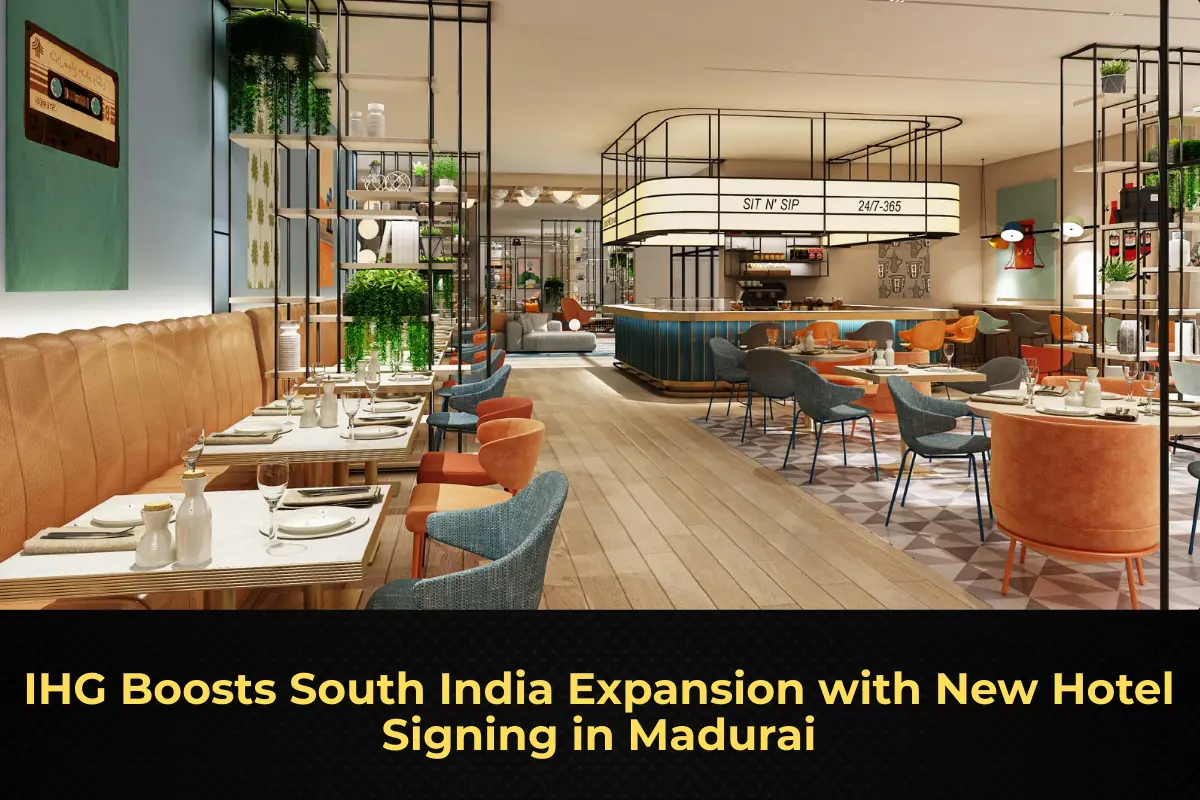

Introduction: IHG Sharpens Focus on South India’s Next Growth Wave
The Indian hospitality market continues to attract sustained interest from global hotel groups, driven by rising domestic travel, improving infrastructure, and the emergence of tier-2 cities as viable demand centres. In a strategic move aligned with these trends, InterContinental Hotels Group (IHG) has announced a new hotel signing in Madurai, reinforcing its long-term commitment to South India.
This development is not an isolated expansion decision but part of a broader strategy to deepen IHG’s presence in culturally significant and economically growing markets. Madurai, known for its religious tourism, regional commerce, and improving connectivity, represents the kind of diversified destination that international hotel brands increasingly prioritise in India.
Why Madurai Matters in IHG’s Expansion Playbook
Madurai’s Evolving Hospitality Landscape
Madurai has long been a major pilgrimage destination, anchored by the Meenakshi Amman Temple and a steady influx of religious and cultural tourists. In recent years, however, the city has also evolved as a regional business and education hub, expanding the profile of its visitor base beyond traditional leisure segments.
This diversification has created demand for branded, professionally managed hotels that can cater to a mix of pilgrims, business travellers, tour groups, and domestic leisure guests. For international operators like IHG, Madurai offers a balanced demand curve that reduces reliance on a single travel segment.
Tier-2 Cities as the Next Growth Frontier
India’s hospitality growth is increasingly shifting toward tier-2 and tier-3 cities. While metros remain important, rising land costs, intense competition, and supply saturation have made emerging cities more attractive for sustainable growth.
Madurai fits squarely into this narrative. Improved road and rail connectivity, expanding airport infrastructure, and government focus on regional development have enhanced the city’s attractiveness as a hotel investment destination.
IHG’s South India Strategy: Depth Over Density
Building Regional Clusters
IHG’s expansion approach in South India has been marked by the creation of regional clusters rather than isolated properties. By strengthening its footprint across Tamil Nadu, Karnataka, Kerala, and Telangana, the group aims to build operational synergies, brand recognition, and loyalty-driven demand.
The Madurai signing complements IHG’s existing and planned hotels across the region, enabling cross-city travel benefits for guests and improved efficiency in sales, marketing, and talent deployment.
Alignment with Domestic Travel Growth
Domestic travel remains the backbone of India’s hotel industry, particularly outside major metros. Religious tourism, weddings, small conferences, and regional business travel drive consistent room demand throughout the year.
By targeting cities like Madurai, IHG positions itself to capture this resilient domestic segment while also laying the groundwork for future international arrivals as inbound tourism grows.
Brand Strategy and Positioning
Select-Service and Full-Service Balance
IHG’s portfolio strategy in India balances select-service and full-service brands, allowing flexibility across different demand profiles. In tier-2 markets, this adaptability is especially important, as demand often fluctuates between price-sensitive group travel and higher-yield corporate or social events.
The Madurai hotel is expected to align with this balanced approach, offering standardized quality and brand assurance while remaining accessible to a broad range of travellers.
Consistency as a Competitive Advantage
One of the key strengths international hotel groups bring to emerging markets is operational consistency. For guests travelling across multiple cities, familiarity with brand standards becomes a deciding factor in hotel selection.
IHG’s focus on brand-led growth ensures that new properties benefit from global systems, loyalty platforms, and service protocols that enhance guest confidence and repeat visitation.
Investment Confidence and Owner Partnerships
Growing Developer Interest in Branded Hotels
The Madurai signing also reflects growing confidence among Indian hotel developers in partnering with global operators. Branded hotels offer advantages in financing, distribution, and long-term asset value, particularly in markets where unbranded supply dominates.
For developers, alignment with an international group like IHG reduces market risk while improving the property’s appeal to institutional investors and lenders.
Shared Long-Term Vision
Successful hotel partnerships depend on a shared long-term vision rather than short-term performance expectations. IHG’s steady, region-focused growth approach resonates with owners seeking sustainable returns rather than rapid, speculative expansion.
This alignment is particularly important in tier-2 cities, where market maturity develops gradually and patience is critical to long-term success.
South India’s Rising Role in India’s Hotel Growth Story
Diverse Demand Drivers
South India offers one of the most diversified hospitality demand profiles in the country. Religious tourism, medical travel, education hubs, manufacturing clusters, and IT-driven business travel coexist within relatively compact geographic regions.
This diversity reduces seasonality risk and creates year-round demand opportunities for hotels, making the region attractive for both domestic and international operators.
Infrastructure and Policy Support
Ongoing investments in highways, airports, and urban infrastructure continue to enhance accessibility across South Indian cities. State governments have also shown increasing support for tourism development through policy incentives and promotional initiatives.
These structural improvements strengthen the long-term outlook for hospitality investments in cities like Madurai.
Operational and Talent Implications
Creating Local Employment Opportunities
Each new hotel opening contributes directly to local employment through front-of-house, culinary, housekeeping, and management roles. Indirectly, hotels support a broader ecosystem of suppliers, transport providers, and service partners.
IHG’s expansion into Madurai will create new career pathways for hospitality professionals in the region, reducing the need for talent migration to metros.
Training and Skill Development
International hotel groups place strong emphasis on training and skill development. New properties typically serve as training grounds for local talent, raising overall service standards in the destination.
This knowledge transfer contributes to the long-term maturity of the local hospitality market.
Competitive Landscape in Emerging Cities
Rising Competition Among Branded Players
Madurai and similar cities are witnessing increased interest from both domestic and international hotel brands. As branded supply grows, competition will shift from mere presence to differentiation through service quality, location, and brand strength.
Early entrants like IHG benefit from first-mover advantages, including stronger brand recall and deeper relationships with local stakeholders.
Importance of Brand Trust
In emerging markets, brand trust plays a critical role in guest decision-making. International brands bring perceived assurance around hygiene, safety, and service consistency—factors that have gained importance in recent years.
This trust factor strengthens IHG’s competitive positioning as branded supply expands.
Long-Term Outlook for IHG in India
Scaling with Market Maturity
IHG’s India strategy reflects an understanding that market maturity varies widely across cities. Rather than aggressive saturation, the group appears focused on measured growth aligned with demand fundamentals.
The Madurai signing supports this philosophy, adding depth to the portfolio while maintaining strategic discipline.
Leveraging Loyalty and Distribution Strength
As IHG expands its Indian footprint, its global loyalty ecosystem and distribution channels will play an increasingly important role in driving demand. Domestic travellers are becoming more loyalty-aware, and international exposure will further enhance this trend.
New properties stand to benefit from this growing network effect.
Conclusion: A Strategic Step in a Broader Growth Vision
IHG’s decision to sign a new hotel in Madurai represents more than a single market entry—it reflects a calculated move within a broader South India growth strategy. By focusing on culturally significant, economically evolving cities, the group is positioning itself to capture long-term demand rather than short-term volume.
As India’s hospitality landscape continues to decentralise beyond major metros, strategic expansions into tier-2 cities will define the next phase of industry growth. For IHG, Madurai marks another step toward building a balanced, resilient, and future-ready portfolio across one of India’s most promising regions.