India Moves to Monetize Iconic Hotels, ITDC Redevelopment Faces Strategic and Operational Challenges
India advances monetisation of iconic hotels under asset redevelopment plans, while ITDC faces strategic, operational, and investment challenges in modernising legacy hospitality properties.
 nishathapa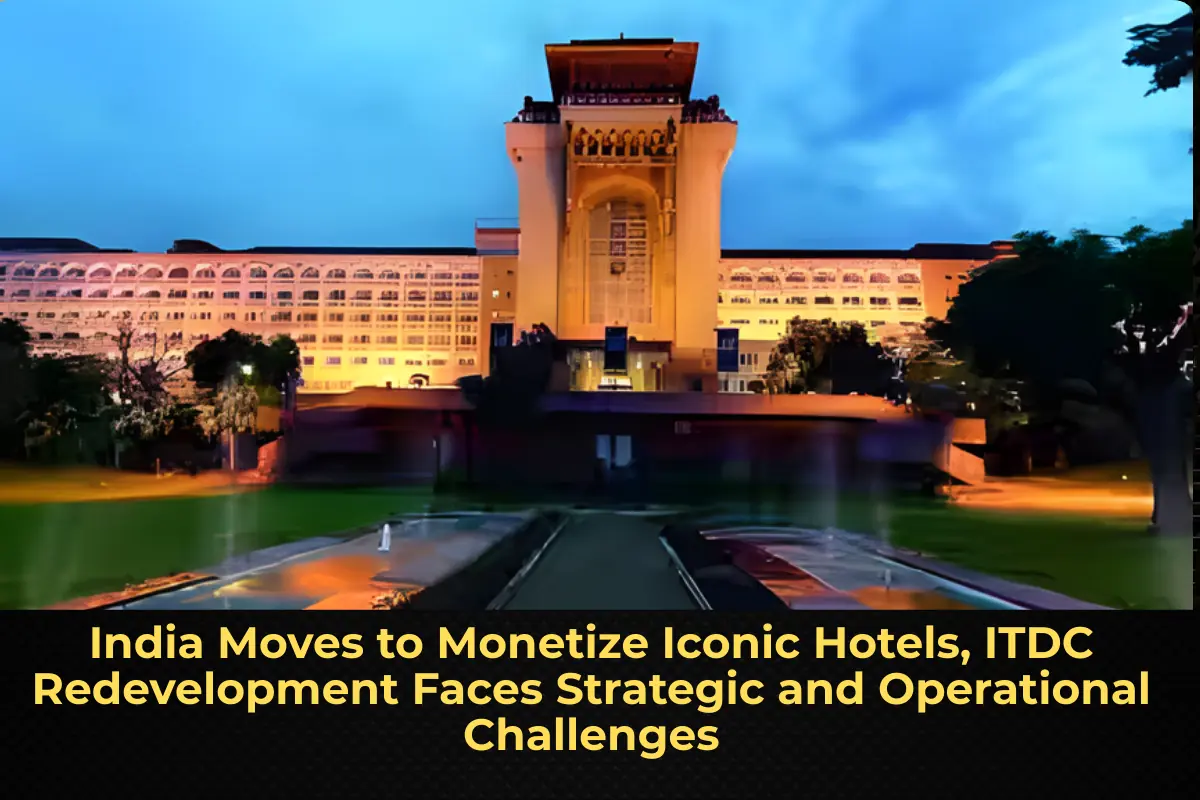

India Advances Monetisation of Iconic Hospitality Assets
India has accelerated efforts to monetise iconic hotel properties as part of its broader asset optimisation and infrastructure development strategy. Several landmark hospitality assets under public ownership are being positioned for redevelopment through structured models aimed at unlocking value, attracting private investment, and modernising ageing infrastructure.
At the centre of this transformation is the redevelopment of hotels managed by the India Tourism Development Corporation (ITDC), which has long overseen some of the country’s most recognisable government-owned hospitality properties. While monetisation presents opportunities for revitalisation, it also brings complex operational and strategic challenges.
Rationale Behind Hotel Monetisation
Many legacy hotel properties were developed decades ago to support diplomatic visits, state functions, and early tourism growth. Over time, however, evolving guest expectations, brand competition, and technological advancements have widened the gap between older infrastructure and contemporary hospitality standards.
Monetisation initiatives aim to address these gaps by inviting private capital and expertise into redevelopment projects. The objective is not only financial optimisation but also asset repositioning to meet modern market demands.
Shifting from Ownership to Value Creation
Rather than direct divestment, structured redevelopment models focus on long-term leases or public-private partnership frameworks. These approaches allow the government to retain ownership while enabling professional operators to enhance performance, upgrade facilities, and improve revenue efficiency.
This strategy aligns with broader national efforts to modernise public assets and enhance economic returns without relinquishing long-term control.
Challenges Facing ITDC Redevelopment
While the monetisation pathway offers significant potential, ITDC’s redevelopment initiatives face multiple challenges:
1. Ageing Infrastructure and Capital Requirements
Many legacy hotels require extensive structural upgrades, technology integration, sustainability retrofits, and design modernisation. The scale of capital required can be substantial, making investor evaluation rigorous and time-intensive.
2. Balancing Heritage with Commercial Viability
Several iconic properties carry historic and architectural significance. Redevelopment plans must balance preservation of identity with commercial repositioning—an intricate process requiring regulatory clearances and design sensitivity.
3. Competitive Market Landscape
India’s hospitality sector has seen rapid expansion by domestic and international hotel chains. Redeveloped ITDC properties will need strong branding, efficient management models, and differentiated positioning to compete effectively.
4. Regulatory and Administrative Complexities
Public asset redevelopment often involves layered approvals, compliance requirements, and stakeholder coordination. Ensuring transparency while maintaining project momentum remains a critical balancing act.
Investment Sentiment in Indian Hospitality
Despite these challenges, investor interest in India’s hospitality sector remains strong. Rising domestic travel, infrastructure development, and growing corporate demand have strengthened long-term growth projections.
Iconic properties located in prime urban zones or strategic tourism destinations present significant upside potential once modernised. Investors with expertise in repositioning brownfield assets may find attractive opportunities within the redevelopment framework.
Strategic Implications for the Hospitality Industry
The monetisation of government-owned hotels reflects a broader shift in India’s hospitality ecosystem—from state-led asset management to market-driven operational excellence. This transition may encourage further collaboration between public authorities and private hotel operators.
For the wider industry, such initiatives could enhance supply quality, stimulate investment flows, and raise service benchmarks across segments.
Employment and Economic Impact
Large-scale redevelopment projects typically generate employment across construction, hospitality operations, and ancillary services. Upgraded properties can also attract higher-value events, international delegations, and premium travellers, contributing to local economic growth.
Additionally, revitalised assets can strengthen destination competitiveness, supporting broader tourism development strategies.
Future Outlook
The success of India’s iconic hotel monetisation drive will depend on careful execution, investor confidence, and effective repositioning strategies. Transparent bidding processes, professional management structures, and clear redevelopment timelines will be key determinants of long-term outcomes.
If implemented efficiently, ITDC’s redevelopment journey could become a blueprint for transforming legacy hospitality infrastructure into modern, revenue-generating assets aligned with global standards.
Conclusion
India’s move to monetise iconic hotels marks a pivotal phase in the evolution of public hospitality assets. While ITDC redevelopment presents operational and strategic challenges, it also opens doors for innovation, capital infusion, and competitive repositioning.
The coming years will reveal how effectively these legacy properties can be transformed into dynamic contributors to India’s growing tourism and hospitality economy.